
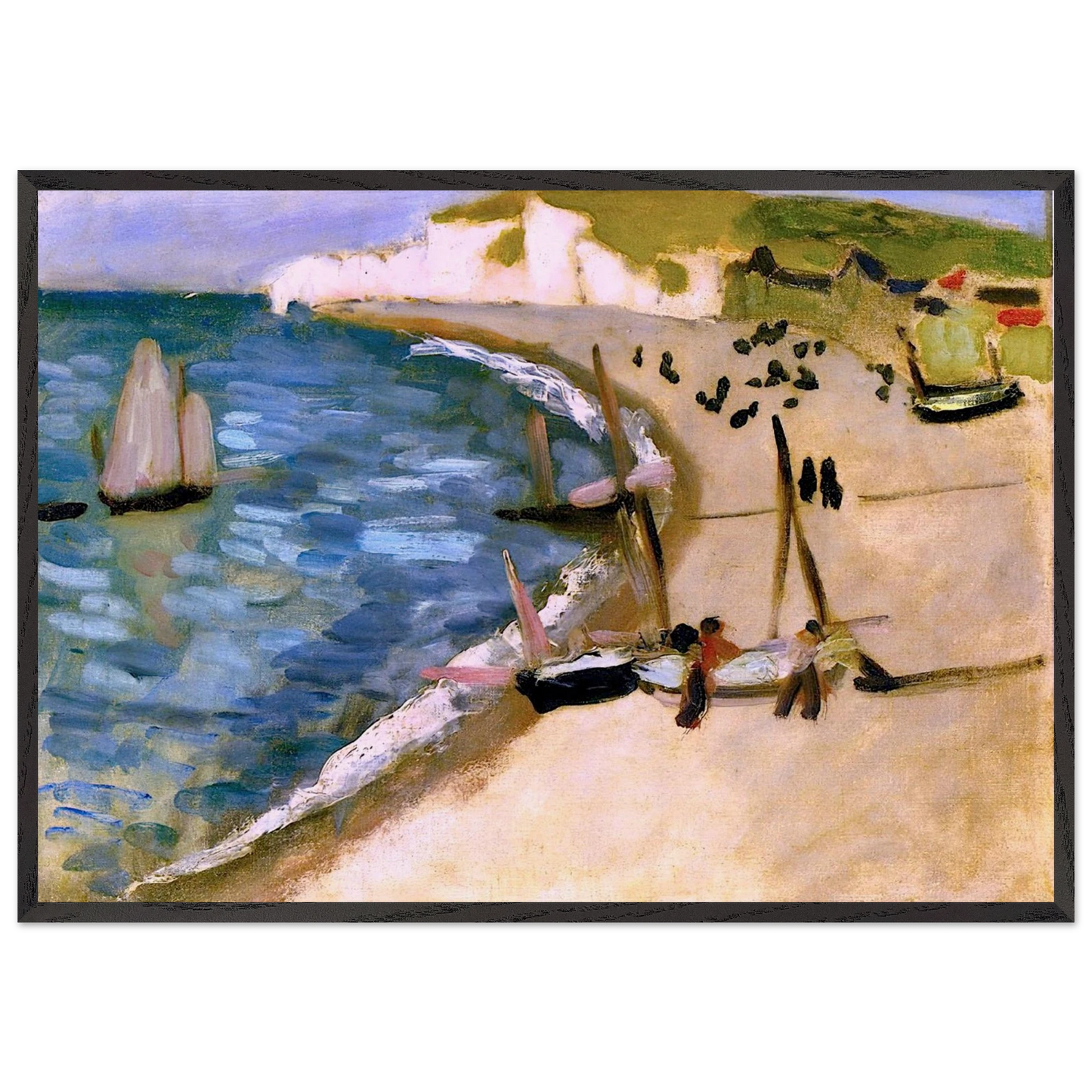
What is the quality of the paper used for this Matisse print?
We use 250 gsm (110 lb) museum-quality, natural white, matte paper. This archival-grade, acid-free paper ensures your Henri Matisse reproduction remains vibrant and resists yellowing over time.
How is the Henri Matisse Etretat print framed?
The print is mounted in a 20mm thick black frame made from responsibly sourced oak and ash wood. It features shatterproof plexiglass for ultimate protection and a sophisticated gallery aesthetic.
Is the artwork ready to hang upon arrival?
Yes, your framed art print arrives ready to hang. We include a professional hanging kit with every order, allowing you to elevate your space immediately upon delivery.
What makes this Matisse reproduction "museum-quality"?
Our reproductions use FSC-certified materials, heavyweight archival paper, and precision printing techniques that mirror the depth and color accuracy found in high-end art galleries and museums.
How is the frame sustainably sourced?
RedKalion is committed to sustainability. The oak and ash wood used for our 20mm frames are sourced from responsibly managed forests, adhering to FSC standards or equivalent certifications.
What is the historical significance of the Amont Cliffs at Etretat in Matisse's career?
Painted in 1921, this piece marks Matisse's "Nice Period" transition, where he combined his mastery of color with a more naturalistic approach to light and atmosphere on the French coast.
Why did Matisse choose the Normandy coast as a subject?
Matisse followed in the footsteps of masters like Monet and Courbet, drawn to Étretat's dramatic cliffs to study the unique, silvery Atlantic light that defined French landscape painting.