Skip to product information
1 of 1

RedKalion

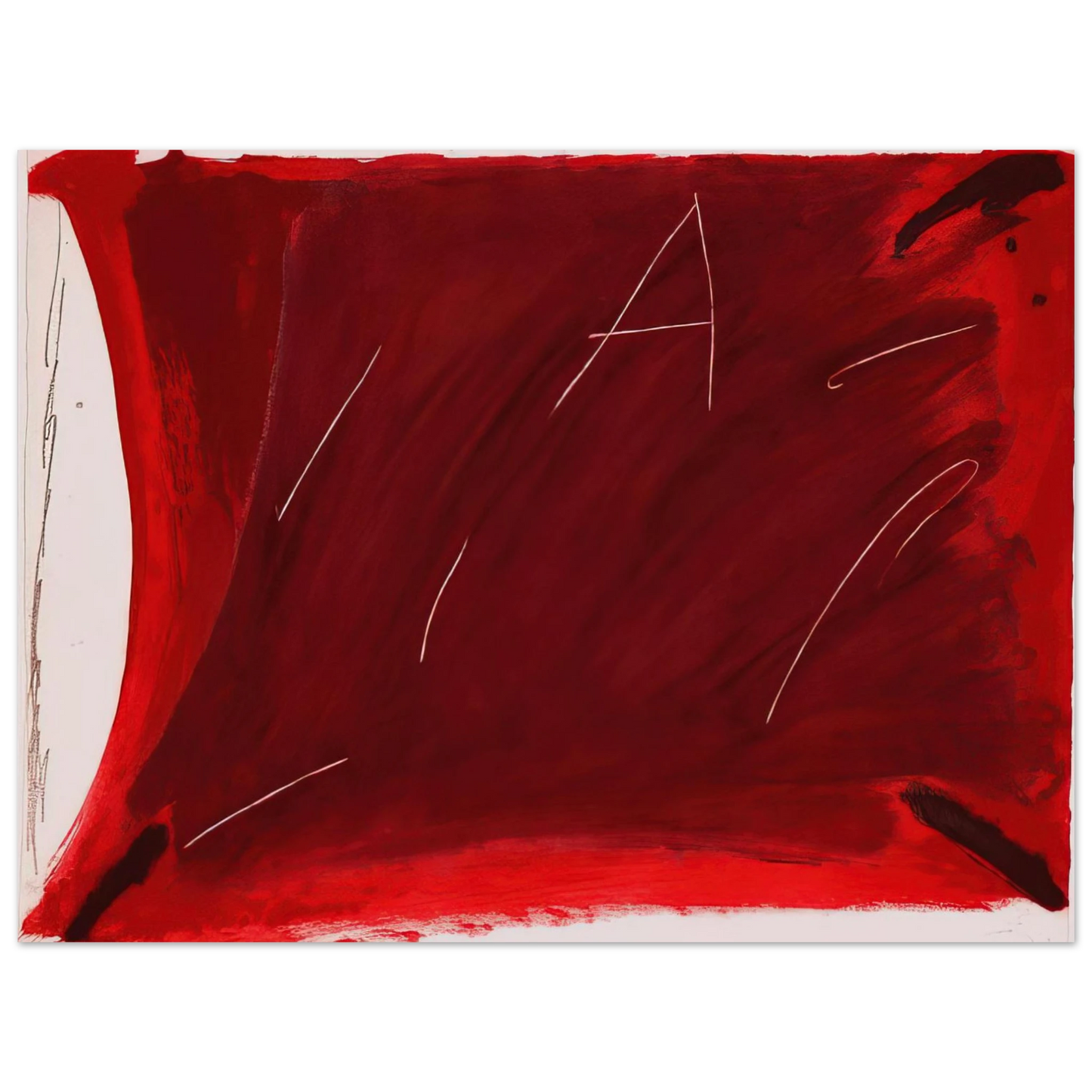
Antoni Tapies - NEGRE I ROIG V A DAMUNT VERMELL 1976 75x100 cm / 30x40inches Fine Art Poster

Antoni Tapies - NEGRE I ROIG V A DAMUNT VERMELL 1976 75x100 cm / 30x40inches Fine Art Poster

Regular price $207.99 USD
Regular price $311.00 USD Sale price $207.99 USD
Sale Sold out
Quantity

Antoni Tàpies: Negre i Roig V a Damunt Vermell (1976) – A Masterpiece of Textural Expression

Experience the profound depth of Antoni Tàpies' visionary work with our museum-quality reproduction of Negre i Roig V a Damunt Vermell (1976). As a leading figure of the Art Informel movement, Tàpies transformed the canvas into a visceral landscape of philosophical inquiry. This specific piece, created during a pivotal era in Spanish history, showcases his mastery over 'matter painting'—where the interplay of negre (black) and roig (red) creates a rhythmic, almost architectural tension against a scarlet ground.

At RedKalion, we curate our prints to honor the artist's original intent. This fine art print is rendered on our Master's Edition archival paper, chosen specifically for its ability to capture the complex, tactile nuances of Tàpies' signature style. The matte, uncoated finish ensures a non-reflective surface that emphasizes the rich pigments and symbolic gestures of the 1976 composition.

The RedKalion Archival Standard

  • Exquisite Texture: Printed on 250 gsm (110 lb) natural white paper, providing a luxurious feel and substantial thickness (0.29 mm).
  • Enduring Brilliance: Our acid-free paper features a pH balance above 7, preventing the yellowing or degradation often seen in lesser reproductions.
  • Curatorial Integrity: Every print is a high-fidelity representation of the original 75x100 cm masterpiece, ensuring that every mark and shadow is preserved.
  • Sustainability: We utilize FSC-certified paper, reflecting a commitment to both artistic excellence and environmental responsibility.

Elevate your collection with an archival masterpiece that endures. This Antoni Tàpies fine art poster is more than a reproduction; it is a testament to the enduring power of 20th-century abstraction, meticulously prepared to transform your space into a private gallery.

View full details
What defines the quality of this Antoni Tàpies fine art print?

RedKalion uses Master's Edition archival paper, a 250 gsm (110 lb) museum-quality medium. This ensures a heavy, premium feel with a luxurious matte finish that perfectly captures the deep black and red tones of Tàpies' 1976 work.

Is the paper used for this reproduction sustainable?

Yes, we use FSC-certified paper for all our prints. This guarantees that the materials for your Antoni Tàpies reproduction are sourced from responsibly managed forests, meeting the highest environmental and social standards.

How does RedKalion ensure the longevity of the print?

Our prints are made on acid-free paper with a pH value above 7. This archival-grade material prevents yellowing and brittleness over time, ensuring your museum-quality reproduction remains vibrant for generations.

What are the shipping and fulfillment details?

We operate on a print-on-demand basis with no minimum order requirements. Each print is carefully packaged to ensure it arrives in pristine condition, ready for framing and display in your home or gallery.

Does the print include a frame?

This product is a standalone fine art print. Its 30x40 inch (75x100 cm) dimensions are a standard size for high-end framing, allowing you to choose a frame that best complements your interior design.

What is the historical significance of Negre i Roig V a Damunt Vermell?

Created in 1976, this work emerged during Spain's transition to democracy. Tàpies used the colors red and black to symbolize both primal human struggle and Catalan cultural identity, making it a cornerstone of 20th-century European abstraction.

What is Antoni Tàpies' 'matter painting' technique?

Tàpies pioneered 'matter painting' by incorporating non-traditional materials and deep textures into his work. Our high-resolution print captures these tactile qualities, reflecting his belief that the physical substance of art carries its own spiritual meaning.