

RedKalion
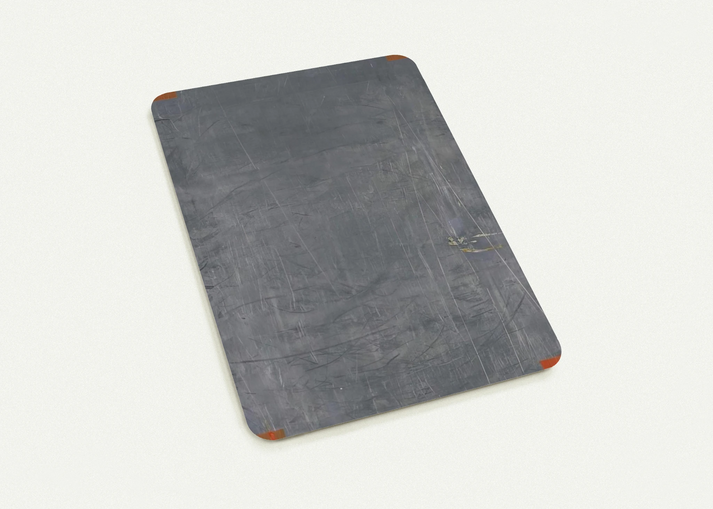
Bad Honnef Multiple - 1998 By Gunther Forg Pack of 10 Post Cards | Gunther Forg Post Cards | A6 (10.5 x 14.8 cm) - 4.1 x 5.8 inches
Bad Honnef Multiple - 1998 By Gunther Forg Pack of 10 Post Cards | Gunther Forg Post Cards | A6 (10.5 x 14.8 cm) - 4.1 x 5.8 inches
Couldn't load pickup availability
Elevate Your Correspondence with Günther Förg’s Bad Honnef Multiple (1998)
Experience the intersection of German post-war modernism and functional elegance with this exclusive pack of 10 postcards featuring Bad Honnef Multiple - 1998 by the acclaimed artist Günther Förg. These A6 fine art prints capture the raw, structural energy that defined Förg’s career, allowing you to share a piece of contemporary art history with every note you send.
Mastering Abstraction and Space
Günther Förg was a master of multidisciplinary art, known for his ability to navigate the boundaries between painting, photography, and architecture. Bad Honnef Multiple represents a pivotal moment in his late 90s oeuvre, showcasing his signature approach to spatiality and the rhythmic application of color. By choosing these museum-quality reproductions, you are celebrating an artist who challenged the viewer to perceive the architectural qualities within abstract forms.
Uncompromising Print Quality by RedKalion
At RedKalion, we believe that even a postcard should be a masterpiece. These cards are produced using our proprietary 12-color fine art printing technology. Unlike standard 4-color commercial prints, our process ensures stunning depth, capturing the subtle tonal variations and gestural marks of Förg’s original work. The 200 gsm (80 lb) paper weight provides a substantial, premium feel, while the smooth matte finish ensures a glare-free viewing experience and a perfect surface for writing.
- Artist: Günther Förg
- Title: Bad Honnef Multiple - 1998
- Format: Pack of 10 Post Cards
- Dimensions: A6 (10.5 x 14.8 cm / 4.1 x 5.8 inches)
- Material: FSC-certified, eco-friendly 200 gsm paper
- Longevity: Archival-grade inks for lasting vibrancy
Whether you are a dedicated collector of German abstract art or looking to elevate your daily stationery, these cards offer a sophisticated way to engage with Forg’s legacy. Each set is printed on demand to ensure the highest quality control and a reduced environmental footprint, embodying the RedKalion commitment to sustainable, world-class art curation.


Discover Unlimited Art Possibilities
At RedKalion, you can find virtually any artwork from any artist, available in a wide range of sizes to perfectly match your space.
If you didn’t find what you’re looking for, contact us at support@redkalion.com . We will source any artwork and produce it in any size and format you need, including art prints, posters, canvas, framed pieces, framed canvas, and more.
For dedicated art enthusiasts, we also offer handcrafted replicas of any artwork, carefully painted by highly skilled artists using traditional techniques.
For custom requests, contact us at support@redkalion.com .
What printing technology is used for these postcards?
We utilize advanced 12-color fine art printing technology. This provides far greater color accuracy and depth than standard 4-color inkjet processes, ensuring the integrity of Forg's original palette.
What are the paper specifications for the Bad Honnef pack?
The cards are printed on 200 gsm (80 lb) FSC-certified paper with a thickness of 0.26 mm. They feature a smooth matte finish for a sophisticated, glare-free aesthetic.
What are the exact dimensions of each card?
Each card in the pack is A6 size, measuring exactly 10.5 x 14.8 cm (4.1 x 5.8 inches), making them perfect for standard mailing or small frames.
Are these cards environmentally friendly?
Yes. We use FSC-certified paper and print on demand to minimize waste. Our materials are chosen for both their archival quality and their environmental responsibility.
How long will the colors last on these fine art prints?
Our use of archival-grade inks and high-quality matte paper ensures that the vibrancy and detail of the artwork will endure for years without significant fading.
What is the significance of Günther Förg’s Bad Honnef series?
Created in 1998, this series reflects Förg’s fascination with the relationship between architectural space and abstract color, a hallmark of his late-20th-century German Modernist style.
Who is Günther Förg, and why is his work important?
Günther Förg was a leading figure in German post-war art, influential for his multidisciplinary work in Neo-expressionism and Minimalism, often exploring the tension between modernism and decay.