
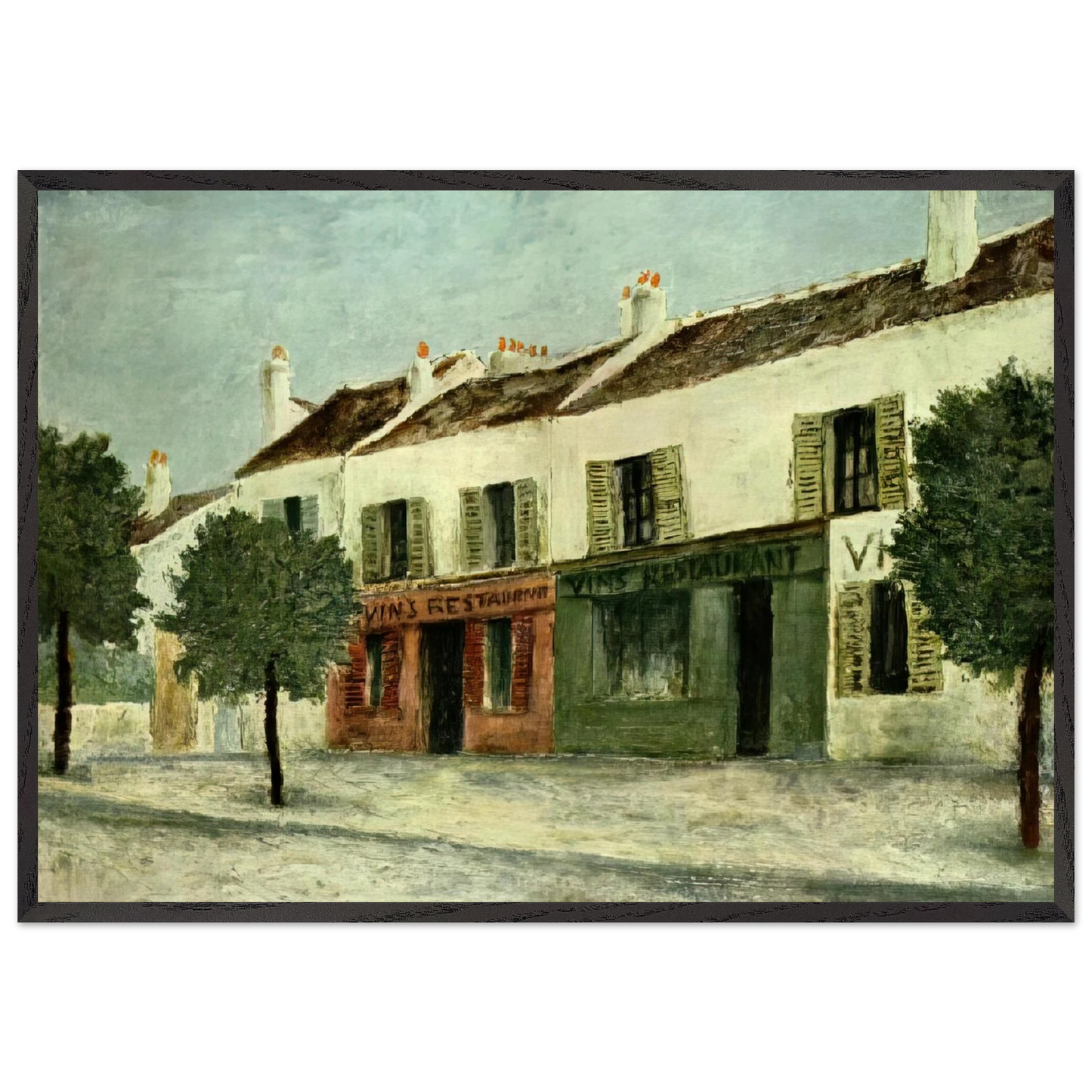
What is the quality of the paper used for this Utrillo print?
We use 250 gsm (110 lb) natural white, archival museum-quality paper. It is matte and uncoated, providing a non-reflective surface that perfectly showcases the textured nuances of Maurice Utrillo’s post-impressionist style.
How is the frame constructed and what are its dimensions?
The frame is made from responsibly sourced oak and ash wood. It measures 20mm (0.79") in both thickness and width, offering a more substantial and premium feel than typical 14mm commercial frames.
Is the artwork protected from damage and fading?
Yes, each print is protected by high-quality, shatterproof plexiglass. This ensures the artwork is shielded from physical damage while maintaining the clarity required to appreciate the fine art details.
Does the print come ready to hang on my wall?
Absolutely. Every framed print includes a pre-installed hanging kit, allowing you to elevate your space immediately upon delivery without the need for additional hardware.
Are the materials used for this product sustainable?
RedKalion is committed to sustainability. We use FSC-certified materials or equivalent standards, ensuring that both the premium paper and the wooden frames are sourced responsibly.
Who was Maurice Utrillo and why is his work significant?
Maurice Utrillo was a key figure in the School of Paris. He is celebrated for his emotive depictions of Parisian suburbs, using heavy impasto and a unique palette to capture urban solitude.
What does the 'White Period' refer to in Utrillo's career?
The 'White Period' (c. 1909–1914) is Utrillo's most acclaimed era, characterized by his use of white pigments mixed with plaster and sand to mimic the texture of aged stone walls.