Skip to product information
1 of 1

RedKalion

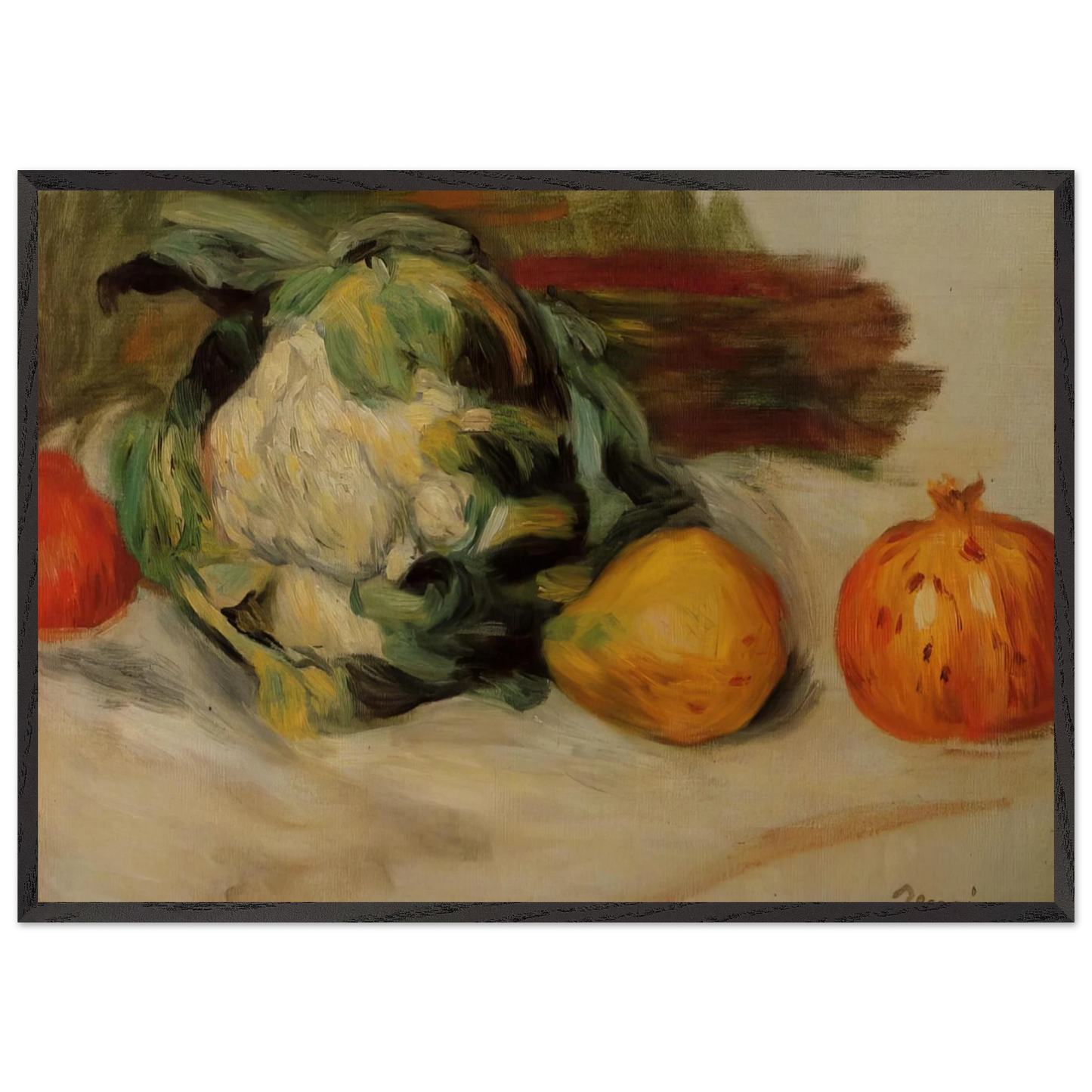
Cauliflower and Pomegranates - Pierre-Auguste Renoir 70x100 cm / 28x40 inches Framed Art Print – Black Wooden Frame

Cauliflower and Pomegranates - Pierre-Auguste Renoir 70x100 cm / 28x40 inches Framed Art Print – Black Wooden Frame

Regular price $449.99 USD
Regular price $999.99 USD Sale price $449.99 USD
Sale Sold out
Quantity

Elevate Your Space with Pierre-Auguste Renoir’s 'Cauliflower and Pomegranates'

Experience the luminous charm of Impressionism with this museum-quality reproduction of Cauliflower and Pomegranates by the legendary Pierre-Auguste Renoir. Originally painted during a period where Renoir explored the tactile beauty of domestic life, this still life transforms everyday kitchen staples into a vibrant symphony of color and light. The rich reds of the pomegranates contrast beautifully with the ivory textures of the cauliflower, showcasing Renoir's mastery of brushwork and his ability to find elegance in the mundane.

Authentic Artistry Meets Modern Craftsmanship

At RedKalion, we curate our fine art prints to honor the artist's original vision. This piece is rendered on 250 gsm (110 lb) natural white, archival museum-quality paper. The matte, uncoated finish ensures that every subtle hue and delicate stroke is visible without distracting glare, preserving the historical integrity of Renoir’s technique. This heavyweight paper offers a luxurious thickness of 0.29 mm, ensuring your archival-grade reproduction remains as captivating as the day it was printed.

Premium Framing and Sustainable Quality

Your Renoir framed art print arrives encased in a sophisticated black frame crafted from responsibly sourced oak and ash wood. Measuring 20mm (0.79") in width and depth, the frame provides a substantial, contemporary profile that is sturdier and more refined than standard gallery frames. To ensure longevity and safety, the print is protected by shatterproof plexiglass, which maintains clarity while shielding the artwork from environmental wear. Each piece is delivered ready-to-hang, including a high-quality hanging kit, allowing you to transform your interior instantly with an archival masterpiece that endures.

View full details
What is the quality of the paper used for this Renoir print?

We use 250 gsm (110 lb) archival museum-quality paper. It is a natural white, matte, and uncoated paper with a thickness of 0.29 mm, specifically designed to ensure the longevity and vibrancy of fine art reproductions.

Is the frame sustainably sourced and what are its dimensions?

Yes, our frames are made from FSC-certified oak and ash wood. The black wooden frame is 20mm (0.79") thick and wide, providing a premium, durable border that is more robust than classic 14mm frames.

How is the artwork protected during shipping and display?

Each print is protected by transparent, shatterproof plexiglass. This ensures the artwork remains safe during transit and is shielded from dust and damage once hung on your wall, maintaining museum-grade clarity.

Is this Renoir framed print ready to hang upon arrival?

Absolutely. Your order includes a professional hanging kit, and the print comes already framed. You can elevate your space with this Pierre-Auguste Renoir masterpiece immediately upon delivery.

What makes this a "museum-quality" reproduction?

Our reproductions use archival-grade, acid-free paper and lightfast inks. Combined with high-resolution scanning of the original artwork, we ensure the color accuracy and textural depth meet the standards expected by art historians and collectors.

When did Renoir paint Cauliflower and Pomegranates?

Renoir painted this vibrant still life in the late 19th century. During this time, he often used domestic subjects to experiment with the play of light and the 'pearl-like' textures that became a hallmark of his late Impressionist style.

Why did Renoir choose common vegetables like cauliflower for his still lifes?

Renoir found immense beauty in the varied textures and organic shapes of vegetables. He used these subjects to master the transition of light across complex surfaces, proving that even simple objects possess inherent artistic value.