
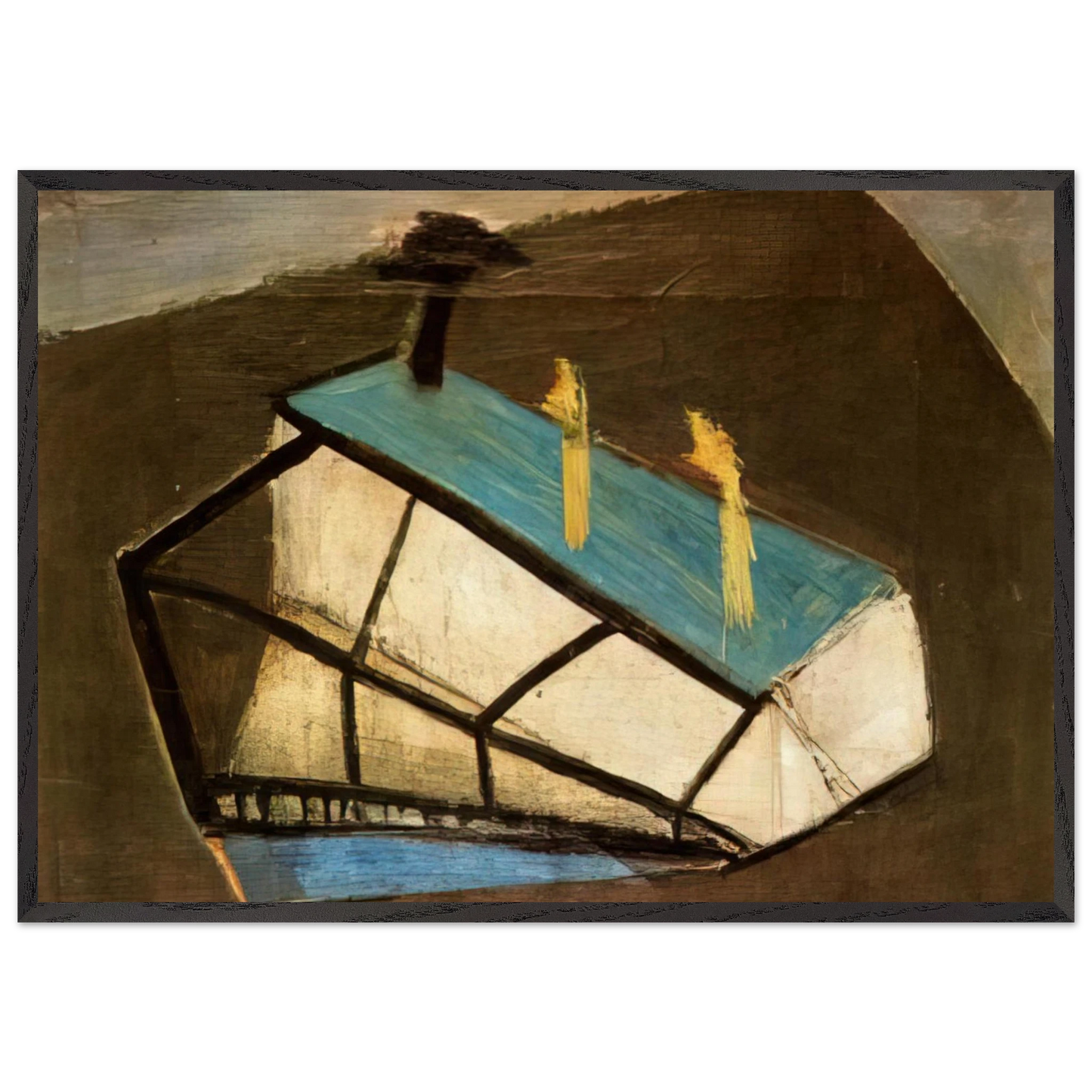
What materials are used for the Cedar 1932 fine art print?
We use 250 gsm (110 lb) museum-quality, natural white paper. It is archival-grade, matte, and uncoated, ensuring your Maria Helena Vieira da Silva reproduction retains its historical integrity without fading over time.
What are the specifications of the black wooden frame?
The frame is crafted from responsibly sourced oak or ash with a black finish. It measures 20mm (0.79") in both width and thickness, providing a modern, substantial border for the 70x100 cm artwork.
Is this Maria Helena Vieira da Silva print ready to hang?
Yes. Every framed print from RedKalion arrives ready to hang. We include a dedicated hanging kit to ensure you can securely display your artwork the moment it arrives at your door.
How is the artwork protected during shipping and display?
We use high-quality, shatterproof plexiglass to protect the print from UV rays and physical damage. Your framed print is packaged in reinforced materials to ensure it reaches you in gallery condition.
Is the paper used for this print environmentally friendly?
RedKalion is committed to sustainability. All our prints use FSC-certified paper or equivalent regional certifications, ensuring your art collection supports responsible forestry practices.
What is the historical significance of Cedar (1932) in Vieira da Silva's career?
Painted in 1932, Cedar represents Vieira da Silva's early exploration of spatial depth and rhythmic lines. It marks her departure from traditional representation toward the architectural abstraction that made her a global icon.
How does the paper weight (250 gsm) affect the print quality?
A weight of 250 gsm (110 lb) is ideal for fine art. It provides the thickness and durability (0.29 mm) required to prevent wrinkling and ensures a professional, museum-standard display.