
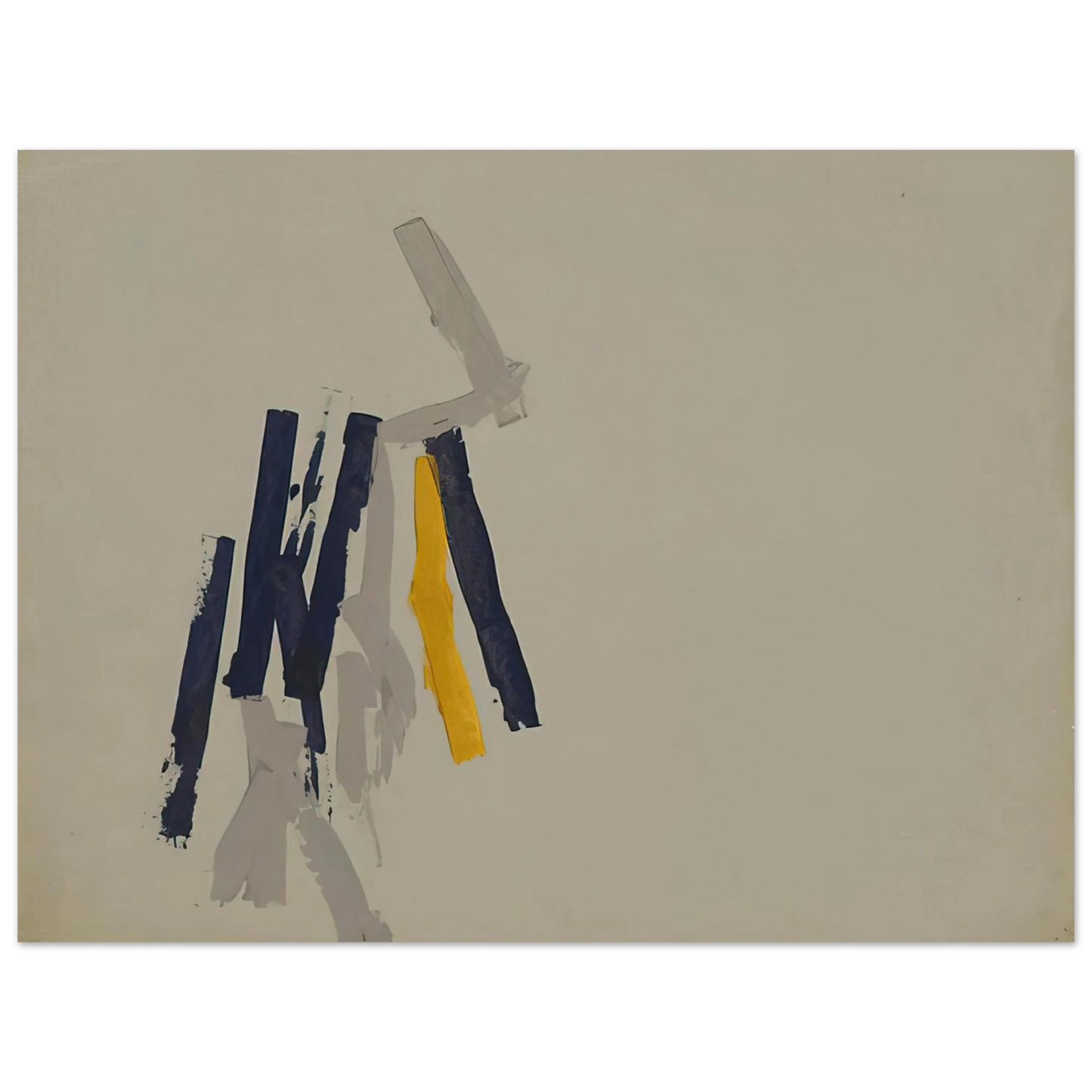
What are the archival qualities of this Charlotte Posenenske print?
This print is produced on Master's Edition archival paper, which is acid-free with a pH above 7. This prevents yellowing and ensures the vibrant stripes of Posenenske’s 1962 work remain pristine for decades without fading or degradation.
What is the texture and finish of the Master's Edition paper?
The paper features a matte, uncoated, natural white (off-white) finish. This provides a luxurious, non-reflective surface that emphasizes the geometric precision and subtle color transitions of the Striped Picture without the glare of standard glossy posters.
How is this fine art poster shipped and fulfilled?
RedKalion utilizes a print-on-demand fulfillment model with no minimum orders. Each Charlotte Posenenske reproduction is carefully printed and shipped in protective packaging to ensure it arrives in gallery-ready condition at your doorstep.
Why is Charlotte Posenenske's 'Striped Picture' significant in art history?
Created in 1962, this piece represents Posenenske’s shift toward industrial geometry. It captures the tension between painting and objecthood, a hallmark of German minimalism that eventually led her to abandon the art market for social activism.
What does the FSC certification mean for this reproduction?
The FSC certification ensures that the 250 gsm paper used for your fine art print is sourced from responsibly managed forests. This aligns with modern ethical standards while maintaining the highest museum-quality material specifications.
How does the 250 gsm weight affect the print's durability?
At 250 gsm (110 lb) and 0.29 mm thickness, this paper is significantly heavier and more durable than standard posters. It resists curling and provides the structural integrity required for high-end framing and long-term display.
What was the artistic intent behind Posenenske's use of stripes in 1962?
Posenenske used stripes to eliminate subjective emotion and focus on objective structure. This 1962 series was an early experiment in repetition and spatial rhythm, laying the groundwork for her later mass-produced, modular sculptures.