
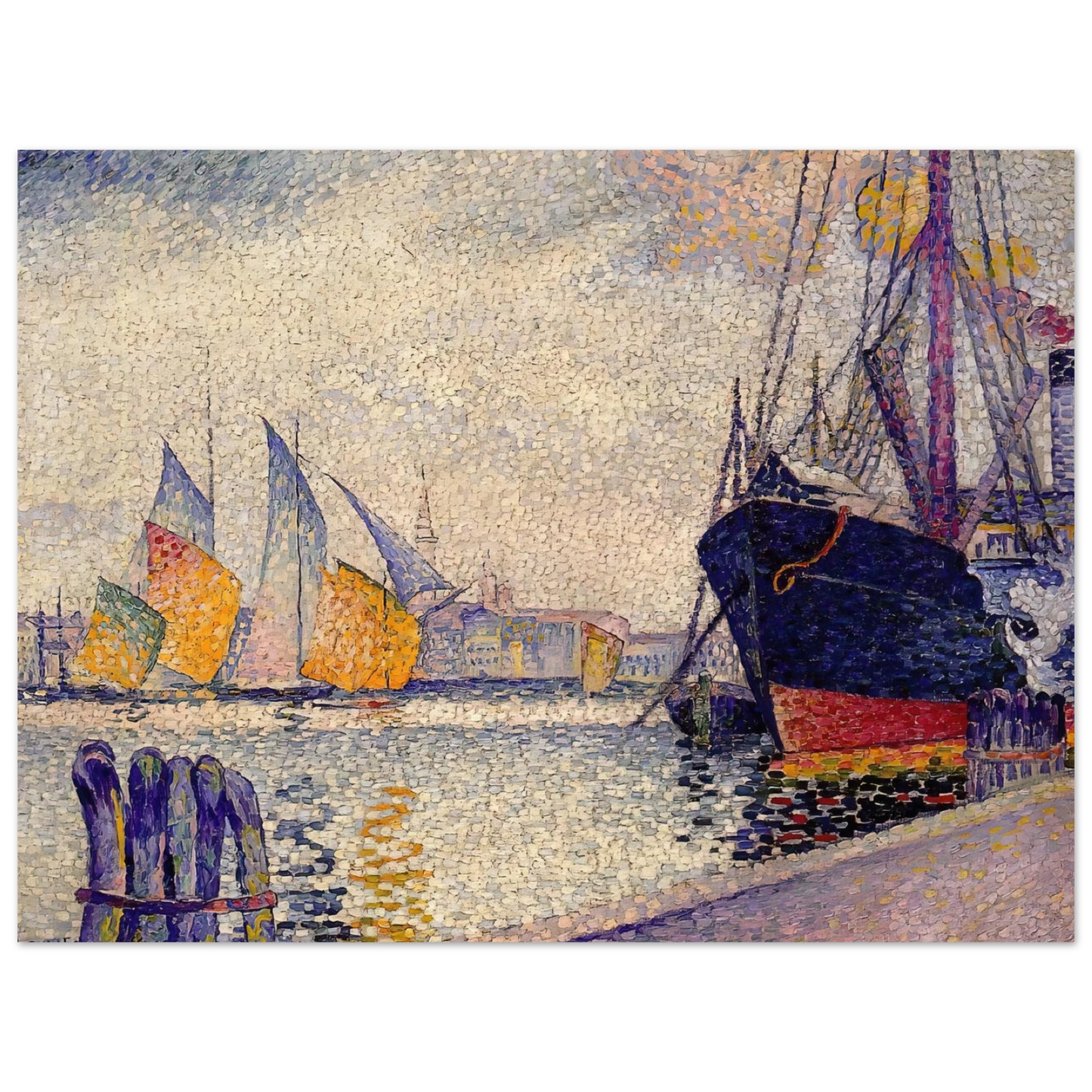
What is the historical significance of Canal de la Guidecca, Venice by Henri-Edmond Cross?
This artwork is a prime example of Neo-Impressionism, showcasing Cross's innovative use of Pointillism to capture Venetian light and atmosphere, blending scientific color theory with artistic expression in late 19th-century European art.
How does the Pointillist technique enhance the visual impact of this fine art print?
The technique uses tiny dots of pure color that blend optically, creating vibrant luminosity and depth, which is meticulously reproduced in this museum-quality archival print for an authentic viewing experience.
What are the specifications of the Master's Edition archival paper used for this print?
It features acid-free (pH above 7) FSC-certified paper with a matte, uncoated finish, natural white hue, 250 gsm weight, and 0.29 mm thickness, ensuring longevity and a luxurious texture for this fine art poster.
How is this fine art poster shipped and what are the fulfillment options?
It is printed and shipped on-demand with no minimum orders, offering flexible fulfillment for this archival reproduction of Canal de la Guidecca, Venice.
What measures ensure the archival longevity of this museum-quality reproduction?
The acid-free paper (pH above 7) prevents yellowing over time, and the FSC-certified materials support sustainability, making this a durable fine art print for long-term display.
Why did Henri-Edmond Cross choose Venice as a subject for this artwork?
Venice's unique light and water reflections inspired Cross to explore color and luminosity, aligning with Neo-Impressionist goals of capturing atmospheric effects through structured techniques.
How does the matte finish affect the appearance of this Pointillist artwork?
The matte, uncoated finish reduces glare and enhances color depth, allowing the intricate dots of the Pointillist technique to be viewed clearly without distractions.