
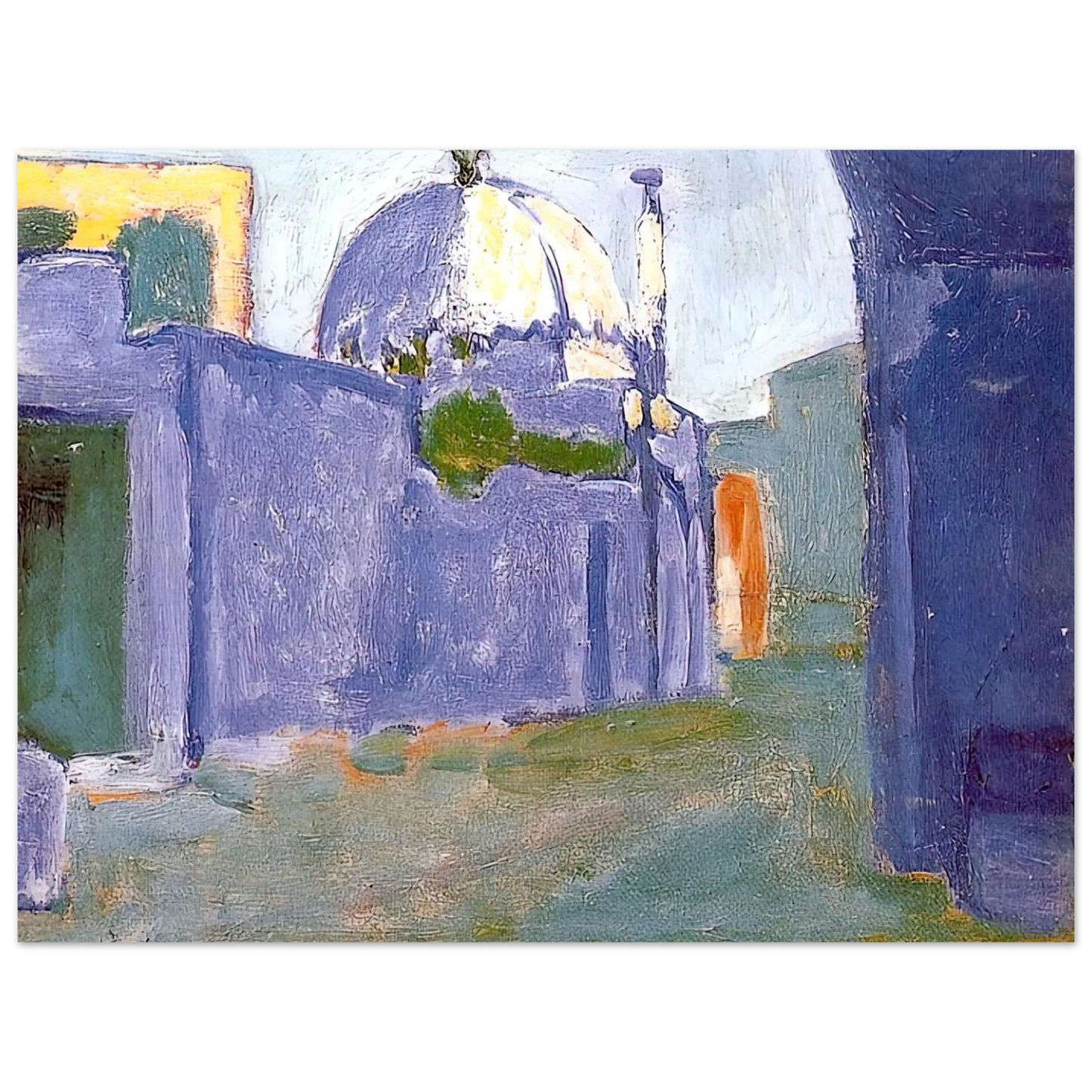
What is the historical significance of Henri Matisse's "LE MARABOUT" (1912)?
"LE MARABOUT" (1912) exemplifies Matisse's Fauvist style, using bold colors and simplified forms to explore African themes during a period of artistic innovation in early 20th-century modern art.
How does this fine art print capture the details of the original artwork?
Our museum-quality reproduction on Master's Edition archival paper ensures precise color matching and texture, preserving every nuance of Matisse's brushwork for an authentic viewing experience.
What are the specifications of the paper used for this print?
This print uses acid-free, FSC-certified paper with a matte finish, 250 gsm weight, 0.29 mm thickness, and natural white color for archival longevity and luxurious texture.
How is shipping handled for this on-demand art print?
We offer no minimum orders with on-demand printing and shipping, ensuring careful packaging and timely delivery to protect your museum-quality reproduction.
Will this archival print resist yellowing over time?
Yes, the acid-free paper (pH above 7) prevents yellowing, making this a durable fine art poster that maintains its vibrancy for generations.
What inspired Matisse's depiction of the marabout figure in this artwork?
Matisse was influenced by African art and spirituality, using the marabout—a West African religious leader—to explore themes of exoticism and abstraction in his Fauvist compositions.
How does the size (75x100 cm / 30x40 inches) impact the display of this piece?
This large format enhances the visual impact of Matisse's bold colors and forms, making it ideal for statement walls in homes or offices as a premium art reproduction.