
Discover Unlimited Art Possibilities
At RedKalion, you can find virtually any artwork from any artist, available in a wide range of sizes to perfectly match your space.
If you didn’t find what you’re looking for, contact us at support@redkalion.com . We will source any artwork and produce it in any size and format you need, including art prints, posters, canvas, framed pieces, framed canvas, and more.
For dedicated art enthusiasts, we also offer handcrafted replicas of any artwork, carefully painted by highly skilled artists using traditional techniques.
For custom requests, contact us at support@redkalion.com .
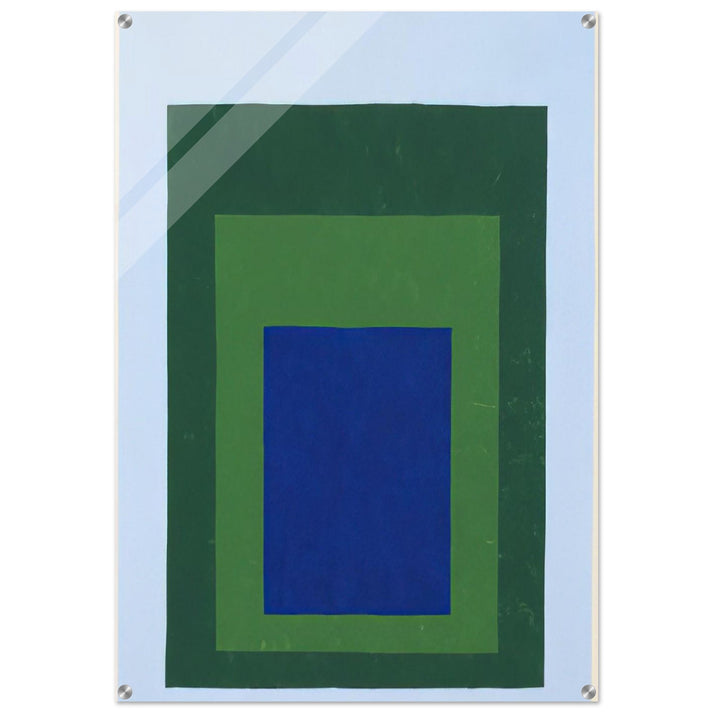
What is the historical significance of Josef Albers' 'Homage to the Square: Blue Green' (1950)?
This artwork is a key piece from Albers' iconic Homage to the Square series, reflecting his Bauhaus-influenced studies on color theory and perception in mid-20th century modern art.
How does the acrylic material enhance this fine art print?
The 4mm (0.15") acrylic panel provides vibrant color reproduction, a sleek finish, and durability, making it a premium choice for museum-quality wall art.
What are the dimensions and hanging details for this Josef Albers print?
It measures 70x100 cm / 28x40" inches and includes a hanging kit with pre-drilled holes (14mm from edges) for easy installation of your acrylic art.
How is the print packaged and shipped to ensure safety?
We use protective packaging and reliable carriers to deliver your archival-grade reproduction securely, with tracking provided for peace of mind.
Is this print archival and fade-resistant?
Yes, our premium acrylic prints are designed for archival longevity, resisting fading to maintain vibrant colors as a lasting fine art reproduction.
Why did Albers focus on squares in this series?
Albers used nested squares to isolate and study color interactions, minimizing compositional distractions to explore pure perceptual effects in his modern art.
What makes the blue and green hues significant in this piece?
These colors demonstrate Albers' theory of relative color, where their juxtaposition creates optical vibrations and depth, key to his Op Art innovations.