
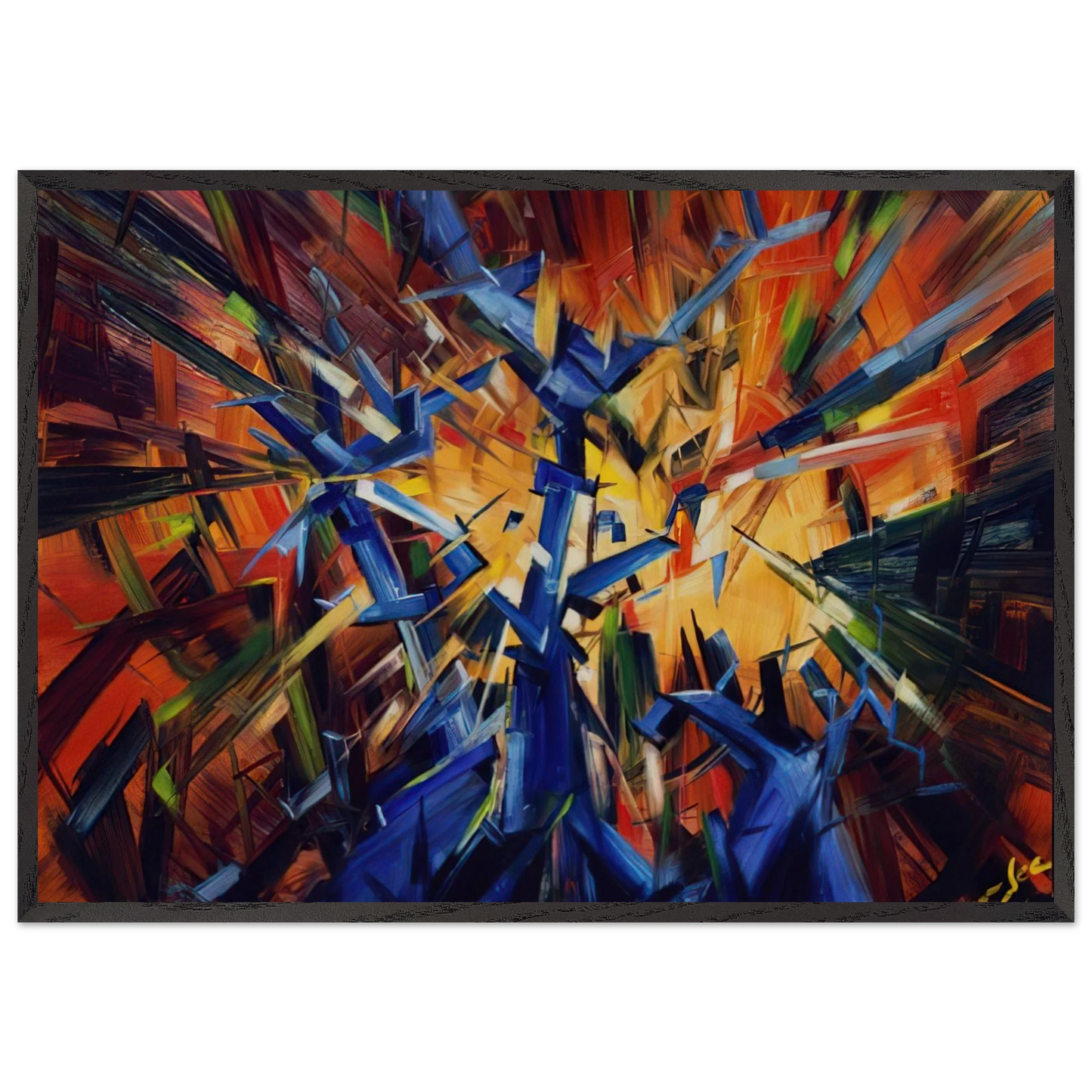
What is the historical significance of Untitled - 1966 N7 by Konrad Zuse?
This artwork is a pioneering example of early digital art, created by computer inventor Konrad Zuse in 1966 using algorithmic processes, predating the digital art movement and reflecting his innovative blend of technology and aesthetics.
What materials are used in this framed art print?
The print features 250 gsm archival museum-quality paper in a matte finish, framed with responsibly sourced oak and ash wood, and protected by shatterproof plexiglass for durability and fine art preservation.
How is the frame constructed for this ready-to-hang print?
The black wooden frame is 20mm (0.79") thick and wide, made from sustainable oak and ash, and includes a hanging kit for immediate wall display as a premium art reproduction.
Is the paper archival and sustainable for long-term display?
Yes, it uses 250 gsm FSC-certified archival paper with a matte, uncoated finish, ensuring longevity and eco-friendly quality for your museum-quality print collection.
What are the dimensions and shipping details for this piece?
The framed print measures 70x100 cm (28x40 inches) and ships securely packaged, ready-to-hang with all hardware included for easy installation in your home or office.
How does Konrad Zuse's background influence this artwork?
As a computer pioneer, Zuse applied algorithmic thinking to create abstract geometric forms in this 1966 piece, showcasing his unique intersection of science and art in early digital aesthetics.
Why is the frame thicker than standard options?
The 20mm frame provides enhanced durability and a bold, modern profile that complements the artwork's digital origins, offering superior protection and visual impact compared to classic 14mm frames.