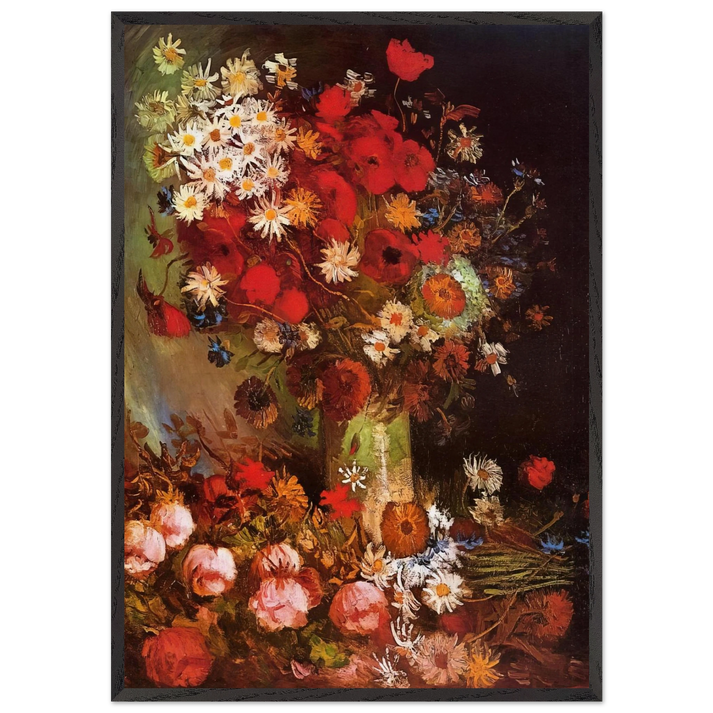
Discover Unlimited Art Possibilities
At RedKalion, you can find virtually any artwork from any artist, available in a wide range of sizes to perfectly match your space.
If you didn’t find what you’re looking for, contact us at support@redkalion.com . We will source any artwork and produce it in any size and format you need, including art prints, posters, canvas, framed pieces, framed canvas, and more.
For dedicated art enthusiasts, we also offer handcrafted replicas of any artwork, carefully painted by highly skilled artists using traditional techniques.
For custom requests, contact us at support@redkalion.com .
What are the dimensions of this Vincent van Gogh framed art print?
This fine art print measures 70x100 cm (28x40 inches) and comes in a black wooden frame that is 20mm thick, providing a substantial gallery-style presentation for your wall.
What type of paper is used for this museum-quality reproduction?
We use 250 gsm (110 lb) matte, uncoated archival museum-quality paper, which is FSC-certified for sustainability and ensures vibrant color reproduction and long-term durability.
Is this framed print ready to hang upon delivery?
Yes, this ready-to-hang art print includes a hanging kit, so you can display it directly on your wall without any additional setup.
How does the frame protect the Vincent van Gogh print?
The frame features shatterproof plexiglass that safeguards the print from damage while maintaining optical clarity, and it's made from responsibly sourced oak and ash wood.
Is this van Gogh reproduction archival and fade-resistant?
Yes, printed on archival museum-quality paper with high-grade inks, this fine art print is designed to resist fading and last for generations.
What inspired Vincent van Gogh's floral still-life paintings?
During his time in Paris (1886-1888), van Gogh was influenced by Impressionism and Japanese prints, leading him to explore vibrant floral subjects like poppies and chrysanthemums to master color and texture.
Why is this van Gogh artwork significant in art history?
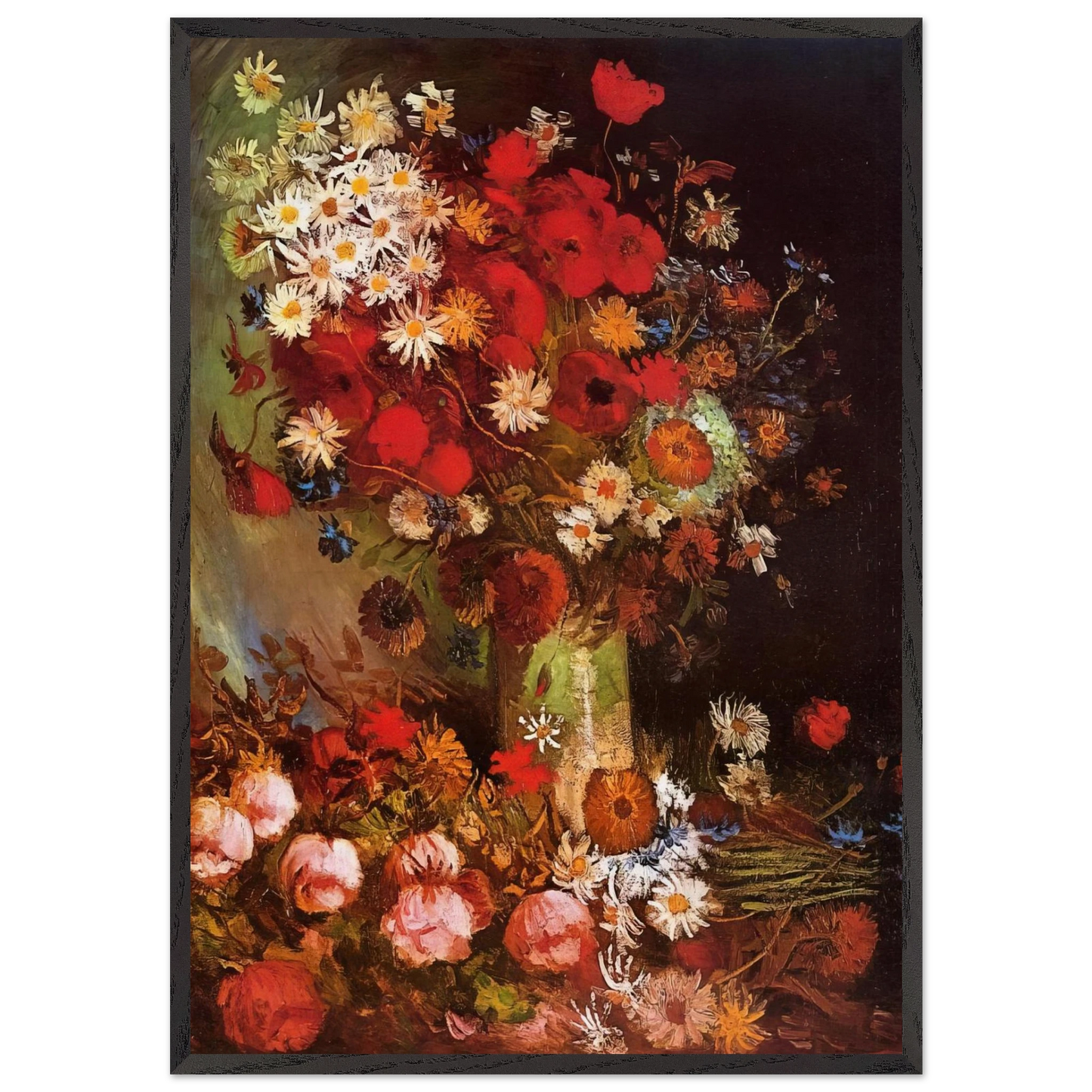
This 1886 painting marks van Gogh's shift toward brighter palettes and expressive brushstrokes, foreshadowing his iconic Post-Impressionist style and highlighting his emotional connection to nature.