

Discover Unlimited Art Possibilities
At RedKalion, you can find virtually any artwork from any artist, available in a wide range of sizes to perfectly match your space.
If you didn’t find what you’re looking for, contact us at support@redkalion.com . We will source any artwork and produce it in any size and format you need, including art prints, posters, canvas, framed pieces, framed canvas, and more.
For dedicated art enthusiasts, we also offer handcrafted replicas of any artwork, carefully painted by highly skilled artists using traditional techniques.
For custom requests, contact us at support@redkalion.com .
What is the historical significance of Yukon Sonata by Gene Davis?
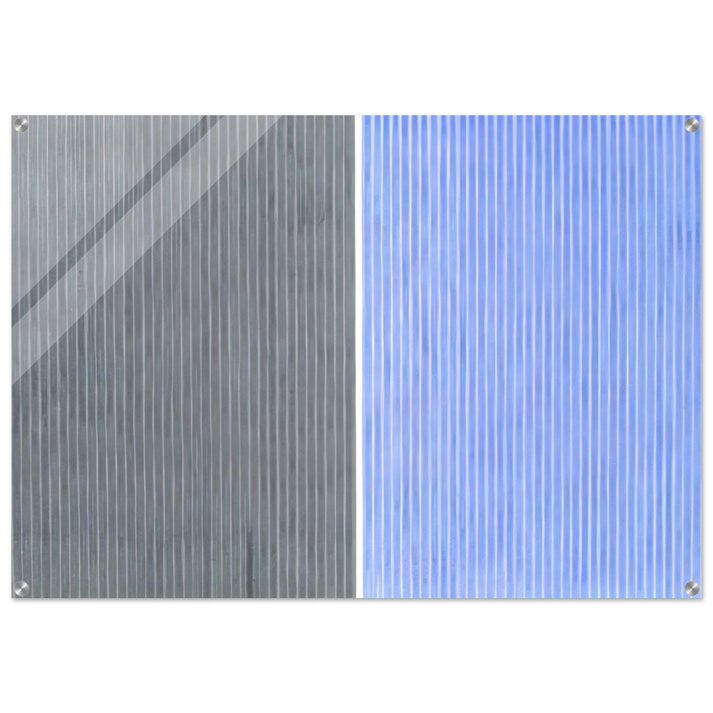
Yukon Sonata (1981) is a key work by Gene Davis, a pioneer of the Color Field movement and Washington Color School, known for using vertical acrylic stripes to explore color perception and emotional resonance in modern art.
How does the acrylic material enhance this Gene Davis print?
The 4mm (0.15") acrylic provides a sleek, vibrant finish that mimics the luminosity of Davis's original acrylic paintings, ensuring durability and color fidelity for this museum-quality reproduction.
What are the dimensions and hanging details for this artwork?
This fine art print measures 70x100 cm / 28x40" inches, with straight-cut corners and pre-drilled holes (14mm from edge, 8mm diameter) including a hanging kit for easy installation in your home or office.
Is this print archival and long-lasting?
Yes, RedKalion uses premium materials to create archival-grade reproductions that resist fading, making this Gene Davis wall art a durable investment for lasting enjoyment.
How is shipping handled for this acrylic print?
We ship this artwork securely packaged to ensure it arrives in perfect condition, with tracking provided for reliable delivery of your Gene Davis prints.
Why did Gene Davis use vertical stripes in his art?
Gene Davis employed vertical stripes to create rhythmic, optical effects that challenge viewers' perception, using color as the primary subject to evoke emotion and movement in his Color Field works.
What makes the Color Field movement unique?
The Color Field movement, active in the mid-20th century, emphasized large areas of solid color and abstract forms to evoke mood and spatial depth, with artists like Davis focusing on pure color interaction.