
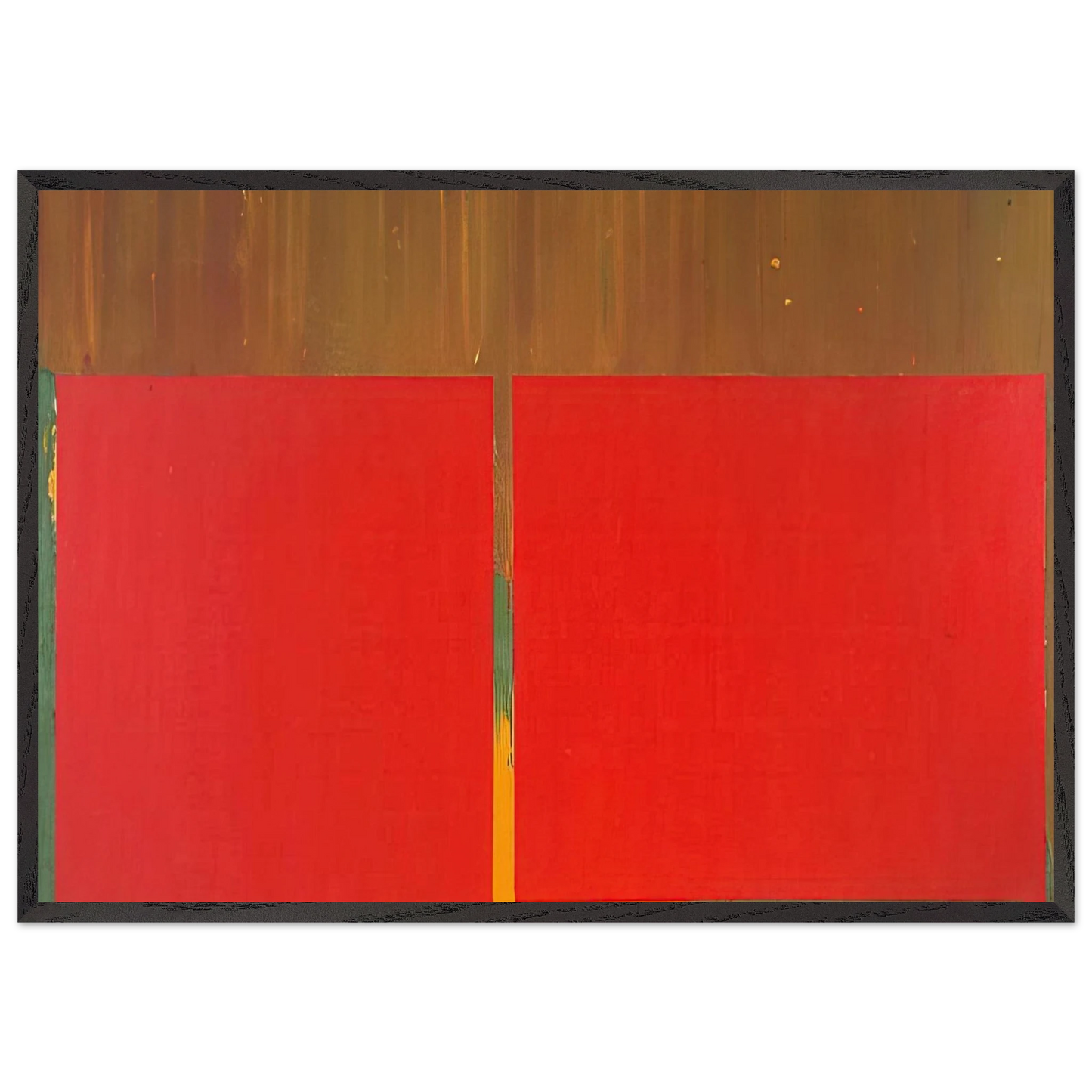
What are the specifications of the paper used for this John Hoyland print?
The print is produced on 250 gsm (110 lb) natural white, matte, archival museum-quality paper. This uncoated, FSC-certified paper has a thickness of 0.29 mm, ensuring high durability and a premium, glare-free aesthetic for fine art reproductions.
How is the frame constructed for the 17.3.69 print?
This print comes in a black wooden frame made from responsibly sourced ash wood. It features a modern 20mm width and thickness, providing a more substantial and premium look than common 14mm frames, and includes shatterproof plexiglass for protection.
Is the artwork ready to hang upon arrival?
Yes. Your framed John Hoyland print arrives fully assembled and includes a professional hanging kit. It is ready to be mounted on your wall immediately upon unboxing, ensuring a seamless experience from delivery to display.
How does RedKalion ensure the longevity of this abstract reproduction?
We use archival-grade, acid-free paper and UV-resistant plexiglass to prevent yellowing and fading. Our materials meet museum standards, ensuring that the vibrant colors and structural integrity of the artwork remain preserved for decades.
What is the shipping and protection process for framed prints?
Every framed print is packaged with reinforced corners and protective wrapping, then shipped in a heavy-duty cardboard box. This rigorous process minimizes the risk of damage during transit, ensuring your masterpiece arrives in pristine condition.
What does the title 17.3.69 signify in John Hoyland’s body of work?
John Hoyland frequently titled his paintings after the date of their completion. '17.3.69' indicates the work was finished on March 17, 1969, reflecting his diary-like approach to tracking his stylistic evolution through color and spatial experimentation.
How did John Hoyland influence British Abstract Expressionism?
Hoyland was a titan of British abstraction, bridging the gap between European tradition and American Color Field painting. His 1960s works, like 17.3.69, redefined British art by emphasizing massive scale, emotional resonance through color, and a rejection of representational form.