

RedKalion
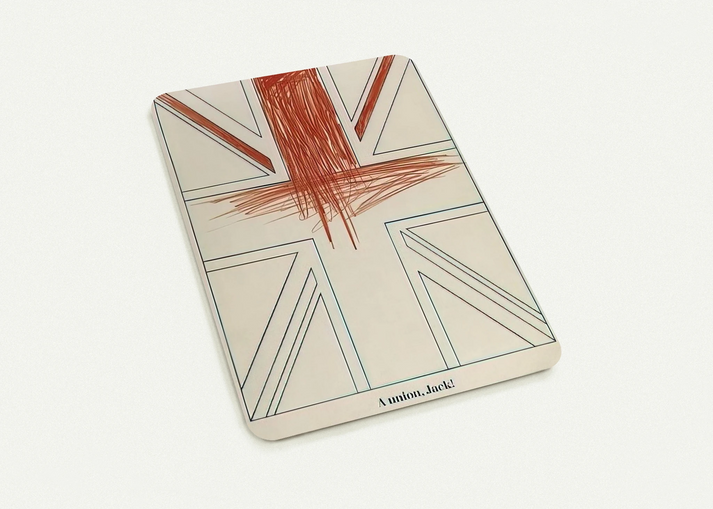
A union, Jack! Young Commonwealth Artists - 1962 By Billy Apple Pack of 10 Post Cards | Billy Apple Post Cards | A6 (10.5 x 14.8 cm) - 4.1 x 5.8 inches
A union, Jack! Young Commonwealth Artists - 1962 By Billy Apple Pack of 10 Post Cards | Billy Apple Post Cards | A6 (10.5 x 14.8 cm) - 4.1 x 5.8 inches
Не може да се зареди възможността за взимане
Elevate Your Correspondence with Billy Apple’s Conceptual Legacy
Step into the vibrant world of British Pop Art with this exclusive pack of 10 postcards featuring Billy Apple’s iconic "A union, Jack! Young Commonwealth Artists - 1962." This piece is more than just a graphic statement; it marks a pivotal moment in art history. In 1962, the artist Barrie Bates transformed into the conceptual identity 'Billy Apple,' and this work reflects the bold, self-branding aesthetic that would define his legendary career.
Each postcard is a museum-quality reproduction, captured using our advanced 12-color fine art printing technology. Unlike standard 4-color printing, this process ensures the depth, vibrancy, and precision of the original 1960s palette are preserved with absolute fidelity. The smooth matte finish eliminates glare, allowing the sophisticated typography and design to take center stage.
RedKalion is committed to archival excellence. These cards are printed on 200 gsm (80 lb) FSC-certified paper, offering a substantial, premium feel that honors the tactile nature of fine art. Whether you are sending a note to a fellow collector or framing them as a curated set, these postcards serve as a testament to mid-century conceptual innovation.
- Artist: Billy Apple (1962)
- Material: 200 gsm / 80 lb archival-grade paper (0.26 mm thickness)
- Finish: Non-reflective smooth matte
- Eco-Conscious: FSC-certified materials, printed on demand to reduce waste
- Technology: 12-color giclée printing for superior color accuracy


Discover Unlimited Art Possibilities
At RedKalion, you can find virtually any artwork from any artist, available in a wide range of sizes to perfectly match your space.
If you didn’t find what you’re looking for, contact us at support@redkalion.com . We will source any artwork and produce it in any size and format you need, including art prints, posters, canvas, framed pieces, framed canvas, and more.
For dedicated art enthusiasts, we also offer handcrafted replicas of any artwork, carefully painted by highly skilled artists using traditional techniques.
For custom requests, contact us at support@redkalion.com .
What makes the print quality of these Billy Apple postcards superior?
We utilize 12-color fine art printing technology, which provides a significantly wider color gamut and smoother gradients than standard 4-color inkjet printers, ensuring museum-quality accuracy.
What are the specific dimensions and paper weight?
These are A6 postcards (10.5 x 14.8 cm / 4.1 x 5.8 inches) printed on premium 200 gsm (80 lb) paper with a thickness of 0.26 mm (10.3 mils).
Is the paper used for these postcards environmentally friendly?
Yes, RedKalion uses FSC-certified paper, ensuring that the materials are sourced from responsibly managed forests that provide environmental, social, and economic benefits.
How are the postcards shipped and produced?
Every set is printed on demand to ensure the highest quality control and minimize environmental impact. There are no minimum orders, and they are shipped in protective packaging.
Will the colors fade over time?
No. By using archival-grade 12-color inks and premium matte paper, these prints are designed to resist fading and maintain their vibrancy for decades when kept out of direct sunlight.
What is the significance of the year 1962 for Billy Apple?
1962 was the year the artist Barrie Bates rebranded himself as Billy Apple, a landmark move in conceptual art that treated the artist's identity as a commercial brand.
What was the 'Young Commonwealth Artists' exhibition?
It was a significant London exhibition in 1962 where Apple showcased his work, bridging the gap between traditional painting and the emerging Pop Art and conceptual movements.