RedKalion
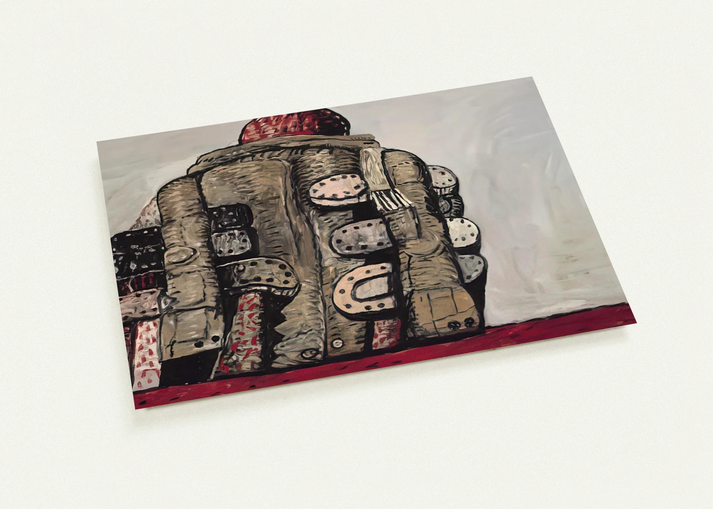
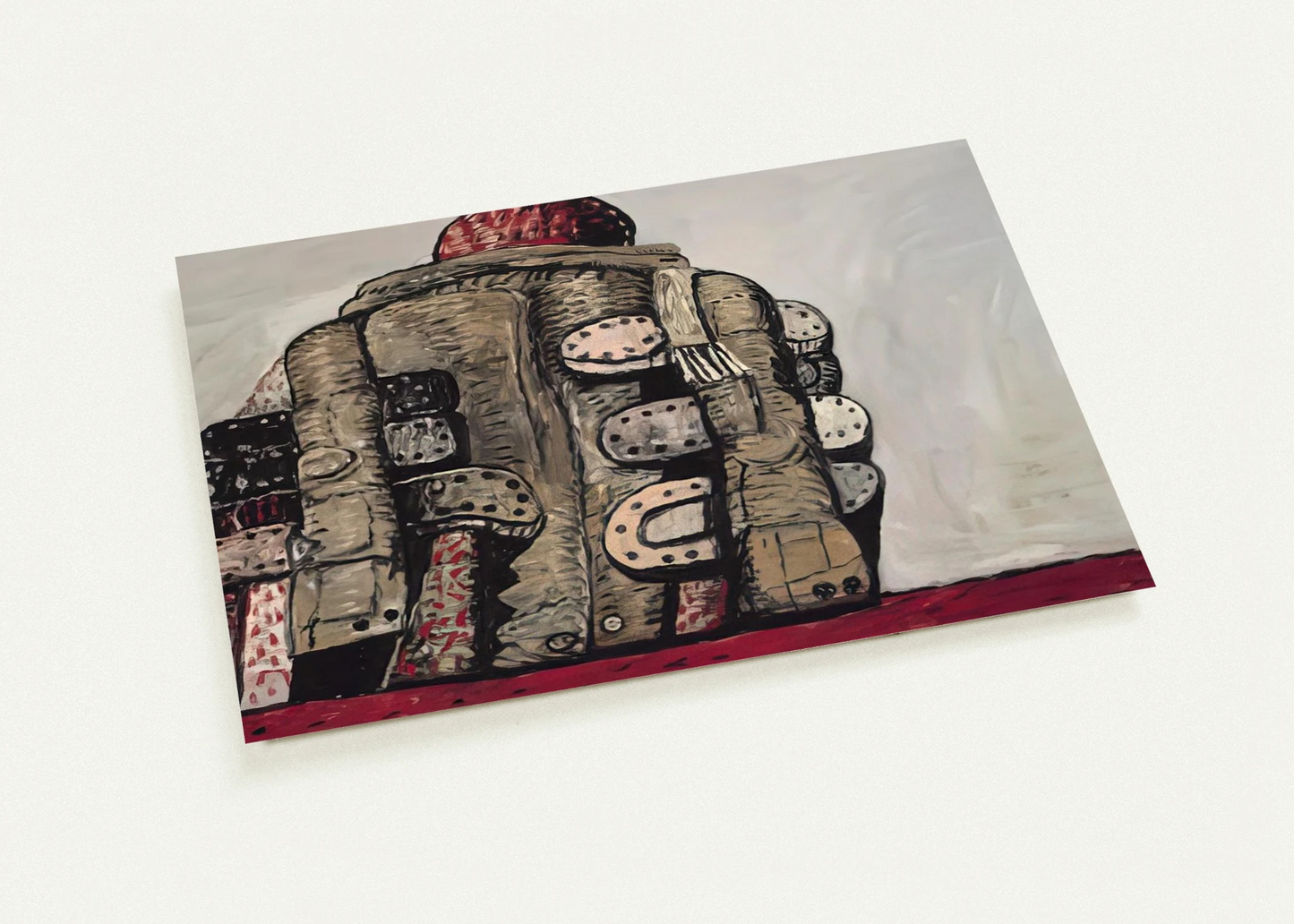
BACK VIEW By Philip Guston Pack of 10 Post Cards | Philip Guston Post Cards | A6 (10.5 x 14.8 cm) - 4.1 x 5.8 inches
BACK VIEW By Philip Guston Pack of 10 Post Cards | Philip Guston Post Cards | A6 (10.5 x 14.8 cm) - 4.1 x 5.8 inches
Не може да се зареди възможността за взимане
Elevate Your Correspondence with Philip Guston's 'BACK VIEW'
Immerse yourself in the provocative and introspective world of Philip Guston with this exclusive pack of 10 museum-quality postcards. Featuring the seminal work BACK VIEW, these cards capture a pivotal moment in art history. Guston, a master who famously transitioned from Abstract Expressionism to a raw, cartoon-inspired figuration, uses the 'back view' motif to explore themes of solitude, existential weight, and the enigma of the human form. Each card serves as a miniature canvas, reflecting the clunky, deliberate brushwork and muted palette that defined Guston's late period.
At RedKalion, we believe fine art should be accessible without compromising on technical excellence. These postcards are not merely stationery; they are high-fidelity reproductions. Utilizing 12-color fine art printing technology, we achieve a depth of color and precision that far exceeds standard commercial printing. The result is a vibrant, accurate representation of Guston's original vision, allowing you to share a piece of neo-expressionist mastery with every message.
Product Specifications & Artistry
- Exquisite Detail: Printed with a 12-color process for stunning chromatic depth and accuracy.
- Premium Paper: 200 gsm (80 lb) weight with a thickness of 0.26 mm (10.3 mils) for a substantial, professional feel.
- Matte Finish: A smooth, glare-free matte coating ensures the focus remains on the artwork's texture.
- Eco-Conscious: Produced on FSC-certified paper, aligning archival quality with environmental responsibility.
- Size: A6 format (10.5 x 14.8 cm / 4.1 x 5.8 inches), perfect for framing or mailing.
Whether used for sophisticated correspondence or displayed as a curated set of mini-prints, these Philip Guston postcards offer an enduring connection to one of the 20th century's most influential artists. Experience the archival quality and curated excellence that defines the RedKalion collection.
Discover Unlimited Art Possibilities
At RedKalion, you can find virtually any artwork from any artist, available in a wide range of sizes to perfectly match your space.
If you didn’t find what you’re looking for, contact us at support@redkalion.com . We will source any artwork and produce it in any size and format you need, including art prints, posters, canvas, framed pieces, framed canvas, and more.
For dedicated art enthusiasts, we also offer handcrafted replicas of any artwork, carefully painted by highly skilled artists using traditional techniques.
For custom requests, contact us at support@redkalion.com .
What printing technology is used for these Philip Guston postcards?
We use advanced 12-color fine art printing technology. This provides superior color vibrancy and accuracy compared to standard 4-color printers, ensuring every nuance of Guston's palette is captured.
What is the weight and feel of the postcard paper?
Each card is printed on 200 gsm (80 lb) paper with a thickness of 0.26 mm. It features a smooth matte finish, providing a premium, glare-free, and substantial feel in the hand.
Are these postcards environmentally friendly?
Yes. RedKalion is committed to sustainability; all our postcards are printed on FSC-certified paper, ensuring the materials are sourced from responsibly managed forests.
How are these postcards produced and shipped?
Our postcards are printed on demand to reduce waste. Once an order is placed, they are meticulously crafted and shipped directly to you, ensuring no minimum order requirements.
Will the colors fade over time?
No. By using archival-grade 12-color inks and high-quality matte paper, these reproductions are designed for longevity, maintaining their vibrancy for years without the typical fading of standard prints.
What does the 'BACK VIEW' represent in Guston's work?
In his late figurative period, Guston often depicted figures from behind to evoke a sense of mystery, isolation, and the 'burden' of the past, challenging the viewer to look beyond the surface.
Is this work considered Abstract Expressionism or Neo-Expressionism?
While Guston began as an Abstract Expressionist, 'BACK VIEW' belongs to his late figurative style, which helped pioneer Neo-Expressionism by reintroducing narrative and recognizable, albeit distorted, subjects.