
Discover Unlimited Art Possibilities
At RedKalion, you can find virtually any artwork from any artist, available in a wide range of sizes to perfectly match your space.
If you didn’t find what you’re looking for, contact us at support@redkalion.com . We will source any artwork and produce it in any size and format you need, including art prints, posters, canvas, framed pieces, framed canvas, and more.
For dedicated art enthusiasts, we also offer handcrafted replicas of any artwork, carefully painted by highly skilled artists using traditional techniques.
For custom requests, contact us at support@redkalion.com .
What is the paper quality of this Frankenthaler print?
This reproduction is printed on 250 gsm (110 lb) natural white, museum-quality paper. Its archival properties and uncoated matte finish ensure long-lasting color vibrancy and a sophisticated, glare-free appearance for high-end interiors.
What are the specifications of the black wooden frame?
The print is housed in a 20mm (0.79") thick and wide frame made from responsibly sourced oak and ash. It features a sleek black finish and is significantly sturdier than standard 14mm frames.
How is the artwork protected during shipping and display?
We use shatterproof plexiglass to protect the print surface. This material offers superior clarity while ensuring the piece remains lightweight and safe during transit and daily display in your home or gallery.
Is this product environmentally friendly?
Yes, RedKalion uses FSC-certified materials or equivalent sustainable paper and wood. This ensures that your museum-quality reproduction is produced following the highest environmental and social standards in the industry.
Does the framed print come ready to hang?
Every framed art print includes a professional hanging kit. The piece arrives fully assembled and ready to hang directly on your wall, allowing you to elevate your space immediately upon delivery.
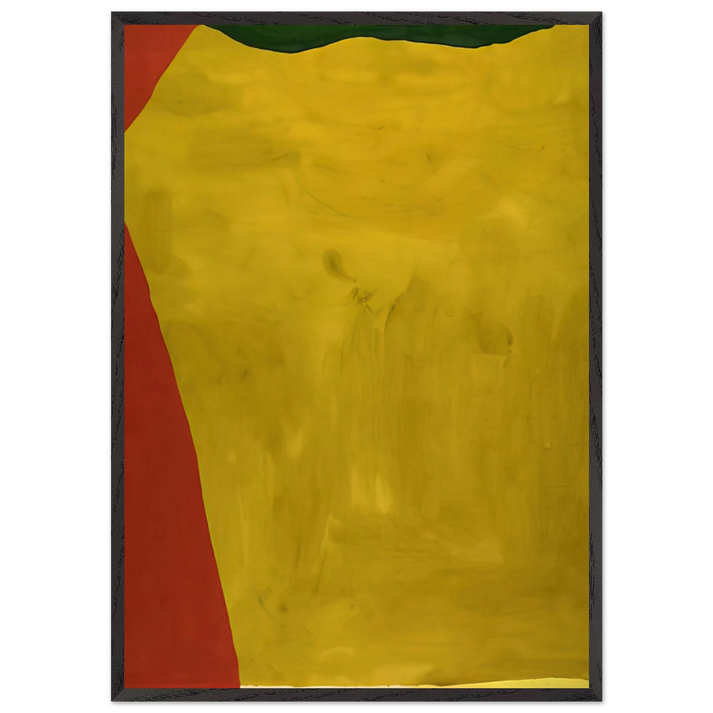
What inspired the title 'Blessing of the Fleet' in 1969?
Frankenthaler often used titles to evoke an atmospheric mood rather than a literal depiction. This piece references the tradition of clergy blessing maritime vessels, translated here through abstract, oceanic color fields and organic movement.
What technique did Helen Frankenthaler use for this piece?
By 1969, Frankenthaler had refined her 'soak-stain' method using acrylics. This technique allowed her to create bold, saturated washes of color that merged with the paper fibers, creating the luminous, weightless effect seen in this work.