
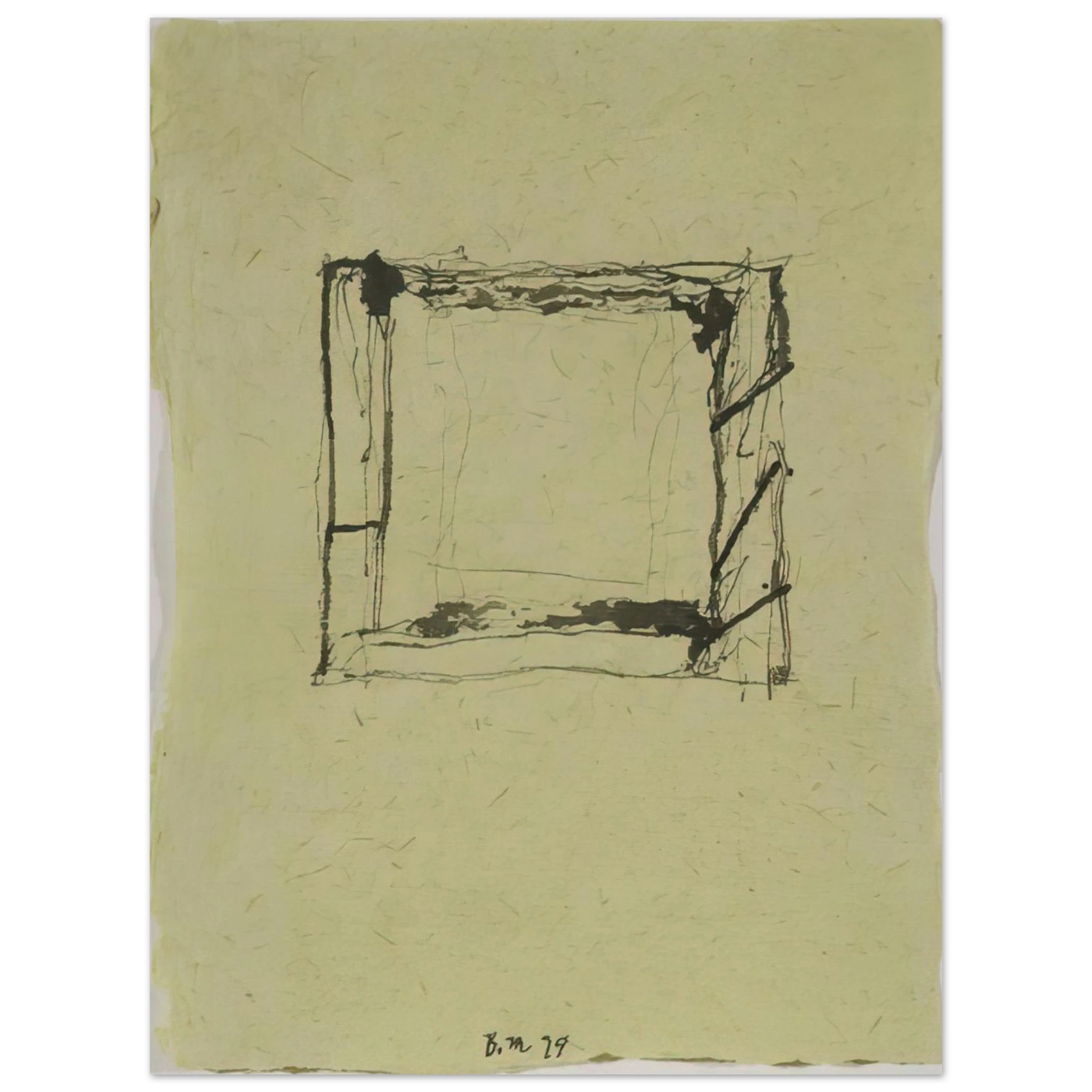
What is the significance of the Mirabelle Addenda 2 series?
Part of a personal and technical exploration by Brice Marden in 1979, this series—named after his daughter—showcases his transition from rigid Minimalism to a more organic, calligraphic approach, blending architectural structure with fluid, expressive lines.
What characterizes the print quality of this RedKalion edition?
We use Master's Edition archival paper (250 gsm/110 lb) with a matte, uncoated finish. This museum-quality material ensures high-contrast detail and a luxurious, non-reflective surface perfect for fine art photography and abstract prints.
Is the paper used for this Brice Marden poster sustainable?
Yes, RedKalion prioritizes ecological responsibility. This fine art print is produced on FSC-certified paper, ensuring that the materials are sourced from responsibly managed forests that provide environmental, social, and economic benefits.
How does the matte finish affect the viewing experience?
The matte, natural white finish eliminates glare from indoor lighting, allowing the viewer to appreciate the subtle tonal shifts and calligraphic details of Marden’s work from any angle in a room.
How are shipping and fulfillment handled for this print?
Each print is produced on-demand to reduce waste, with no minimum order requirements. It is carefully packaged in protective materials to ensure your museum-quality reproduction arrives in pristine condition.
What artistic movement does Brice Marden represent in this 1979 work?
Marden is a central figure in Minimalism and Post-Minimalism. In 1979, his work bridge the gap between pure geometric abstraction and a more gestural, organic style influenced by the landscape and classical art.
Why is acid-free paper important for an abstract print like this?
Acid-free paper (pH above 7) prevents the paper from yellowing or becoming brittle over time. This is essential for maintaining the integrity of Marden's specific color palette and the archival value of the reproduction.