RedKalion
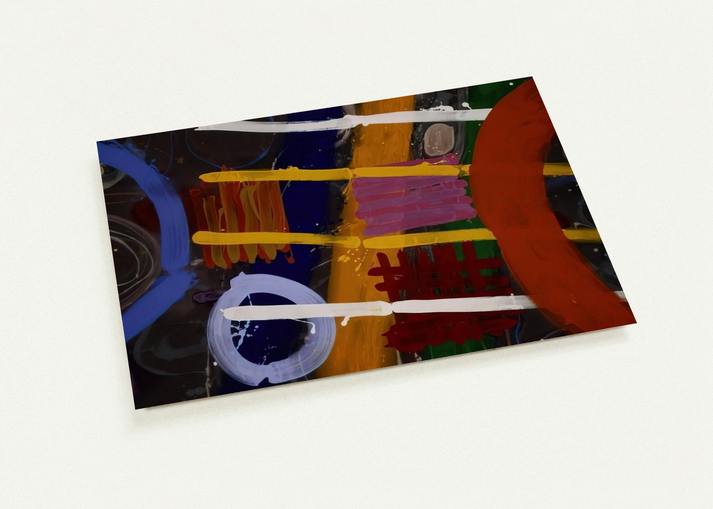
Buchanan - 1987 By Albert Irvin Pack of 10 Post Cards | Albert Irvin Post Cards | A6 (10.5 x 14.8 cm) - 4.1 x 5.8 inches
Buchanan - 1987 By Albert Irvin Pack of 10 Post Cards | Albert Irvin Post Cards | A6 (10.5 x 14.8 cm) - 4.1 x 5.8 inches
Не може да се зареди възможността за взимане
The Chromatic Vitality of Albert Irvin: Buchanan (1987)
Immerse your correspondence in the rhythmic brilliance of British abstraction with this exquisite pack of 10 postcards featuring Albert Irvin’s Buchanan (1987). A master of gestural energy, Irvin was renowned for his ability to translate the pulse of urban life into expansive, luminous compositions. Buchanan represents the zenith of his mature style, where layers of vibrant acrylic are orchestrated with a sense of architectural structure and pure, unadulterated joy.
At RedKalion, we believe that fine art should be felt as much as seen. These museum-quality reproductions are crafted using 12-color fine art printing technology. Unlike standard 4-color commercial prints, our process captures the nuanced depth and explosive color vibrancy of Irvin’s original palette, ensuring that every sweeping brushstroke and translucent glaze is rendered with absolute fidelity.
Archival Quality for the Discerning Collector
Each postcard serves as a miniature masterpiece, printed on premium 200 gsm (80 lb) FSC-certified paper. With a thickness of 0.26 mm, these cards offer a substantial, tactile feel that commands respect. The smooth matte finish eliminates glare, allowing the complex intersections of color to remain the focal point, whether you are sending a thoughtful note or displaying them as a curated set in your home or office.
- Artist: Albert Irvin (1922–2015)
- Title: Buchanan (1987)
- Material: 200 gsm archival-grade matte paper (0.26 mm thickness)
- Technology: 12-color wide-gamut fine art reproduction
- Sustainability: Environmentally conscious, FSC-certified materials
Elevate your everyday exchanges with an archival piece that endures. RedKalion is dedicated to preserving the integrity of world-class art, providing you with a sophisticated medium to share the legacy of one of the 20th century’s most celebrated abstract painters.

Discover Unlimited Art Possibilities
At RedKalion, you can find virtually any artwork from any artist, available in a wide range of sizes to perfectly match your space.
If you didn’t find what you’re looking for, contact us at support@redkalion.com . We will source any artwork and produce it in any size and format you need, including art prints, posters, canvas, framed pieces, framed canvas, and more.
For dedicated art enthusiasts, we also offer handcrafted replicas of any artwork, carefully painted by highly skilled artists using traditional techniques.
For custom requests, contact us at support@redkalion.com .
What makes the 12-color printing process superior for Albert Irvin’s work?
Our 12-color technology uses a wider spectrum of inks than standard printers. This captures the intense saturation and subtle tonal shifts in Irvin’s Buchanan (1987), ensuring the reproduction remains faithful to the artist's original vision with stunning depth.
What is the physical quality and weight of the postcards?
Each card is printed on 200 gsm (80 lb) FSC-certified paper with a thickness of 0.26 mm. This provides a premium, sturdy feel and a smooth matte finish that is glare-free and resistant to fingerprints.
Are these postcards suitable for framing as miniature art prints?
Yes. Due to the museum-quality 12-color printing and archival-grade paper, these A6 cards function beautifully as small-scale fine art prints for home or office decor, fitting standard A6 frames perfectly.
How does RedKalion handle shipping and production?
We operate on a print-on-demand basis with no minimum orders, reducing waste. Your Albert Irvin postcards are meticulously printed and packaged to ensure they arrive in pristine, gallery-ready condition.
Is the paper used for these postcards environmentally friendly?
Absolutely. We prioritize sustainability by using FSC-certified paper, ensuring that your appreciation for fine art supports responsible forest management and environmentally conscious production standards.
What is the historical significance of the title "Buchanan"?
Albert Irvin frequently titled his works after streets or locations in London. "Buchanan" likely refers to Buchanan Road, reflecting Irvin's practice of anchoring his abstract, energetic compositions in the geography of the urban environment he inhabited.
How does Buchanan (1987) reflect Irvin's artistic era?
By 1987, Irvin had fully embraced a celebratory, large-scale abstraction. This piece showcases his signature use of overlapping lattices and high-key colors, moving away from his earlier landscape-influenced works toward pure, rhythmic spatial expression.