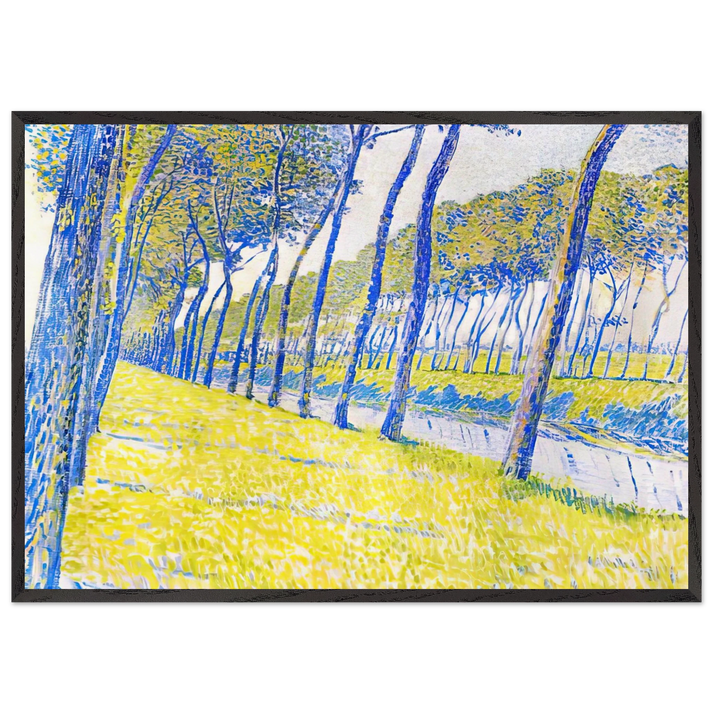

Discover Unlimited Art Possibilities
At RedKalion, you can find virtually any artwork from any artist, available in a wide range of sizes to perfectly match your space.
If you didn’t find what you’re looking for, contact us at support@redkalion.com . We will source any artwork and produce it in any size and format you need, including art prints, posters, canvas, framed pieces, framed canvas, and more.
For dedicated art enthusiasts, we also offer handcrafted replicas of any artwork, carefully painted by highly skilled artists using traditional techniques.
For custom requests, contact us at support@redkalion.com .
What are the exact dimensions and frame specifications for this print?
The print measures 70x100 cm (28x40 inches). It features a premium black frame made from solid oak or ash, measuring 20mm in both thickness and width for a bold, museum-quality aesthetic.
What is the quality and weight of the paper used?
We use 250 gsm (110 lb) museum-quality, natural white paper. It is archival, matte, and uncoated, ensuring the colors of the Canal in Flanders remain vibrant for decades without yellowing.
How is the artwork protected during shipping and display?
The print is protected by shatterproof, transparent plexiglass. Each framed piece is securely packaged to ensure it arrives in perfect condition, ready to be displayed immediately upon arrival.
Is the hanging hardware included with the framed print?
Yes, every framed art print from RedKalion includes a professional-grade hanging kit. The piece arrives ready-to-hang, requiring no additional assembly or specialized tools for installation.
Are the materials used in this art print sustainable?
Absolutely. We use FSC-certified paper and responsibly sourced wood for our frames, ensuring that your acquisition of fine art supports sustainable forestry practices and environmental health.
What makes van Rysselberghe’s technique in 1894 unique?
By 1894, van Rysselberghe moved away from strict Pointillism toward a more fluid Divisionism. This allowed for more expressive movement and atmospheric depth, particularly visible in the reflective surfaces of his canal scenes.
Why is Canal in Flanders considered a masterpiece of Neo-Impressionism?
It perfectly balances the scientific precision of color theory with the emotional resonance of the landscape. It captures the specific, cool light of the Flanders region through complex optical mixing of pigments.