
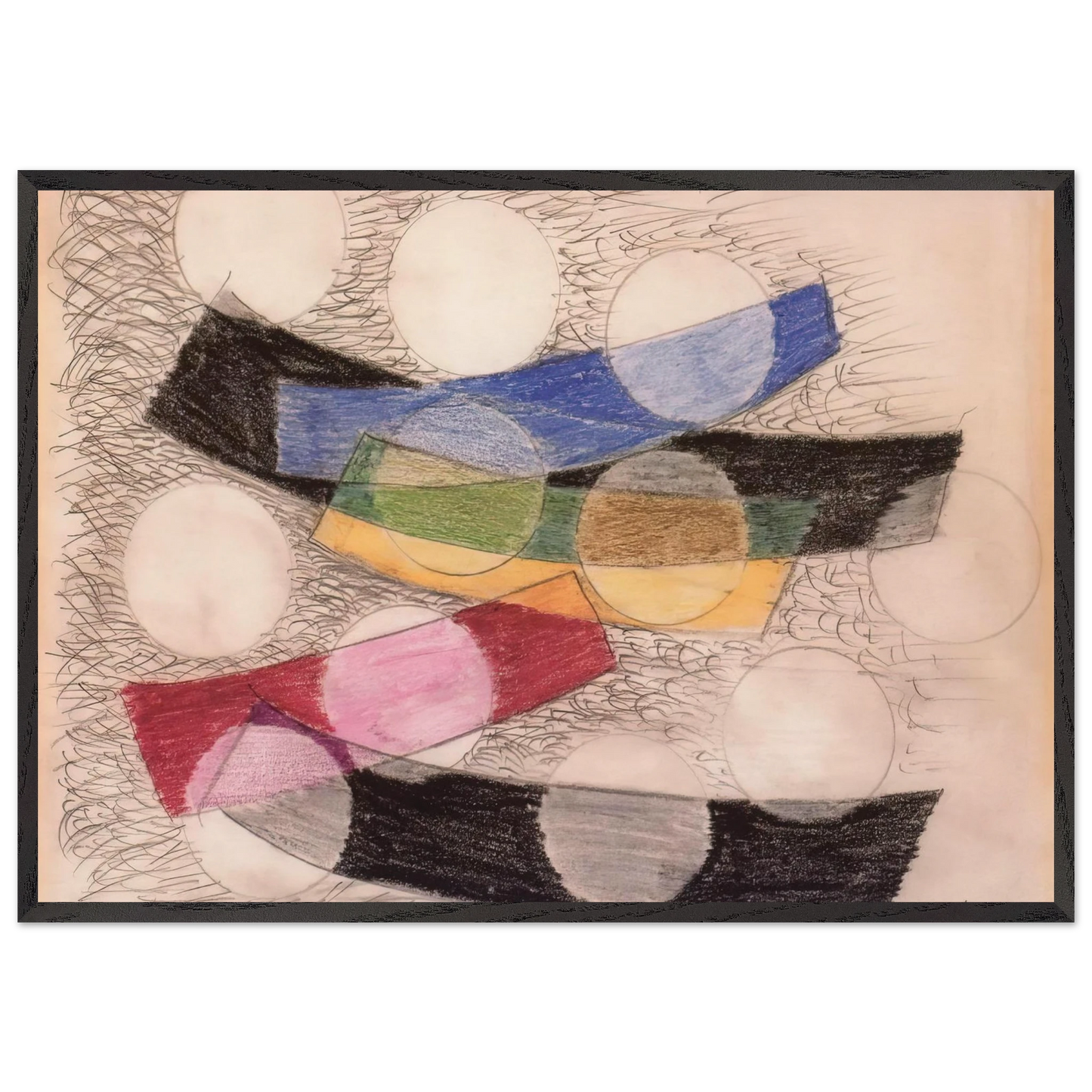
What is the historical significance of Floating Forms by László Moholy-Nagy?
Floating Forms is a key Bauhaus artwork from the 1920s, showcasing Moholy-Nagy's innovative use of abstraction and light to explore spatial relationships, reflecting his influence on modern art and design movements.
What are the exact dimensions and frame details of this framed art print?
This print measures 70x100 cm (28x40 inches) and features a black wooden frame made from responsibly sourced oak and ash, with a 20mm (0.79") thick and wide profile for a bold, modern look.
What type of paper is used for this museum-quality reproduction?
We use 250 gsm (110 lb) matte, uncoated archival paper with a natural white finish and 0.29 mm (11.4 mils) thickness, ensuring premium durability and color accuracy for fine art displays.
Is this framed print ready to hang, and what protection does it include?
Yes, it comes with a ready-to-hang kit for direct wall mounting and shatterproof plexiglass to protect the print from damage, making installation easy and secure.
How sustainable are the materials in this framed art print?
All materials are eco-friendly, including FSC-certified or equivalent sustainable paper and responsibly sourced wood for the frame, aligning with RedKalion's commitment to environmental responsibility.
How does Moholy-Nagy's technique influence the visual impact of Floating Forms?
Moholy-Nagy's use of photograms and geometric abstraction creates a sense of floating, dynamic forms, emphasizing light and space to evoke a modernist, ethereal mood in this composition.
What makes this framed print archival and long-lasting?
The combination of 250 gsm archival paper, matte finish, and shatterproof plexiglass ensures resistance to fading and damage, preserving the print's quality for years as a durable fine art investment.