
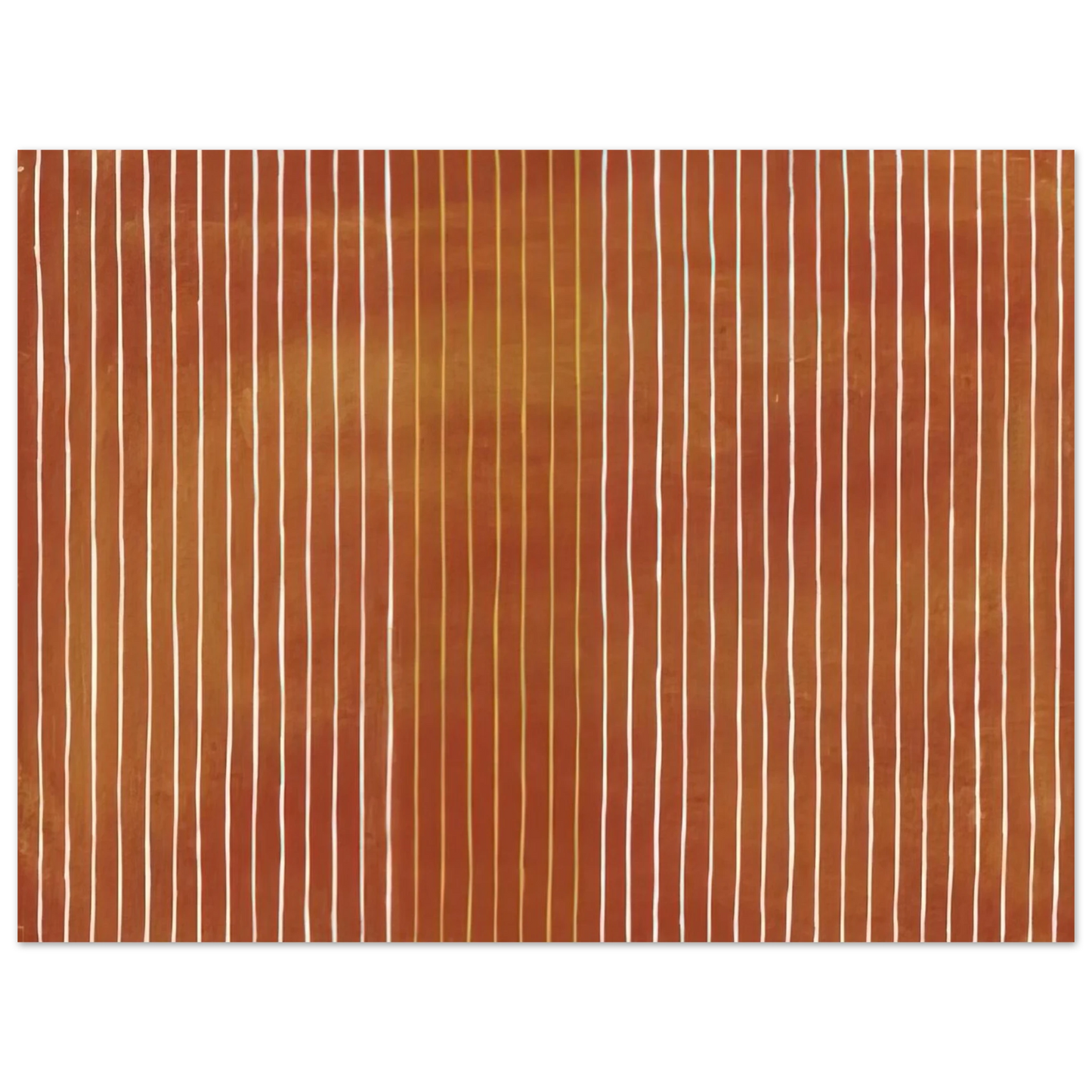
What is the historical significance of Gene Davis's "Pumpkin" (1959)?
"Pumpkin" is a seminal Color Field painting by Gene Davis, showcasing his signature vertical stripes to explore color perception and emotional impact in post-war American art.
How does the color scheme in "Pumpkin" reflect its 1959 context?
The autumnal hues in "Pumpkin" align with mid-century abstract trends, using warm tones to evoke seasonal richness and challenge traditional representational art.
What are the specifications of the fine art print paper?
This museum-quality reproduction uses Master's Edition archival paper: matte, uncoated, natural white, 250 gsm (110 lb), 0.29 mm thick, acid-free for longevity, and FSC-certified.
How is the print shipped and what are the fulfillment options?
Printed and shipped on demand with no minimum orders, ensuring each archival fine art print arrives securely and ready for display.
What makes this print archival and long-lasting?
The acid-free paper (pH above 7) prevents yellowing over time, offering archival quality for durable, museum-grade Color Field art reproductions.
Can this print fit standard framing sizes?
Yes, at 75x100 cm (30x40 inches), it matches common framing dimensions for easy display of Gene Davis's abstract artwork.
Is the paper sustainable and eco-friendly?
Absolutely, the FSC-certified paper ensures responsible sourcing, making this a sustainable choice for premium fine art prints.