
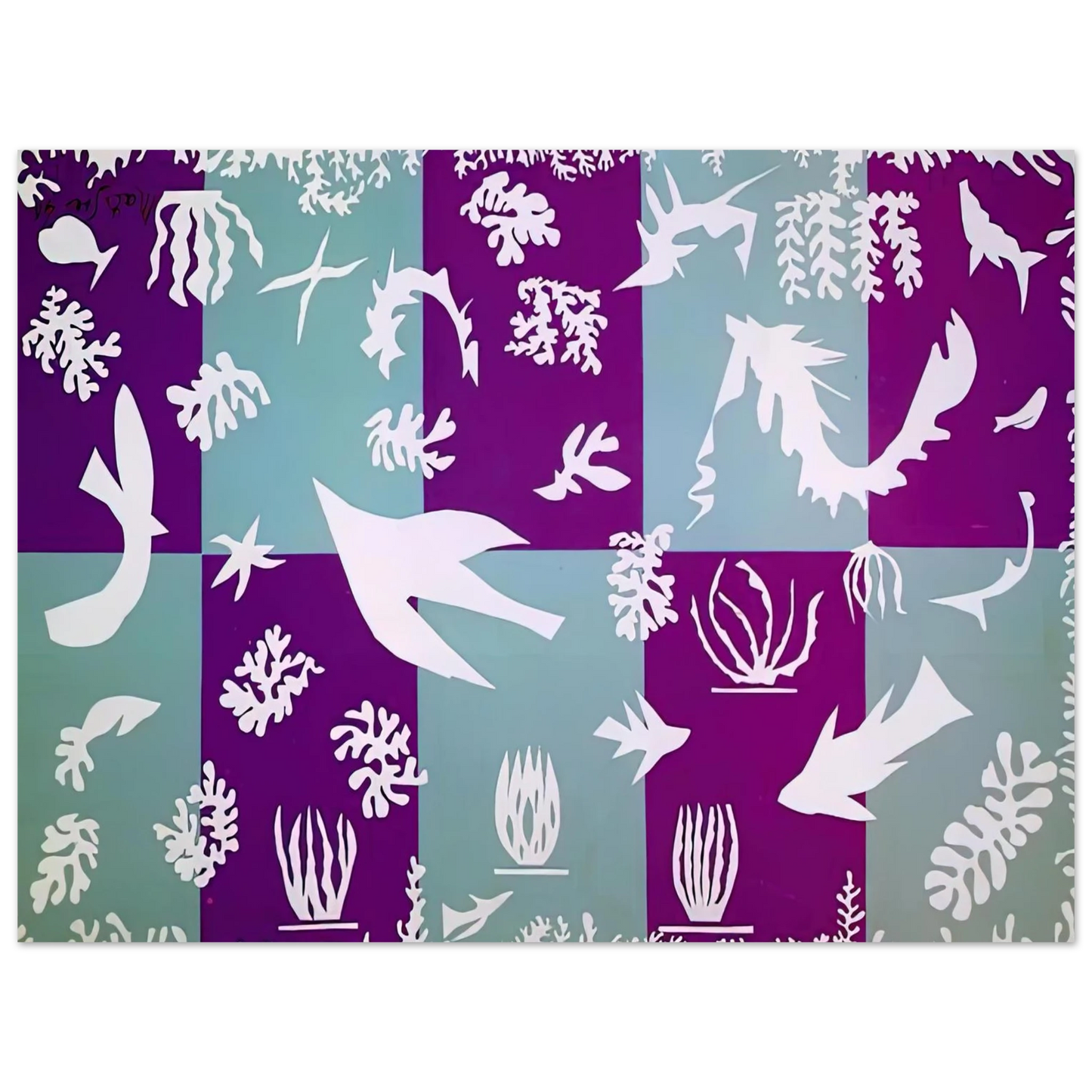
What is the historical significance of Henri Matisse's Polynesia La Mer?
Created in 1946, this work showcases Matisse's innovative cut-out technique during his later years, reflecting his interest in Polynesian culture and marine themes, blending abstraction with organic forms for a serene, vibrant composition.
What details are featured in the Polynesia La Mer artwork?
The artwork depicts flowing ocean waves and stylized marine life using Matisse's signature cut-out shapes, emphasizing color harmony and fluid movement in a 75x100 cm fine art print reproduction.
What type of paper is used for this fine art poster?
It's printed on Master's Edition archival paper, a museum-quality, matte, uncoated, natural white sheet that ensures a luxurious texture and long-lasting color fidelity for your art collection.
How durable and archival is this print?
With acid-free paper (pH above 7), 250 gsm weight, and 0.29 mm thickness, this print resists yellowing and damage, offering archival longevity for decades as a premium reproduction.
What are the shipping and ordering options?
We offer on-demand printing with no minimum orders, shipped directly to you, ensuring a fresh, high-quality Henri Matisse fine art poster delivered promptly and sustainably.
Is the paper environmentally friendly?
Yes, it uses FSC-certified paper, supporting sustainable forestry practices for an eco-conscious choice in your museum-quality art purchase.
How does the cut-out technique influence this piece?
Matisse's cut-out method involved arranging painted paper shapes, creating dynamic, layered compositions that enhance the abstract yet organic feel of Polynesia La Mer's marine imagery.