
Discover Unlimited Art Possibilities
At RedKalion, you can find virtually any artwork from any artist, available in a wide range of sizes to perfectly match your space.
If you didn’t find what you’re looking for, contact us at support@redkalion.com . We will source any artwork and produce it in any size and format you need, including art prints, posters, canvas, framed pieces, framed canvas, and more.
For dedicated art enthusiasts, we also offer handcrafted replicas of any artwork, carefully painted by highly skilled artists using traditional techniques.
For custom requests, contact us at support@redkalion.com .
What are the dimensions and specifications of these MC Escher post cards?
Each post card measures A6 (10.5 x 14.8 cm / 4.1 x 5.8 inches) with 200 gsm (80 lb) weight, 0.26 mm thickness, and smooth matte finish for premium fine art post card quality.
How does the 12-color printing technology enhance these Escher reproductions?
Our 12-color fine art printing delivers superior color vibrancy and depth compared to standard 4-color processes, accurately capturing Escher's intricate nocturnal palette in museum-quality post cards.
Are these post cards printed on sustainable materials?
Yes, all post cards use FSC-certified eco-friendly paper with archival-grade 200 gsm weight, reflecting RedKalion's commitment to environmentally conscious fine art reproductions.
How are these Escher post cards packaged and shipped?
Each pack of 10 post cards arrives in protective packaging, printed on-demand for freshness and shipped securely to preserve their premium quality as collectible art pieces.
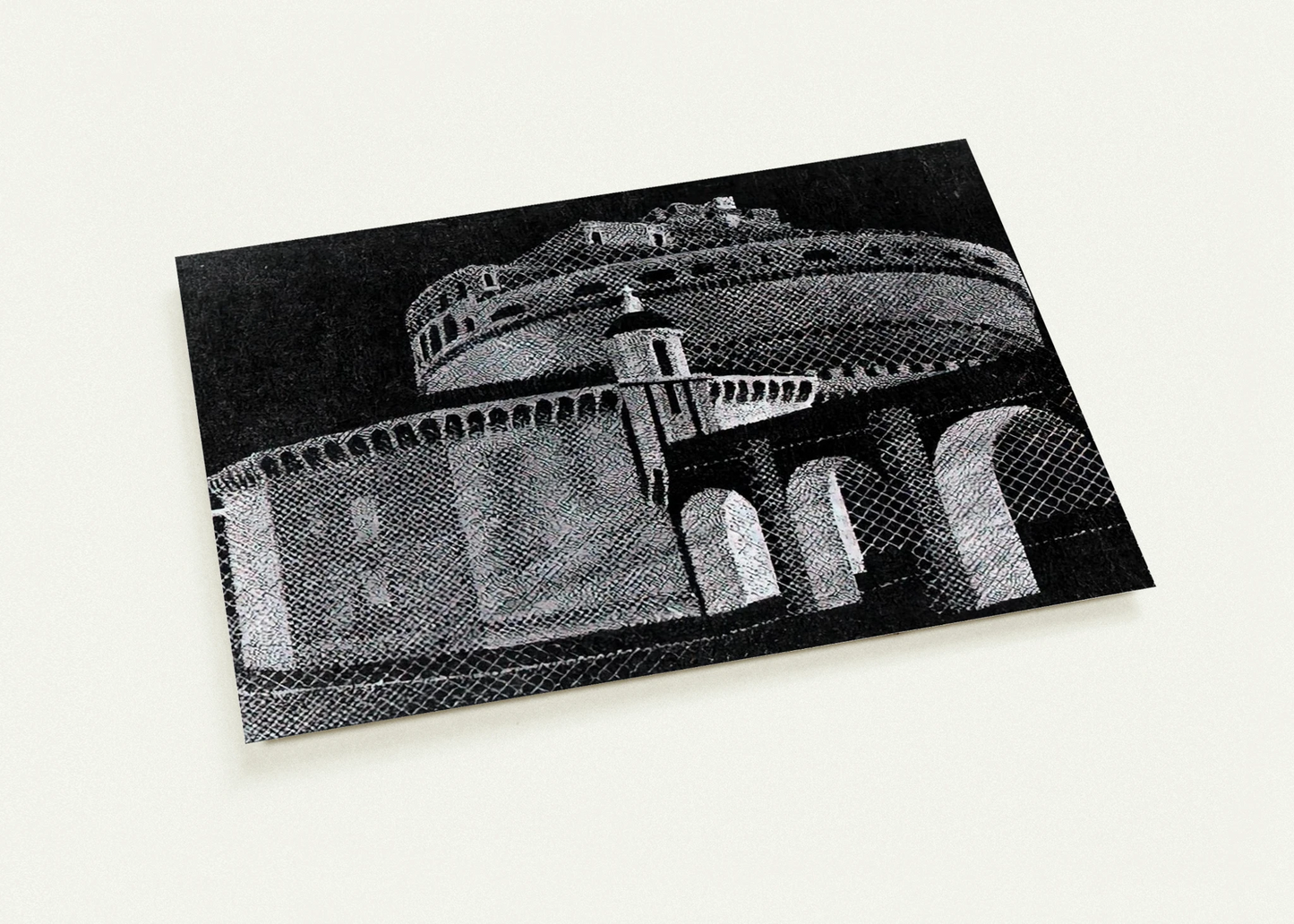
What makes Castel Sant'Angelo significant in Escher's artistic development?
This 1934 woodcut showcases Escher's early mastery of architectural perspective and nocturnal atmosphere during his Italian period, preceding his famous impossible geometry works.
Can these post cards be framed or displayed as art?
Absolutely. With 200 gsm archival paper and museum-quality printing, these post cards function as miniature fine art prints suitable for framing or curated display collections.
Why did Escher choose Castel Sant'Angelo for this nocturnal scene?
Escher was fascinated by Rome's architectural monuments; Castel Sant'Angelo's cylindrical form and historical resonance provided perfect subject matter for his exploration of light and geometric precision.