
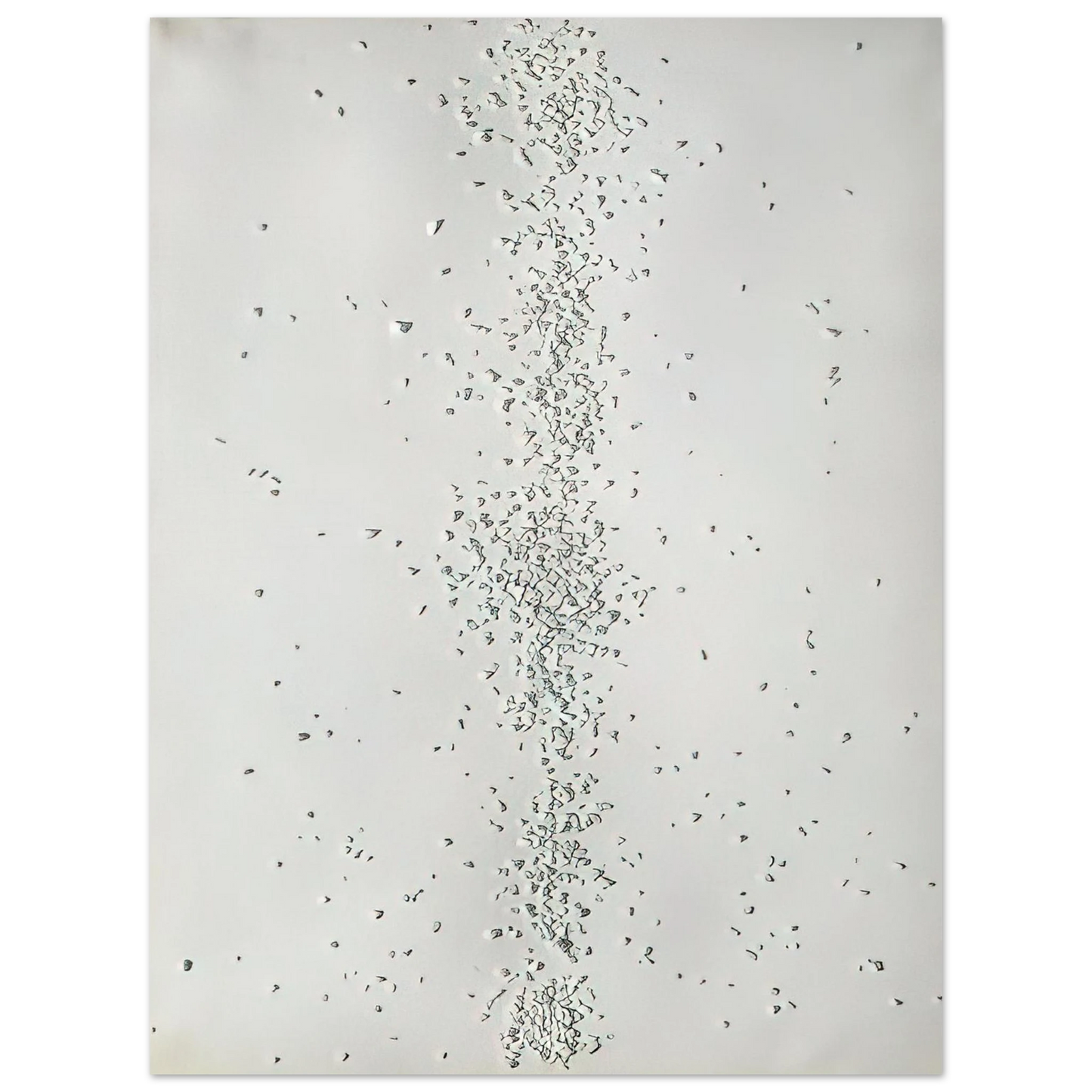
What is the historical significance of Piero Manzoni's "Achrome" (1962)?
"Achrome" is a landmark in conceptual art, challenging traditional painting by using textured materials like kaolin to explore materiality and absence, reflecting Manzoni's avant-garde influence in 1960s Italy.
What materials and techniques did Manzoni use in the original "Achrome"?
Manzoni employed unconventional materials such as kaolin, fiberglass, and canvas to create monochromatic, textured surfaces, emphasizing process over imagery in this fine art masterpiece.
What type of paper is used for this fine art print?
This museum-quality reproduction is printed on Master's Edition archival paper, featuring a matte, uncoated finish in natural white for a luxurious texture and long-lasting durability.
How does the archival paper ensure longevity for this art poster?
The acid-free paper (pH above 7) prevents yellowing over time, making this archival print a lasting investment for your collection of conceptual art reproductions.
What are the weight and thickness specifications of the paper?
The paper weighs 250 gsm (110 lb) with a thickness of 0.29 mm (11.4 mils), providing a substantial, premium feel for this high-quality art print.
Is this print sustainable and eco-friendly?
Yes, it uses FSC-certified paper, ensuring responsible sourcing and aligning with sustainable practices for your fine art purchases.
How is this poster shipped and are there minimum order requirements?
It is printed and shipped on demand with no minimum orders, offering flexible fulfillment for your museum-quality art reproduction needs.