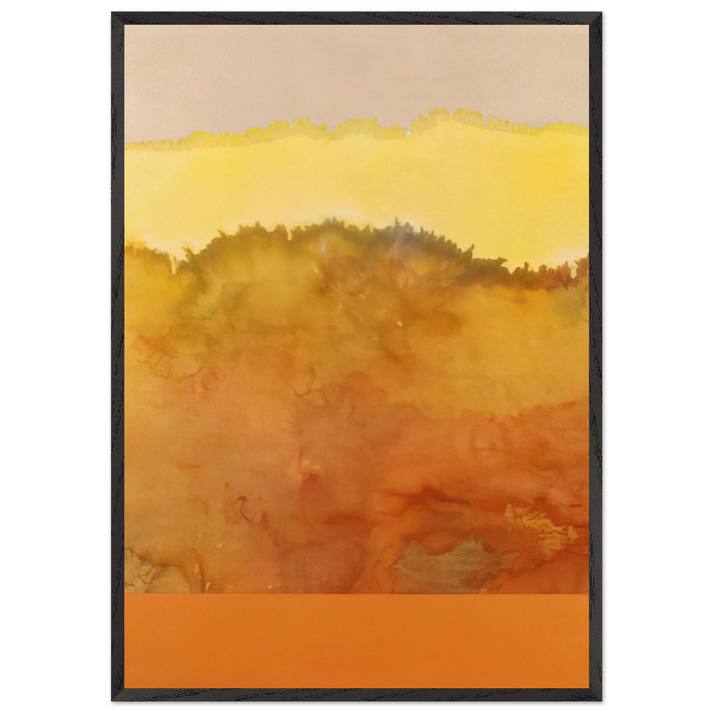

Discover Unlimited Art Possibilities
At RedKalion, you can find virtually any artwork from any artist, available in a wide range of sizes to perfectly match your space.
If you didn’t find what you’re looking for, contact us at support@redkalion.com . We will source any artwork and produce it in any size and format you need, including art prints, posters, canvas, framed pieces, framed canvas, and more.
For dedicated art enthusiasts, we also offer handcrafted replicas of any artwork, carefully painted by highly skilled artists using traditional techniques.
For custom requests, contact us at support@redkalion.com .
What are the dimensions and framing details of this Ronnie Landfield print?
This framed art print measures 70x100 cm (28x40 inches) with a black wooden frame made from responsibly sourced oak and ash, 20mm thick, and includes a hanging kit for easy installation.
What type of paper is used for this museum-quality reproduction?
It uses 250 gsm (110 lb) archival museum-quality paper with a matte, uncoated finish and natural white color, ensuring longevity and vibrant color reproduction for fine art prints.
How is the print protected and is it ready to hang?
Yes, it's ready-to-hang with a hanging kit included, and features shatterproof plexiglass to protect the Ronnie Landfield artwork from damage.
Is the paper sustainable for this archival art print?
Yes, the paper is FSC-certified or equivalent, making this a sustainable choice for high-quality framed art prints.
What is the historical significance of "Sandman and the Angel" by Ronnie Landfield?
Created in 1979, it exemplifies Lyrical Abstraction, blending emotional depth with vibrant colors to reflect post-abstract expressionist trends in modern art.
How does the frame thickness compare to standard frames?
At 20mm (0.79"), it's wider than the classic 14mm (0.55") frame, offering a bold, contemporary look for this fine art reproduction.
Can you describe Ronnie Landfield's technique in this artwork?
Landfield used fluid brushstrokes and luminous color fields to create organic, dreamlike forms, characteristic of his Lyrical Abstraction style from the 1970s.