
What are the technical specifications of the paper used for this Saroyan print?
We use 250 gsm (110 lb) archival museum-quality paper. It is natural white, uncoated, and matte, ensuring a high-end feel and longevity without the glare of glossy alternatives, making it ideal for fine art reproductions.
How is the artwork framed and protected?
The print is mounted in a 20mm thick frame made from FSC-certified black ash and oak. It is protected by shatterproof plexiglass, which provides the clarity of glass with superior durability and safety for your home.
Is this William Saroyan print ready to hang out of the box?
Yes, every framed art print from RedKalion includes a professional-grade hanging kit. Your artwork arrives ready to be displayed on your wall immediately, with no additional hardware required for basic mounting.
What makes the frame on this piece special compared to standard frames?
Our frames are 20mm (0.79") wide and thick, providing a bolder, more premium aesthetic than the standard 14mm frames found elsewhere. This added depth enhances the gallery-like feel of the 70x100 cm Saroyan print.
Does RedKalion use sustainable materials for its fine art prints?
Sustainability is a core value at RedKalion. We use FSC-certified paper and wood or equivalent certifications, ensuring that your museum-quality art print is as environmentally responsible as it is beautiful.
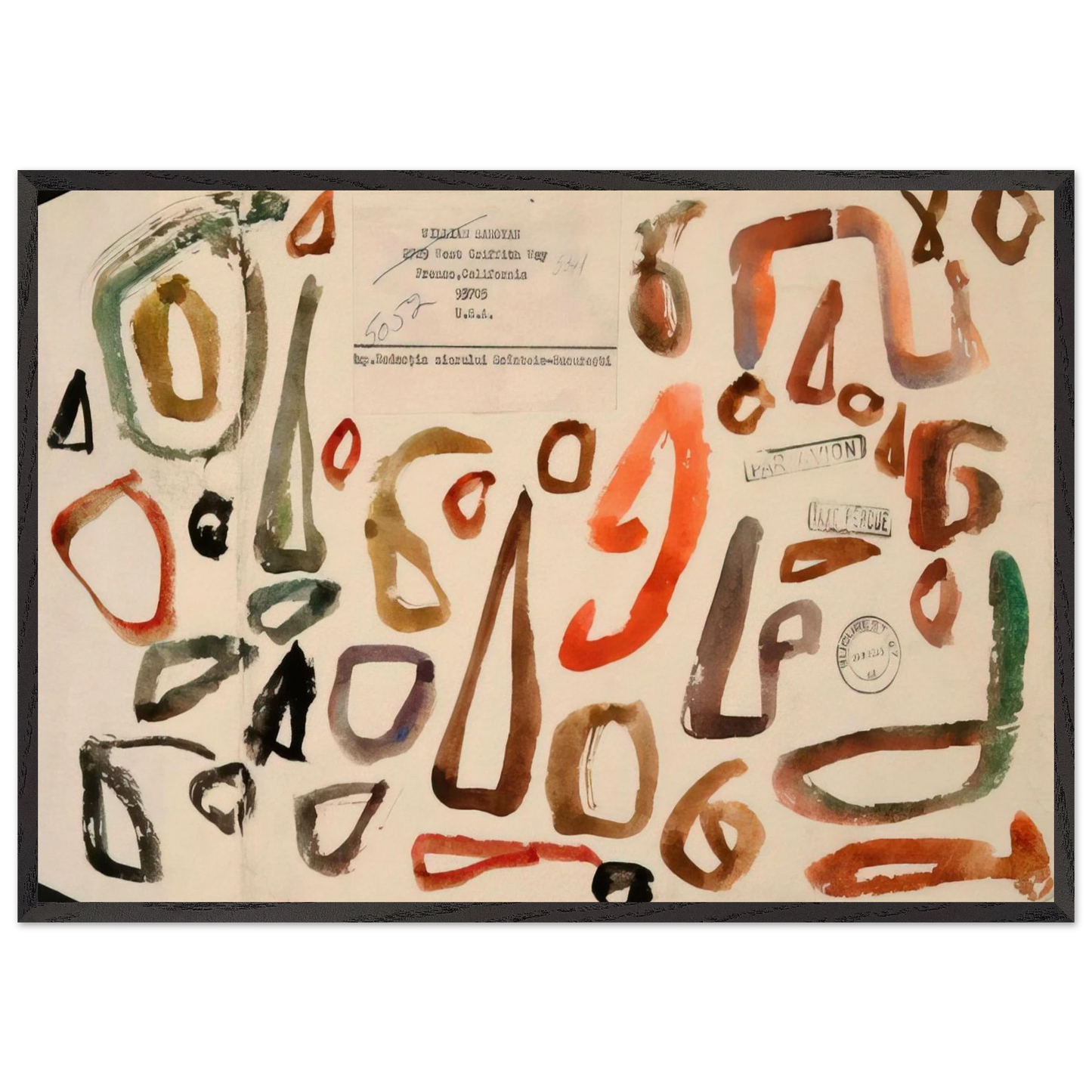
What is the significance of the title '1 October 3 1972'?
William Saroyan often titled his visual works with the exact date of their creation. This reflects his philosophy of art as a spontaneous diary of a moment, capturing the immediate creative energy of that specific day in 1972.
Who was William Saroyan as a visual artist?
Beyond his literary fame, Saroyan was a prolific visual artist influenced by Surrealist automatism. His drawings utilize calligraphic rhythms and abstract forms to explore the human condition, often bridging the gap between writing and painting.