
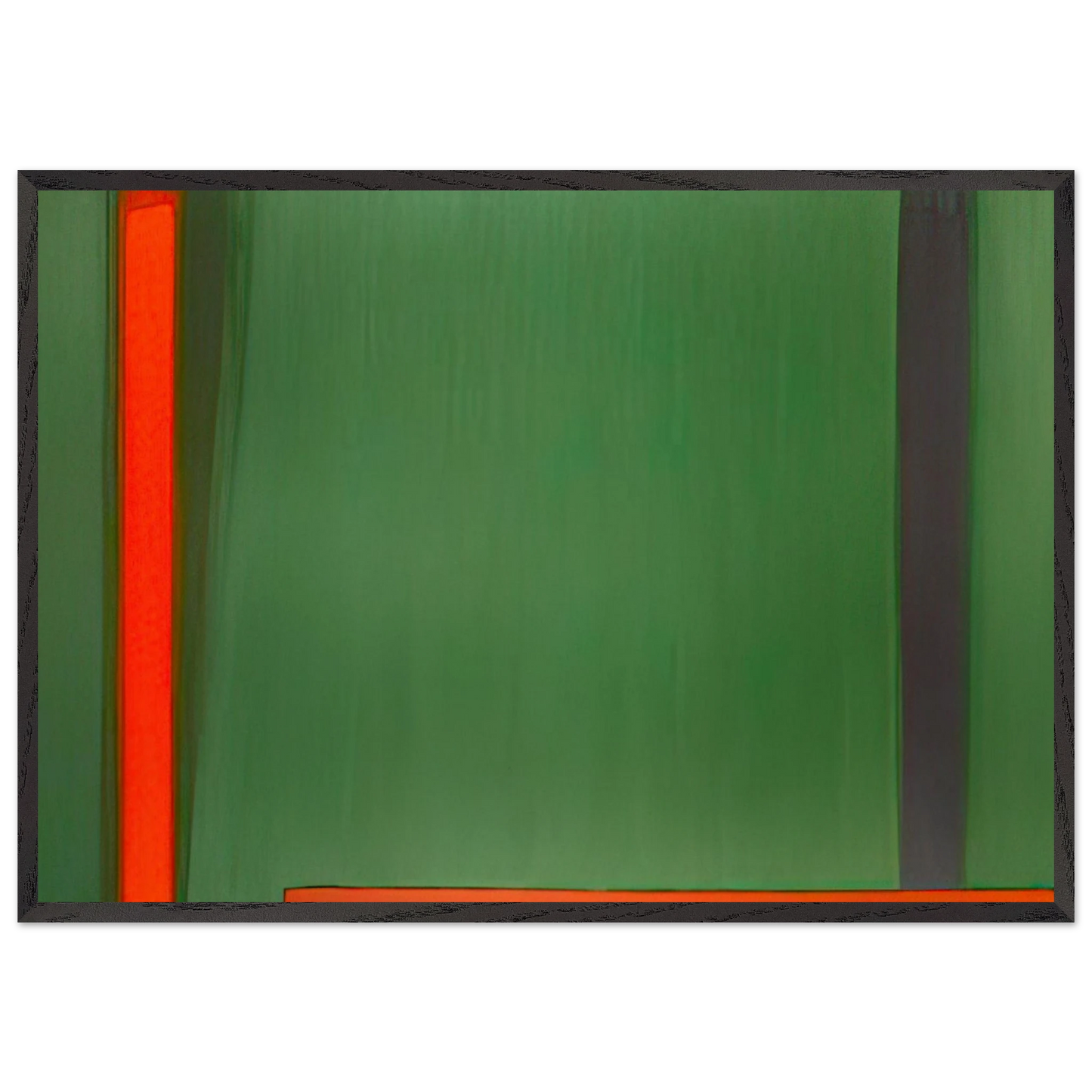
What defines the quality of this John Hoyland fine art print?
This print is a museum-quality reproduction using 250 gsm archival paper and premium inks. At RedKalion, we ensure every detail of Hoyland’s original 1966 masterpiece is preserved with exceptional color accuracy and depth.
Is the black wooden frame sustainably sourced?
Yes, our frames are crafted from responsibly sourced oak and ash wood. They are FSC-certified, ensuring your fine art print meets high environmental and social standards while providing a sophisticated, durable finish.
How is the artwork protected from environmental damage?
We use shatterproof plexiglass to protect the print from dust and physical impact. Combined with our 250 gsm archival-grade paper, this ensures the artwork remains vibrant and preserved for decades without yellowing.
Is the framed print ready to hang upon arrival?
Absolutely. Each framed art print arrives with a pre-installed hanging kit. The 20mm thick frame is designed for immediate mounting, allowing you to elevate your space the moment it arrives.
What are the shipping and handling standards for this piece?
RedKalion utilizes specialized, secure packaging to protect the frame and plexiglass during transit. We partner with premium carriers to ensure your museum-quality reproduction arrives in pristine condition.
What is the significance of the title "191266" in Hoyland's work?
John Hoyland often titled his works based on their date of completion. "191266" signifies the piece was finished on December 19, 1966, a year synonymous with his breakthrough exhibition at the Whitechapel Gallery.
Why is John Hoyland's 1966 period so important to art history?
1966 was a transformative year for Hoyland, marking his transition toward large-scale color field paintings. This period defined British Abstraction, blending American influence with a unique, emotional European sensibility.