Přejít na informace o produktu
1 z 1

RedKalion

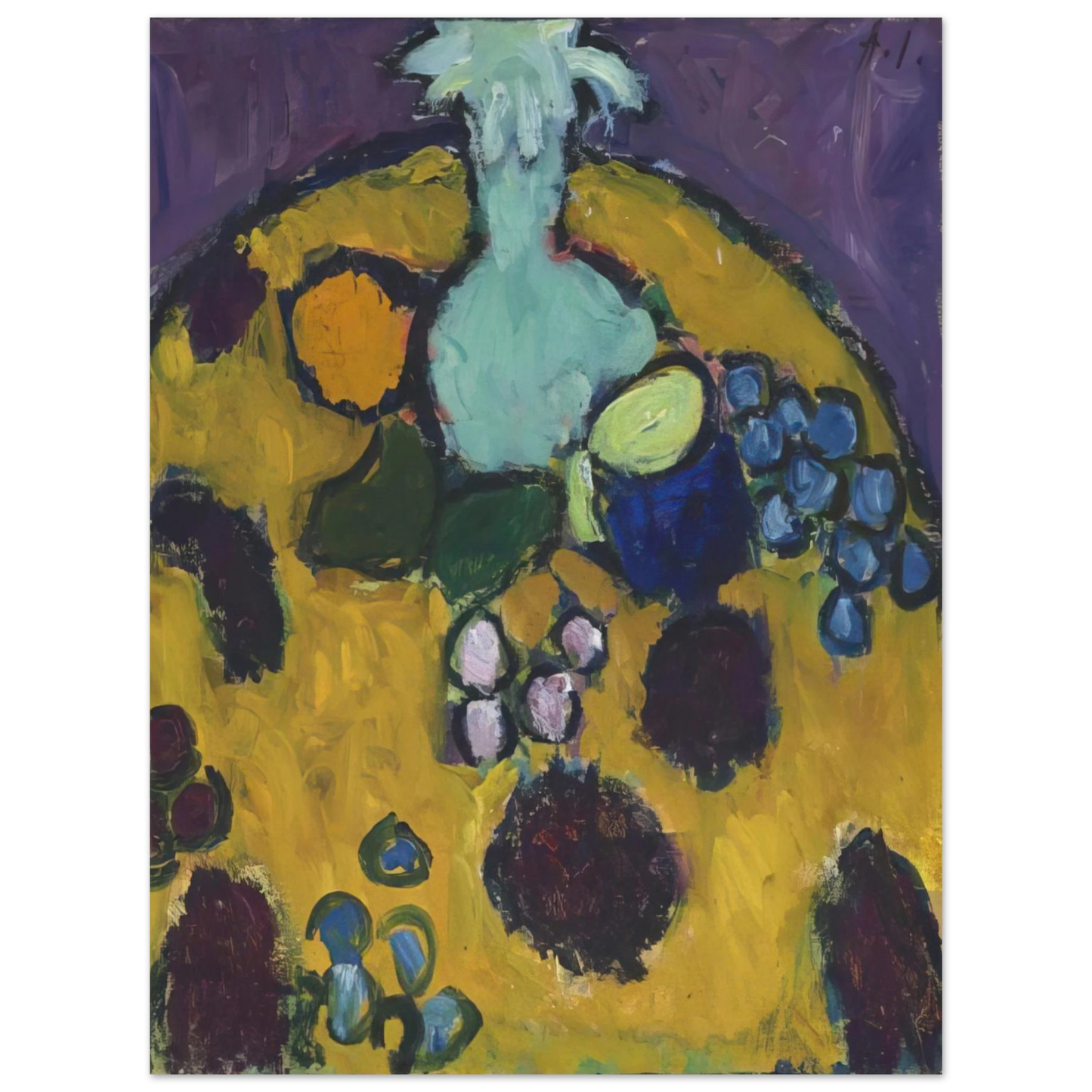
Alexej von Jawlensky - STILLEBEN MIT GESTICKTER DECKE 1910 75x100 cm / 30x40inches Fine Art Poster

Alexej von Jawlensky - STILLEBEN MIT GESTICKTER DECKE 1910 75x100 cm / 30x40inches Fine Art Poster

Běžná cena $207.99 USD
Běžná cena $311.00 USD Výprodejová cena $207.99 USD
Sleva Vyprodáno
Množství

A Synthesis of Color: Alexej von Jawlensky’s Expressionist Vision

Alexej von Jawlensky’s 1910 masterpiece, Stilleben mit gestickter Decke (Still Life with Embroidered Cloth), represents a seminal moment in the transition toward modern Expressionism. During this period, Jawlensky was a central figure in the Munich avant-garde alongside Kandinsky, blending Fauvist color intensity with a structural harmony that became his signature. This 75x100 cm (30x40 inches) museum-quality reproduction captures the visceral energy and rhythmic contours of the original composition.

The Significance of the Embroidered Cloth

In this work, the 'gestickter Decke' serves as more than a mere backdrop; it is a testament to Jawlensky’s fascination with folk art and the spiritual potential of everyday objects. The saturated reds, deep blues, and bold outlines are characteristic of the Neue Künstlervereinigung München style. Our fine art print preserves the nuances of his brushwork, ensuring that the 'synthesis'—the reduction of forms to their most expressive essence—is felt in every inch of the display.

The RedKalion Standard: Archival Excellence

To honor Jawlensky’s legacy, RedKalion presents this piece on our Master's Edition archival paper. This premium substrate is specifically chosen for collectors who demand longevity and tactile luxury. Unlike standard posters, our 250 gsm (110 lb) paper is acid-free (pH above 7), ensuring the piece remains free from yellowing or degradation for generations. The matte, uncoated natural white finish provides a sophisticated, glare-free viewing experience that emphasizes the rich pigment of the Expressionist palette.

  • Paper Weight: Substantial 250 gsm (110 lb) for a premium feel.
  • Finish: Luxurious matte, uncoated texture on an off-white base.
  • Sustainability: Printed on FSC-certified paper for an ethical art collection.
  • Longevity: Archival grade, acid-free composition (Thickness: 0.29 mm).

Elevate your interior with an archival masterpiece that endures, bringing the soul of early 20th-century modernism into the contemporary home.

Zobrazit veškeré podrobnosti
What paper quality is used for this Jawlensky print?

We use Master's Edition archival paper. It is a museum-quality, 250 gsm (110 lb) substrate with a thickness of 0.29 mm, providing a substantial and premium feel for fine art reproductions.

How long will the colors of the print last?

This print is produced on acid-free paper with a pH above 7. This archival standard prevents yellowing over time, ensuring your Alexej von Jawlensky masterpiece retains its vibrancy for decades.

What are the shipping and order requirements?

RedKalion offers on-demand printing with no minimum order requirements. Each museum-quality print is produced specifically for you and shipped with expert care to ensure it arrives in pristine condition.

What is the finish of the Stilleben mit gestickter Decke poster?

The print features a luxurious matte, uncoated finish. The natural white (off-white) paper base provides a sophisticated, glare-free surface that enhances the deep, expressive colors of the artwork.

Is the paper used for this reproduction sustainable?

Yes, we prioritize environmental responsibility. All reproductions of Stilleben mit gestickter Decke are printed on FSC-certified paper, supporting sustainable forest management practices globally.

Why is Jawlensky’s 1910 period significant in art history?

1910 was a transformative year for Jawlensky. He moved away from Impressionism toward Expressionism, mastering the use of bold, non-naturalistic colors and thick outlines that defined the Munich avant-garde movement.

What does the 'embroidered cloth' represent in this work?

The embroidered cloth reflects Jawlensky’s interest in Russian folk art and the 'synthesis' of decorative patterns with spiritual expression, a key element of the Der Blaue Reiter circle's philosophy.