

RedKalion
ALFEDENA ABRUZZI - MC Escher Brushed Aluminum Print - 70x100 cm / 28x40 inches | MC Escher Aluminum Print | MC Escher Prints
ALFEDENA ABRUZZI - MC Escher Brushed Aluminum Print - 70x100 cm / 28x40 inches | MC Escher Aluminum Print | MC Escher Prints
Dostupnost vyzvednutí nebylo možné načíst
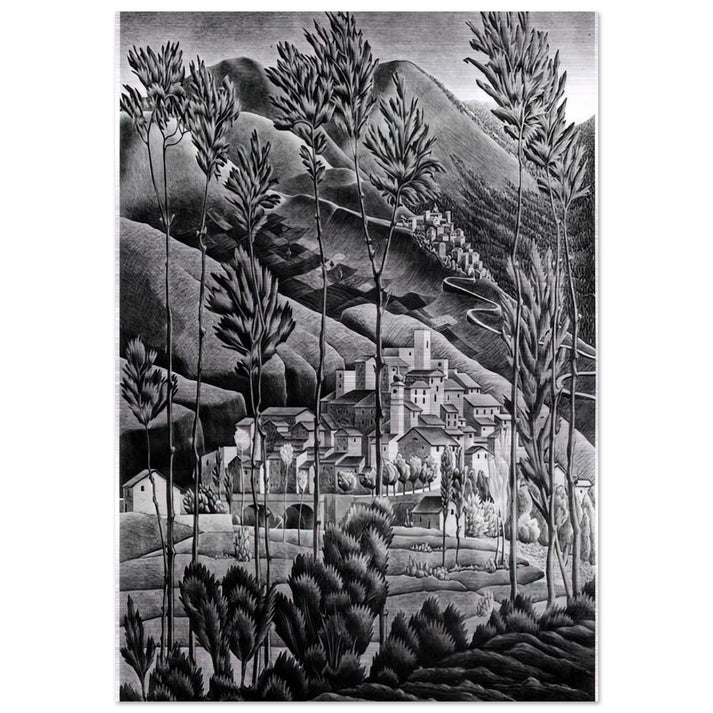
Alfedena Abruzzi by M.C. Escher: A Masterpiece of Perspective on Brushed Aluminum
Elevate your space with a museum-quality reproduction of M.C. Escher’s 'Alfedena Abruzzi'. Created in 1930 during Escher's profound Italian period, this work captures the rugged, vertical beauty of the Abruzzo region. Escher, a master of mathematical precision and architectural rhythm, found endless inspiration in the gravity-defying hill towns of Italy, where the distinction between natural rock and man-made structure often blurs.
This particular fine art print is presented on premium Brushed silver Aluminum DIBOND®, a medium that breathes new life into Escher's intricate linework. The 3mm thick composite panel features a horizontal grain that creates a dynamic, metallic sheen. In this unique printing process, the white areas of the original lithograph are left unprinted, allowing the raw, brushed silver surface to catch the light, adding a contemporary, industrial sophistication to the traditional landscape.
- Technique: Direct print on 3mm (0.12") AluDibond for ultimate durability and rigidity.
- Visual Depth: The matte finish ensures a glare-free viewing experience, while the metallic grain adds a subtle sense of movement to the Abruzzi hills.
- Archival Excellence: RedKalion curates each piece to meet the highest standards of longevity, ensuring your M.C. Escher aluminum print remains a timeless heirloom.
- Ready to Display: Each print arrives with a custom hanging kit tailored to your region, allowing for an effortless, floating installation.
Owning this M.C. Escher reproduction is more than a decorative choice; it is an investment in art history. RedKalion is dedicated to providing the definitive, archival-grade experience for collectors who demand the precision and quality found in the world’s leading galleries.


Discover Unlimited Art Possibilities
At RedKalion, you can find virtually any artwork from any artist, available in a wide range of sizes to perfectly match your space.
If you didn’t find what you’re looking for, contact us at support@redkalion.com . We will source any artwork and produce it in any size and format you need, including art prints, posters, canvas, framed pieces, framed canvas, and more.
For dedicated art enthusiasts, we also offer handcrafted replicas of any artwork, carefully painted by highly skilled artists using traditional techniques.
For custom requests, contact us at support@redkalion.com .
What is the material of this M.C. Escher print?
The artwork is printed on 3mm Brushed silver Aluminum DIBOND®, featuring a horizontal grain and a durable composite core for a rigid, museum-quality finish.
How does the brushed silver finish affect the image?
The white areas of Escher’s design are left unprinted, revealing the metallic silver surface. This creates a striking, dynamic effect that interacts beautifully with ambient light.
Is the mounting hardware included for the Alfedena Abruzzi print?
Yes, every RedKalion aluminum print includes a specialized hanging kit. The specific hardware varies by fulfillment country to ensure the most secure installation for your location.
How long will this aluminum print last?
Aluminum DIBOND® is highly durable and UV-resistant. When kept indoors, this archival-grade print is designed to resist fading and warping for decades, maintaining its matte brilliance.
Where is the Alfedena Abruzzi print shipped from?
We utilize a global network of fulfillment centers to ensure your artwork is produced locally or at the nearest facility, reducing transit time and environmental impact.
What inspired M.C. Escher to create 'Alfedena Abruzzi'?
Escher was captivated by the architectural 'clutter' of Italian mountain villages. 'Alfedena' reflects his obsession with verticality, structural repetition, and the harmony between ancient masonry and the Italian landscape.
How does Escher use perspective in this Abruzzo landscape?
In this 1930 study, Escher uses a steep, upward perspective to emphasize the monumental scale of the town, foreshadowing his later world-renowned explorations of impossible geometries and spatial depth.