

RedKalion
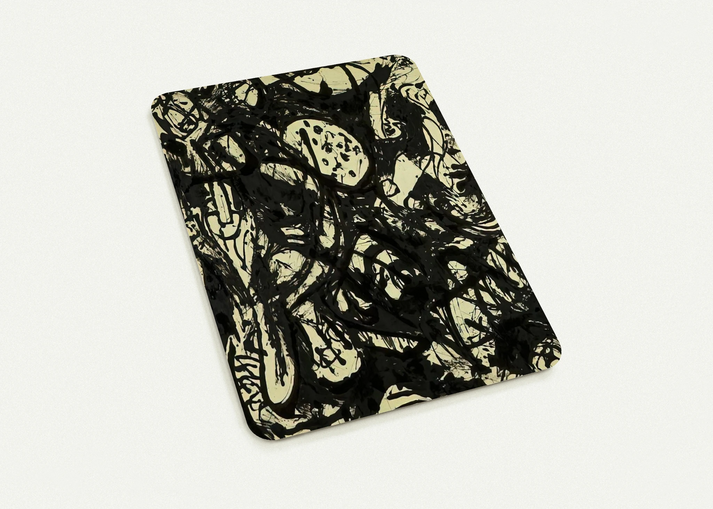
BLACK WHITE NUMBER 20 1951 By Jackson Pollock Pack of 10 Post Cards | Jackson Pollock Post Cards | A6 (10.5 x 14.8 cm) - 4.1 x 5.8 inches
BLACK WHITE NUMBER 20 1951 By Jackson Pollock Pack of 10 Post Cards | Jackson Pollock Post Cards | A6 (10.5 x 14.8 cm) - 4.1 x 5.8 inches
Dostupnost vyzvednutí nebylo možné načíst
Elevate Your Correspondence with Jackson Pollock’s Calligraphic Mastery
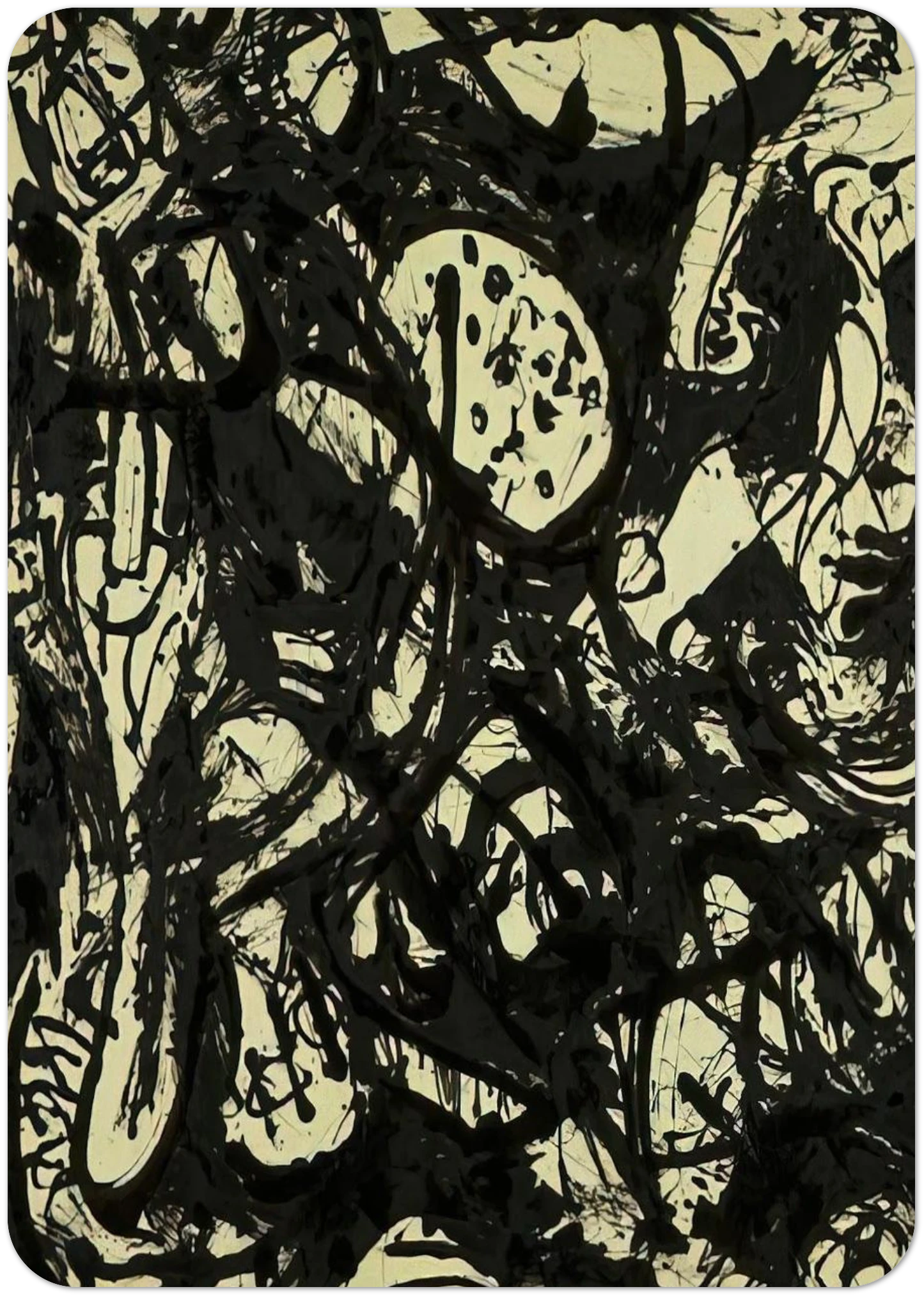
Experience the raw, rhythmic energy of Jackson Pollock’s Black White Number 20 (1951) with this curated pack of 10 museum-quality postcards. Created during Pollock's celebrated "Black Pourings" period, this work represents a sophisticated departure from his vibrant multi-colored drips, focusing instead on the fluid power of black industrial enamel. These A6 postcards allow you to share a piece of Abstract Expressionist history, whether as an elegant note to a fellow art lover or as a sophisticated addition to a personal gallery wall.
Archival Quality Meets Modern Sophistication
At RedKalion, we believe that even the smallest prints deserve the highest level of craftsmanship. Each postcard is produced using 12-color fine art printing technology. Unlike standard 4-color commercial prints, our process captures the subtle tonal variations and intense depth of Pollock’s brushwork, ensuring the monochromatic intensity of Number 20 is rendered with absolute fidelity. The 200 gsm (80 lb) paper provides a substantial, premium feel, while the smooth matte finish eliminates glare, allowing the complex textures of the original 1951 composition to shine.
Sustainable Art for the Discerning Curator
Our commitment to excellence extends to the environment. These Jackson Pollock postcards are printed on FSC-certified paper, ensuring that your passion for art supports responsible forestry. Each set is printed on demand, reducing waste and ensuring that your postcards arrive in pristine condition. Elevate your space or your stationery collection with an archival masterpiece that endures.
- Artist: Jackson Pollock (1912–1956)
- Title: Black White Number 20, 1951
- Paper: 200 gsm / 80 lb with a 0.26 mm thickness
- Print Tech: Ultra-High Definition 12-color archival ink
- Sustainability: FSC-certified eco-friendly materials


Discover Unlimited Art Possibilities
At RedKalion, you can find virtually any artwork from any artist, available in a wide range of sizes to perfectly match your space.
If you didn’t find what you’re looking for, contact us at support@redkalion.com . We will source any artwork and produce it in any size and format you need, including art prints, posters, canvas, framed pieces, framed canvas, and more.
For dedicated art enthusiasts, we also offer handcrafted replicas of any artwork, carefully painted by highly skilled artists using traditional techniques.
For custom requests, contact us at support@redkalion.com .
What makes these Jackson Pollock postcards museum-quality?
RedKalion uses 12-color fine art printing, which offers far greater color depth and accuracy than standard inkjet printers. Combined with 200 gsm archival paper and a smooth matte finish, these postcards replicate the intensity of Pollock’s original 1951 masterpiece.
What are the physical dimensions and paper specifications?
Each postcard in this 10-pack is A6 size (10.5 x 14.8 cm / 4.1 x 5.8 inches). They are printed on 200 gsm (80 lb) paper with a thickness of 0.26 mm (10.3 mils), providing a sturdy, premium feel.
Are these postcards environmentally friendly?
Yes. We utilize FSC-certified paper, ensuring the materials are sourced from responsibly managed forests. Additionally, our print-on-demand model reduces overproduction and environmental waste.
How does the 12-color printing process benefit the artwork?
Standard printing often loses the nuances of monochromatic art. Our 12-color process captures the deep blacks and subtle gradients of Pollock’s 'Black Pourings,' ensuring the calligraphic detail of Black White Number 20 is preserved perfectly.
What is the shipping and production timeline?
Each pack is printed on demand to ensure archival quality. Orders typically ship within 2-4 business days. We do not require minimum orders, allowing you to curate your collection at your own pace.
What is the significance of the 'Black and White' series in Pollock's career?
Starting in 1951, Pollock moved away from his colorful drips to explore black enamel on unprimed canvas. This 'Black Pourings' era, including Number 20, emphasized form and rhythm over color, signaling a more introspective and calligraphic phase of his work.
Why did Jackson Pollock use numbers instead of titles for his works?
Pollock often used numbers to prevent viewers from looking for representational imagery. By titling the work 'Black White Number 20,' he encouraged the audience to experience the painting's pure movement and raw emotion without the bias of a descriptive name.