
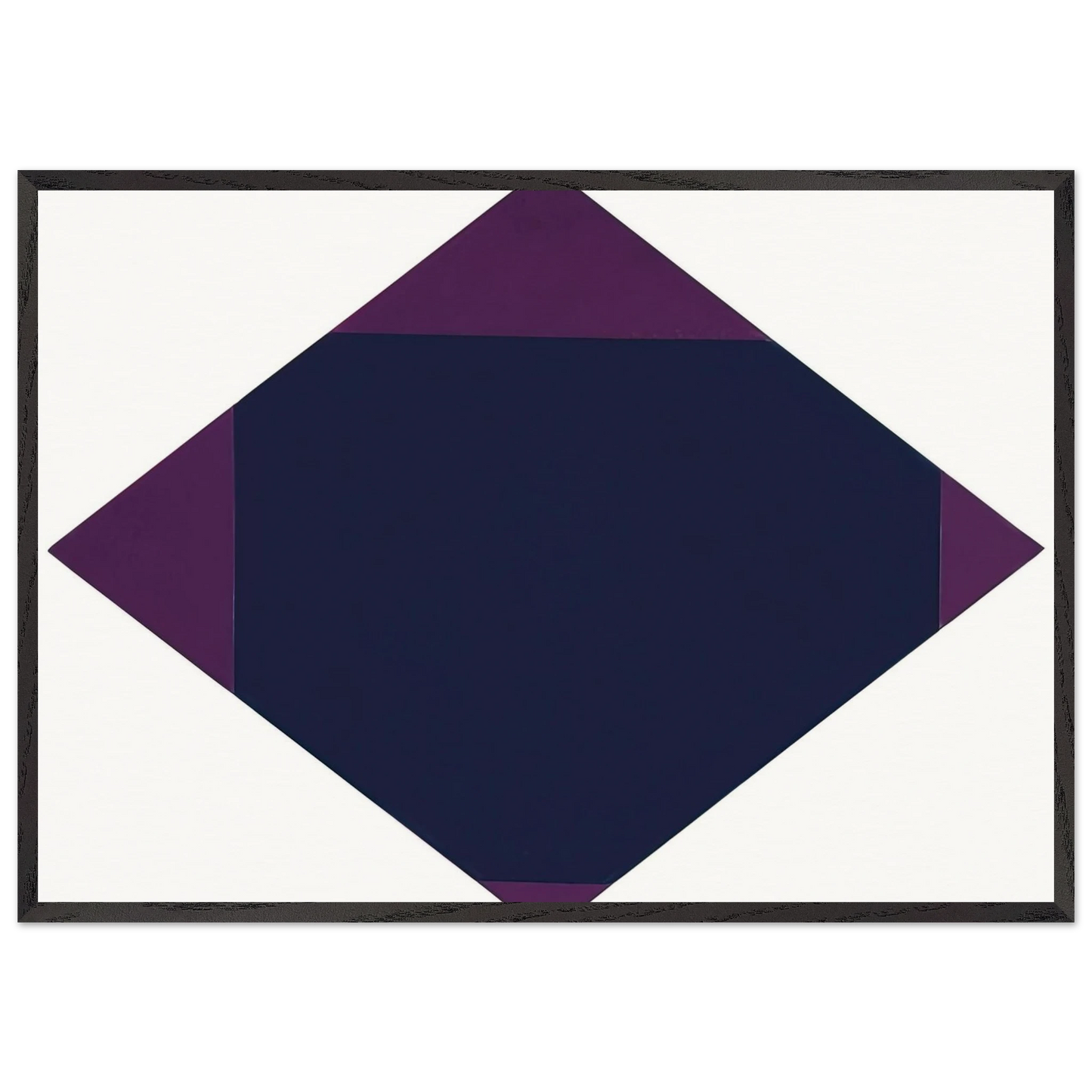
What are the archival qualities of this Max Bill print?
We use 250 gsm archival museum-quality paper. This natural white, uncoated paper is designed to prevent yellowing and ensure the longevity of the pigments over decades.
Tell me about the frame construction and thickness.
Our frames are crafted from responsibly sourced oak and ash. They feature a 20mm (0.79") profile, providing superior durability and a more premium aesthetic than standard frames.
Is the paper used for this artwork sustainable?
Yes, RedKalion utilizes FSC-certified paper or equivalent sustainable materials, ensuring your fine art print is produced with respect for global forest conservation standards.
Is the artwork ready to hang upon arrival?
Absolutely. Your Max Bill print arrives fully assembled in its frame with a professional hanging kit included, allowing for immediate installation in your home or gallery.
How is the print protected from damage?
Each framed print is shielded by shatterproof, transparent plexiglass and shipped in specialized protective packaging to ensure it arrives in pristine condition.
What is the significance of the "square" in Max Bill's work?
For Max Bill, the square was a fundamental geometric unit representing mathematical logic. It allowed him to explore infinite variations of color and proportion within a structured system.
How does the color interaction work in this specific 1968 piece?
The "Blau-violettes" composition utilizes cool-toned contrast to create depth. Bill’s horizontal and vertical intersections guide the eye to find balance within the shifting shades of blue and violet.