
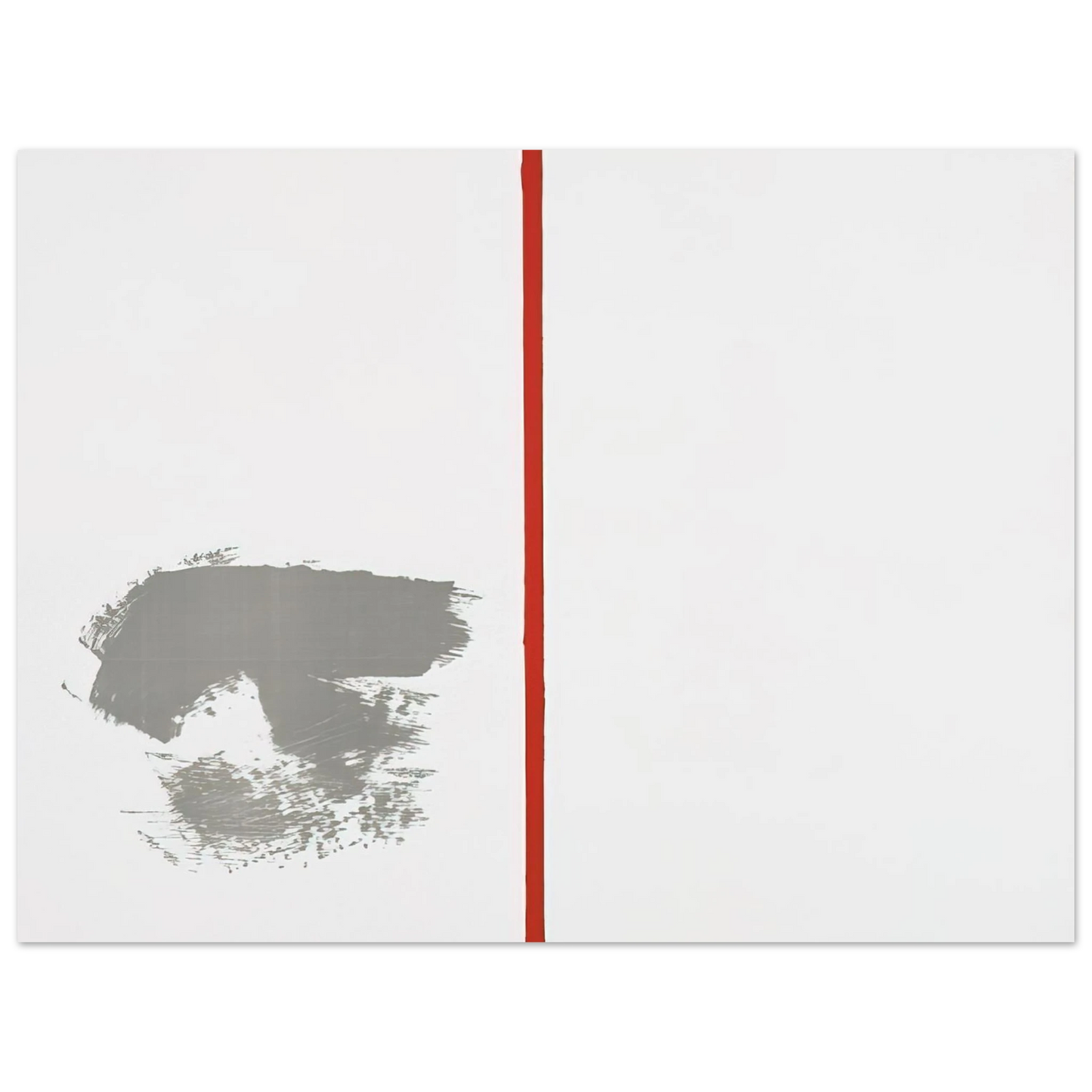
What are the physical dimensions and quality of this Blinky Palermo print?
This print measures 75x100 cm (30x40 inches) and is produced on 250 gsm (110 lb) Master's Edition archival paper. It features a matte, uncoated finish and a thickness of 0.29 mm, ensuring a museum-quality presentation of Palermo's 1970 minimalist work.
Is the paper used for this fine art reproduction sustainable?
Yes, RedKalion uses FSC-certified paper for all Master's Edition prints. This ensures that the materials are sourced from responsibly managed forests, meeting high environmental and social standards while providing a luxury, archival-grade product.
How does the shipping process work for RedKalion prints?
We print and ship every order on demand with no minimum requirements. This ensures your Blinky Palermo reproduction is freshly produced and handled with care, reducing waste and ensuring the highest quality control before it reaches your door.
Will the colors fade or the paper yellow over time?
No. Our prints are made on acid-free paper with a pH level above 7. This archival-grade specification prevents the paper from yellowing and ensures that the pigments remain vibrant and stable for decades when kept in standard indoor conditions.
What is the 'Master's Edition' paper finish like?
The Master's Edition paper is a natural white (off-white), uncoated paper. It provides a luxurious, tactile feel and a matte finish that avoids reflections, making it the ideal choice for displaying high-contrast minimalist art like Palermo's 'Ohne Titel mit rotem Strich'.
Who was Blinky Palermo and why is this 1970 work significant?
Blinky Palermo (1943–1977) was a prominent German abstract artist and student of Joseph Beuys. 'Ohne Titel mit rotem Strich' (1970) represents his transition toward using simple geometric lines to redefine the viewer's perception of the canvas as a three-dimensional object.
What does the 'Red Line' represent in Palermo's minimalist style?
The red line is a formal intervention intended to guide the eye and create spatial tension. In Palermo's work, such minimal gestures are used to explore how a single element of color can alter the entire dynamic of a surrounding void or surface.