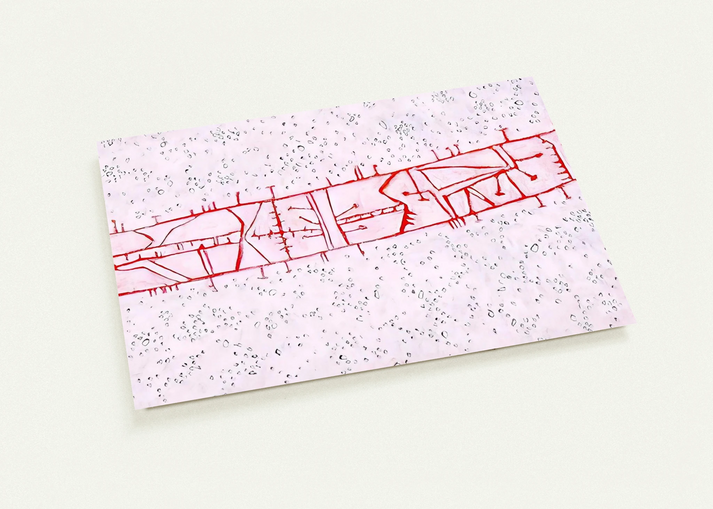

Discover Unlimited Art Possibilities
At RedKalion, you can find virtually any artwork from any artist, available in a wide range of sizes to perfectly match your space.
If you didn’t find what you’re looking for, contact us at support@redkalion.com . We will source any artwork and produce it in any size and format you need, including art prints, posters, canvas, framed pieces, framed canvas, and more.
For dedicated art enthusiasts, we also offer handcrafted replicas of any artwork, carefully painted by highly skilled artists using traditional techniques.
For custom requests, contact us at support@redkalion.com .
What printing technology is used for these Gene Davis postcards?
We use advanced 12-color fine art printing technology. This allows for superior color vibrancy and accurate reproduction of the original artwork's depth, far exceeding the quality of standard 4-color inkjet or offset printing.
What is the weight and finish of the paper?
The postcards are printed on premium 200 gsm (80 lb) paper with a thickness of 0.26 mm (10.3 mils). They feature a smooth matte finish for a sophisticated, glare-free aesthetic.
How are the postcards shipped and produced?
Each pack is printed on demand to ensure the highest quality control and minimize environmental impact. We ship worldwide using protective packaging to ensure your cards arrive in pristine, museum-quality condition.
Is the paper used for these postcards environmentally friendly?
Yes. We use FSC-certified paper, which ensures that the materials are sourced from responsibly managed forests that provide environmental, social, and economic benefits.
Can these A6 postcards be framed as mini art prints?
Absolutely. Due to the high-quality 200 gsm paper and archival 12-color printing, these postcards are frequently used as affordable, high-end decor for small frames or gallery walls.
What is the historical significance of 'Bridge' (1952) in Gene Davis's career?
'Bridge' (1952) represents Davis's early transition from gestural Abstract Expressionism toward the structured Color Field painting. It captures a pivotal moment before his iconic stripe period began in the late 1950s.
Is this work representative of the Washington Color School?
Yes, 'Bridge' showcases the early sensibilities of the Washington Color School, emphasizing color as the primary subject and exploring how different hues interact to create a sense of space and rhythm.