


Frequently Asked Questions
What is the material used for this Alexander Calder print?
The print is crafted on 3mm Brushed silver Aluminum DIBOND®, featuring a metallic finish and a horizontal grain for a dynamic, modern look.
How is the hanging kit handled for international orders?
A specialized hanging kit is included with every print. The specific components vary depending on the fulfillment country to ensure safe and local standards.
Does this aluminum print have a glossy or matte finish?
The finish is matte and glare-free, which is ideal for highlighting the intricate lines of Alexander Calder's designs without distracting reflections.
How do the white areas of the artwork appear on aluminum?
In our direct-print process, unprinted white areas are left transparent, allowing the silver metallic brushed effect of the aluminum to shine through.
What is the archival longevity of an Aluminum DIBOND® print?
These museum-quality prints are highly durable and UV-resistant, designed to maintain color integrity and structural rigidity for several decades.
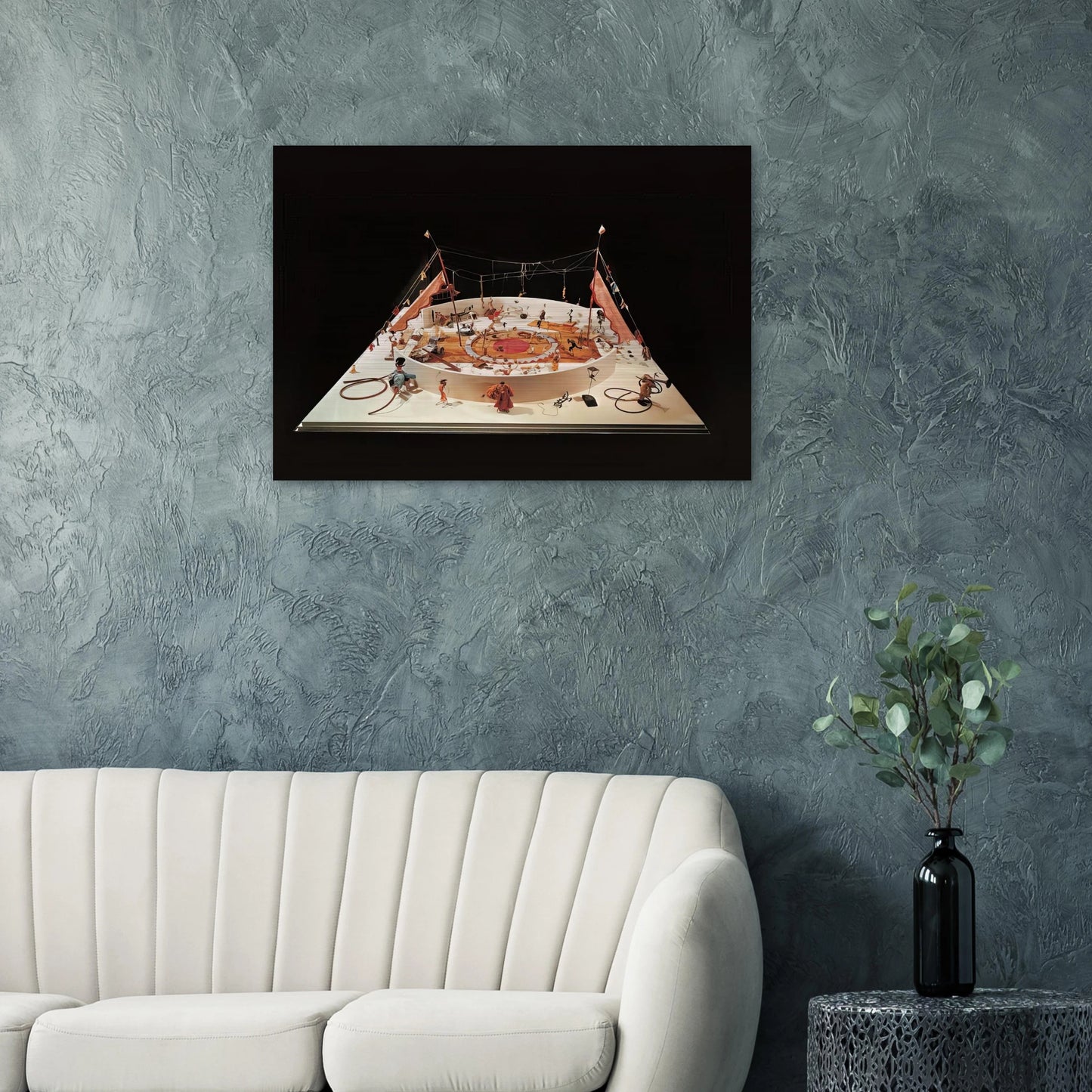
What is the historical significance of Calder's Circus (1931)?
It was a foundational performance work where Calder used wire and found objects, marking his transition from traditional sculpture to kinetic art.
Was Alexander Calder's Circus intended to be a static artwork?
No, it was a portable, performing circus. Calder would manually operate the wire figures for audiences, blending performance art with mechanical ingenuity.