
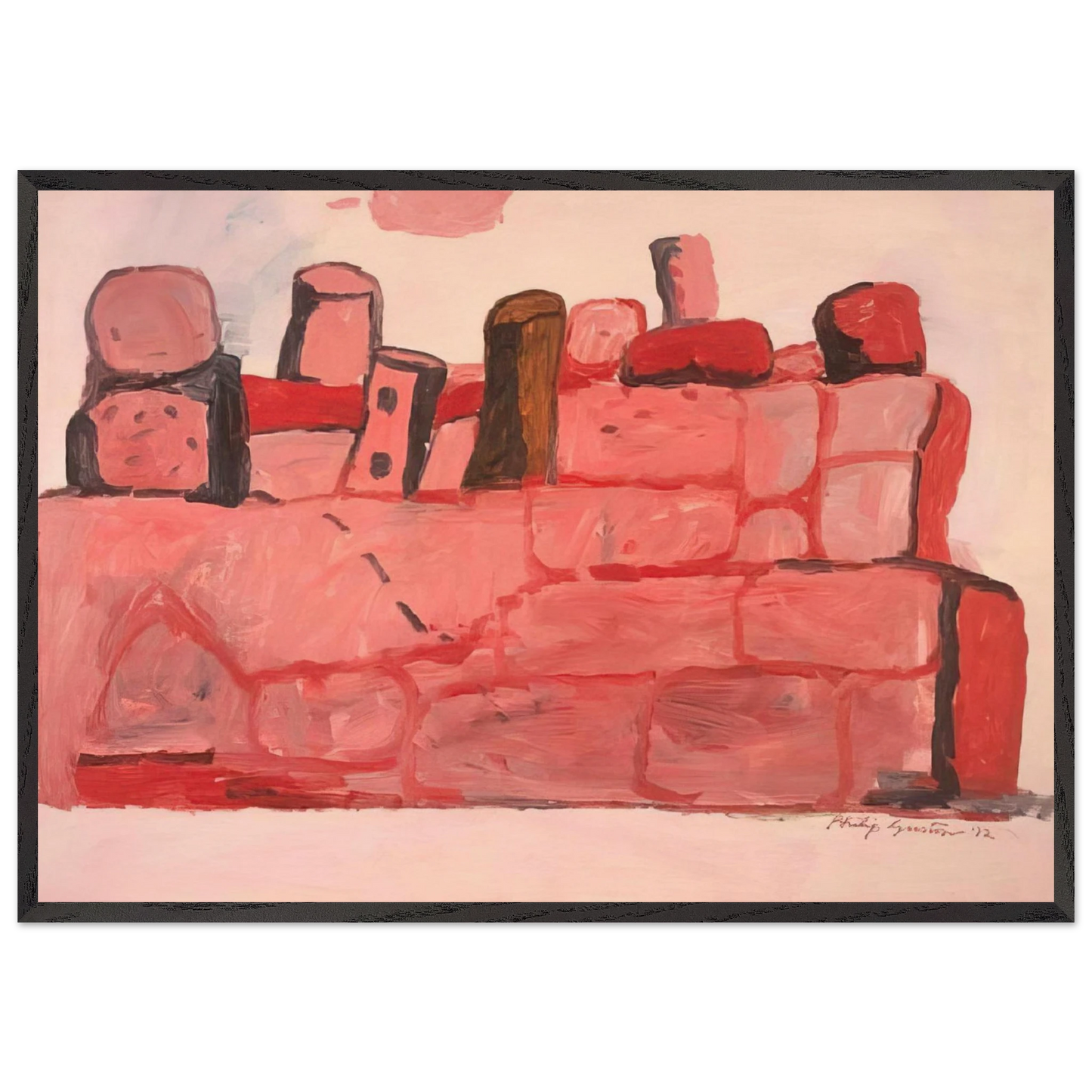
What is the significance of Philip Guston’s 'Cerveteri 1972'?
'Cerveteri 1972' reflects Guston’s fascination with Roman ruins and Etruscan history. It marks his transition into a bold, figurative style characterized by heavy architectural forms and a muted, existential palette, representing a profound shift in 20th-century modernism.
Why did Philip Guston move from Abstraction to the style seen in Cerveteri 1972?
What materials are used for the frame and paper?
We use 250 gsm archival-grade museum paper with a matte finish. The frame is constructed from 20mm thick, responsibly sourced oak or ash wood, providing a robust and premium gallery feel compared to standard thin frames.
Is the Philip Guston framed print ready to hang?
Yes. Every RedKalion framed art print comes with a pre-installed hanging kit. You can display your Philip Guston masterpiece immediately upon arrival with no additional assembly required.
How does RedKalion ensure the archival longevity of the print?
By utilizing 250 gsm, uncoated natural white paper and acid-free materials, we prevent yellowing. The inclusion of shatterproof plexiglass protects the print from UV light and environmental damage, ensuring it remains an enduring legacy.
How is the artwork protected during shipping?
We use specialized, secure packaging designed for fine art. The shatterproof plexiglass is more durable than traditional glass, significantly reducing the risk of damage during transit to ensure your print arrives in pristine condition.
Are the materials used in this framed print sustainable?
Yes. RedKalion is committed to sustainability. We use FSC-certified wood for our frames and paper, ensuring that your art piece is produced through environmentally responsible and socially beneficial forestry practices.