
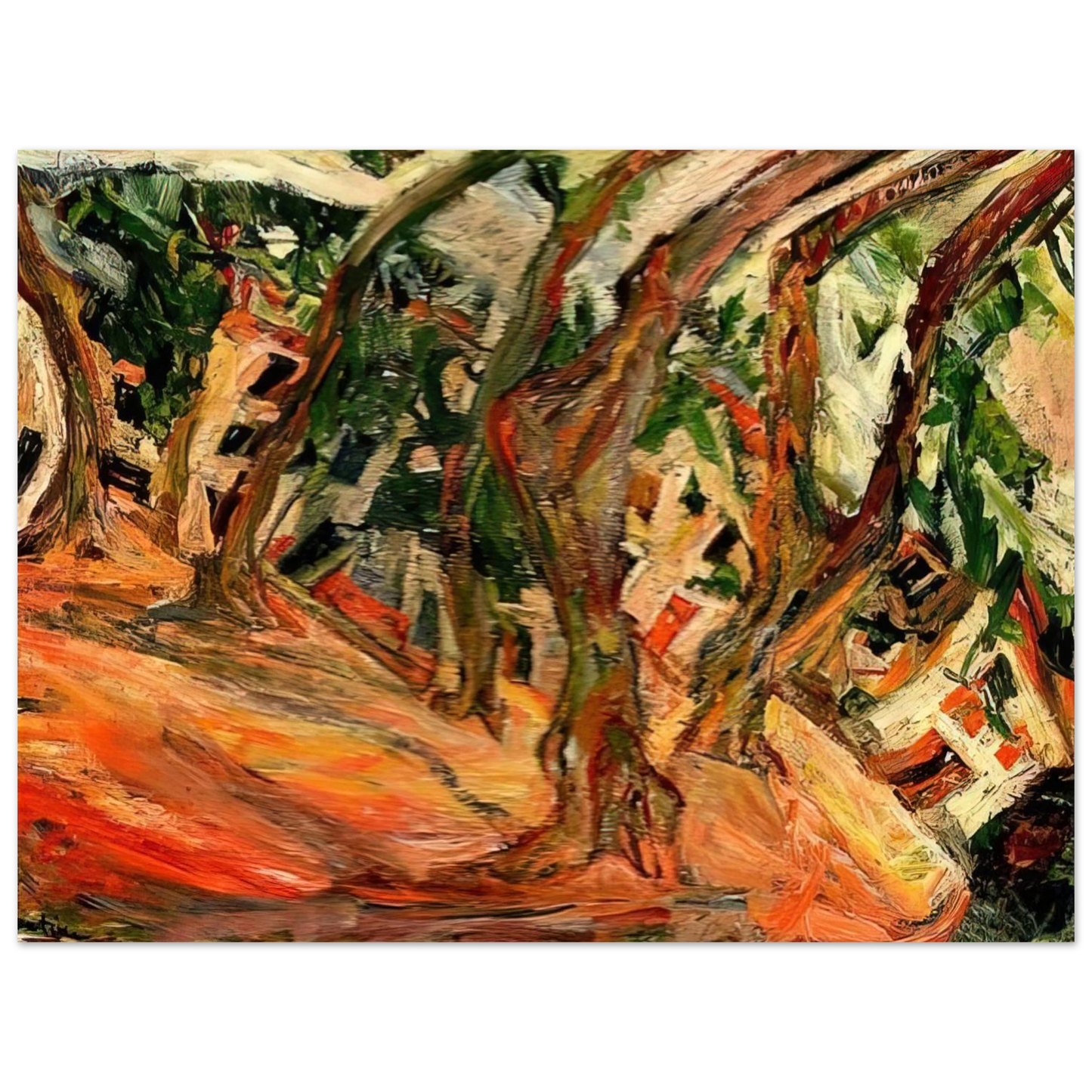
What makes the RedKalion reproduction of Soutine's 'Plane Trees at Céret' museum-quality?
We use Master's Edition archival paper and advanced printing techniques to replicate the color depth and emotional intensity of the original. This 250 gsm fine art print meets the rigorous standards required for gallery-level display.
What are the specifications of the archival paper used?
Our prints utilize 250 gsm (110 lb) acid-free paper with a thickness of 0.29 mm. The natural white, uncoated finish provides a luxurious, non-reflective surface that enhances the visibility of Soutine’s complex brushwork.
How does the matte finish affect the appearance of this expressionist work?
The matte, uncoated finish ensures no light reflection interferes with the viewing experience. This allows the deep greens and earthy tones of the Céret landscape to appear natural and textured, similar to the original canvas.
Will this fine art print yellow or fade over time?
No. We use acid-free paper with a pH level above 7. This archival standard prevents the paper from yellowing or becoming brittle, ensuring the 'Plane Trees at Céret' remains vibrant for decades.
What is RedKalion’s approach to shipping and fulfillment?
Each order is printed and shipped on demand with no minimums. We use protective, sustainable packaging to ensure your museum-quality print arrives in pristine condition, ready for framing and display.
What is the significance of the Céret period in Chaim Soutine's career?
Between 1919 and 1922 in Céret, Soutine developed his signature style of distorted perspective and violent energy. This period produced approximately 200 works that are now considered cornerstones of Expressionist landscape painting.
Why are the forms in 'Plane Trees at Céret' so distorted?
Soutine used distortion to convey internal psychological states rather than objective reality. The 'drunken' perspective of the trees reflects a visceral, emotional response to nature, a hallmark of his unique contribution to modern art.