RedKalion
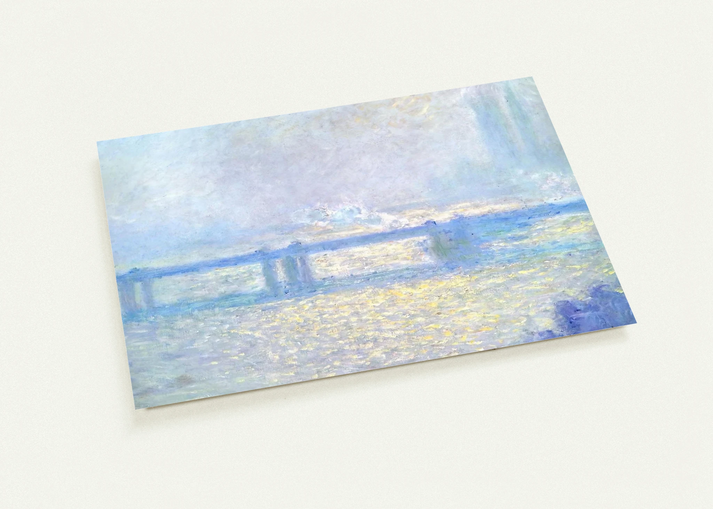
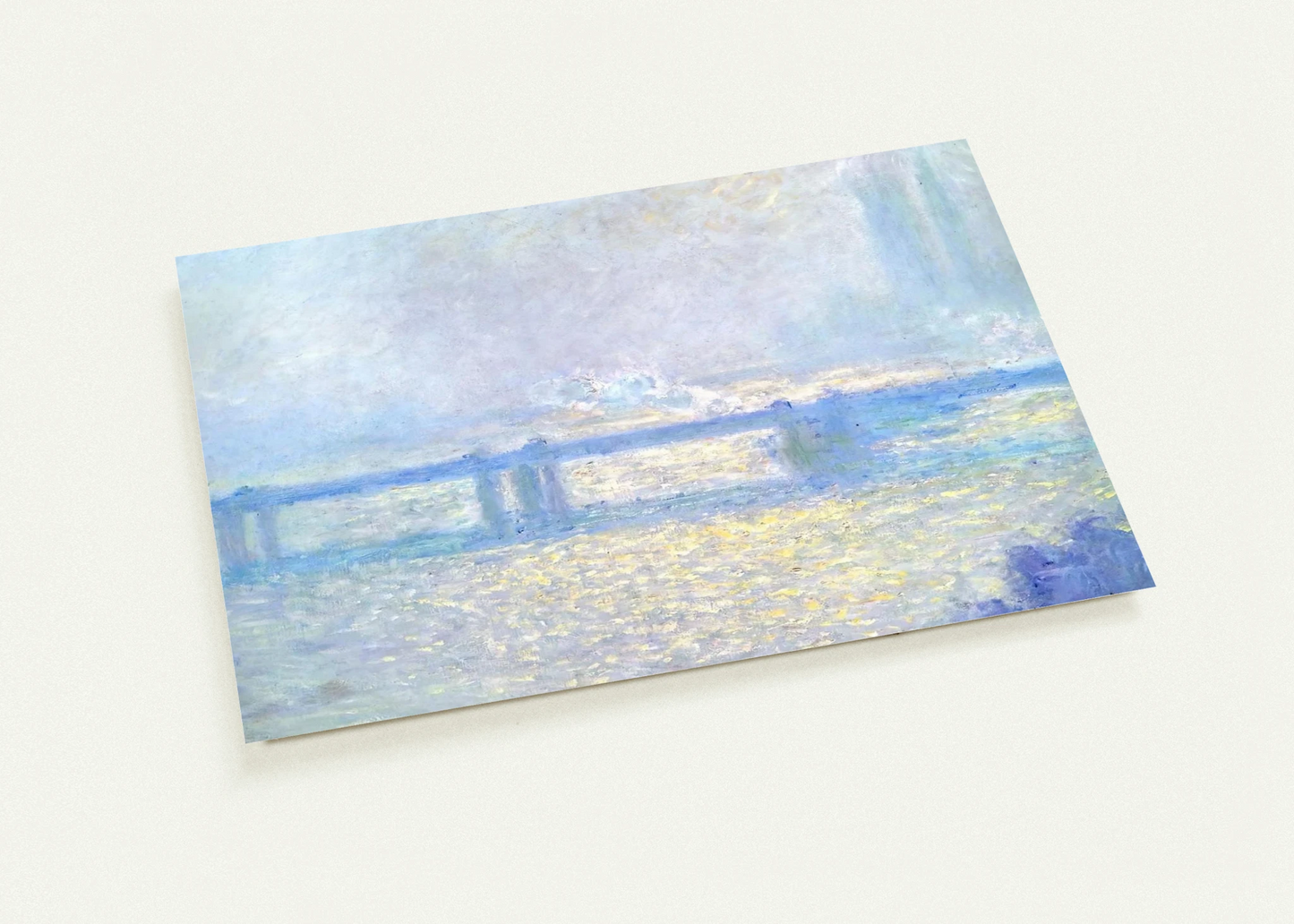
Charing Cross Bridge, Overcast Weather By claude monet Pack of 10 Post Cards | claude monet Post Cards | A6 (10.5 x 14.8 cm) - 4.1 x 5.8 inches
Charing Cross Bridge, Overcast Weather By claude monet Pack of 10 Post Cards | claude monet Post Cards | A6 (10.5 x 14.8 cm) - 4.1 x 5.8 inches
Dostupnost vyzvednutí nebylo možné načíst
Claude Monet’s Atmospheric Mastery: Charing Cross Bridge, Overcast Weather
Experience the ethereal beauty of Impressionism with this premium pack of 10 postcards featuring Claude Monet’s Charing Cross Bridge, Overcast Weather. Between 1899 and 1904, Monet captured the shifting moods of the Thames from his balcony at the Savoy Hotel, obsessing over the play of light through the iconic London fog. This specific composition highlights the bridge’s geometric silhouette softened by a dense, overcast atmosphere—a testament to Monet’s genius in rendering light where it seems most absent.
At RedKalion, we bridge the gap between historical heritage and modern curation. These A6 postcards are not mere stationary; they are museum-quality reproductions. Utilizing our advanced 12-color fine art printing technology, we achieve a chromatic depth and vibrancy that captures the subtle grays, mauves, and blues of Monet's palette, far surpassing the limitations of standard 4-color printing.
- Archival Quality: Printed on 200 gsm (80 lb) FSC-certified paper, ensuring both a luxurious weight and environmental responsibility.
- Elegant Texture: A smooth matte finish provides a glare-free surface, allowing the intricate brushwork to shine.
- Durability: With a thickness of 0.26 mm (10.3 mils), these cards are designed to endure, whether sent through the post or displayed in a frame.
Elevate your correspondence or your personal collection with an archival masterpiece that endures. RedKalion ensures each print reflects the true intent of the master, delivered with the care and precision of a world-class gallery.
Discover Unlimited Art Possibilities
At RedKalion, you can find virtually any artwork from any artist, available in a wide range of sizes to perfectly match your space.
If you didn’t find what you’re looking for, contact us at support@redkalion.com . We will source any artwork and produce it in any size and format you need, including art prints, posters, canvas, framed pieces, framed canvas, and more.
For dedicated art enthusiasts, we also offer handcrafted replicas of any artwork, carefully painted by highly skilled artists using traditional techniques.
For custom requests, contact us at support@redkalion.com .
What printing technology is used for these Claude Monet postcards?
We use a 12-color fine art printing process. This provides superior color accuracy and depth compared to standard 4-color prints, ensuring Monet’s subtle atmospheric tones are faithfully reproduced.
What are the physical dimensions and paper weight of the cards?
Each card is A6 size (10.5 x 14.8 cm / 4.1 x 5.8 inches). They are printed on heavy 200 gsm (80 lb) paper with a thickness of 0.26 mm (10.3 mils).
Is the paper used for these prints environmentally conscious?
Yes, all our Claude Monet postcards are printed on FSC-certified (Forest Stewardship Council) paper, meeting the highest environmental and social standards for responsible forestry.
How many postcards are included in this set?
This is a curated pack of 10 individual postcards, all featuring the iconic "Charing Cross Bridge, Overcast Weather" by Claude Monet.
Does the paper have a glossy or matte finish?
These postcards feature a smooth matte finish. This ensures a clean, sophisticated, and glare-free display, perfect for both writing and framing.
Why did Monet paint the Charing Cross Bridge so many times?
Monet was fascinated by the transient nature of light. His London series explores how the urban fog and overcast weather transformed the landscape, creating a nearly abstract study of color.
Where was the original Charing Cross Bridge painting created?
Monet began the series from the Savoy Hotel in London between 1899 and 1901, though he refined many of the works, including the overcast scenes, in his studio in Giverny.