Přejít na informace o produktu
1 z 1

RedKalion

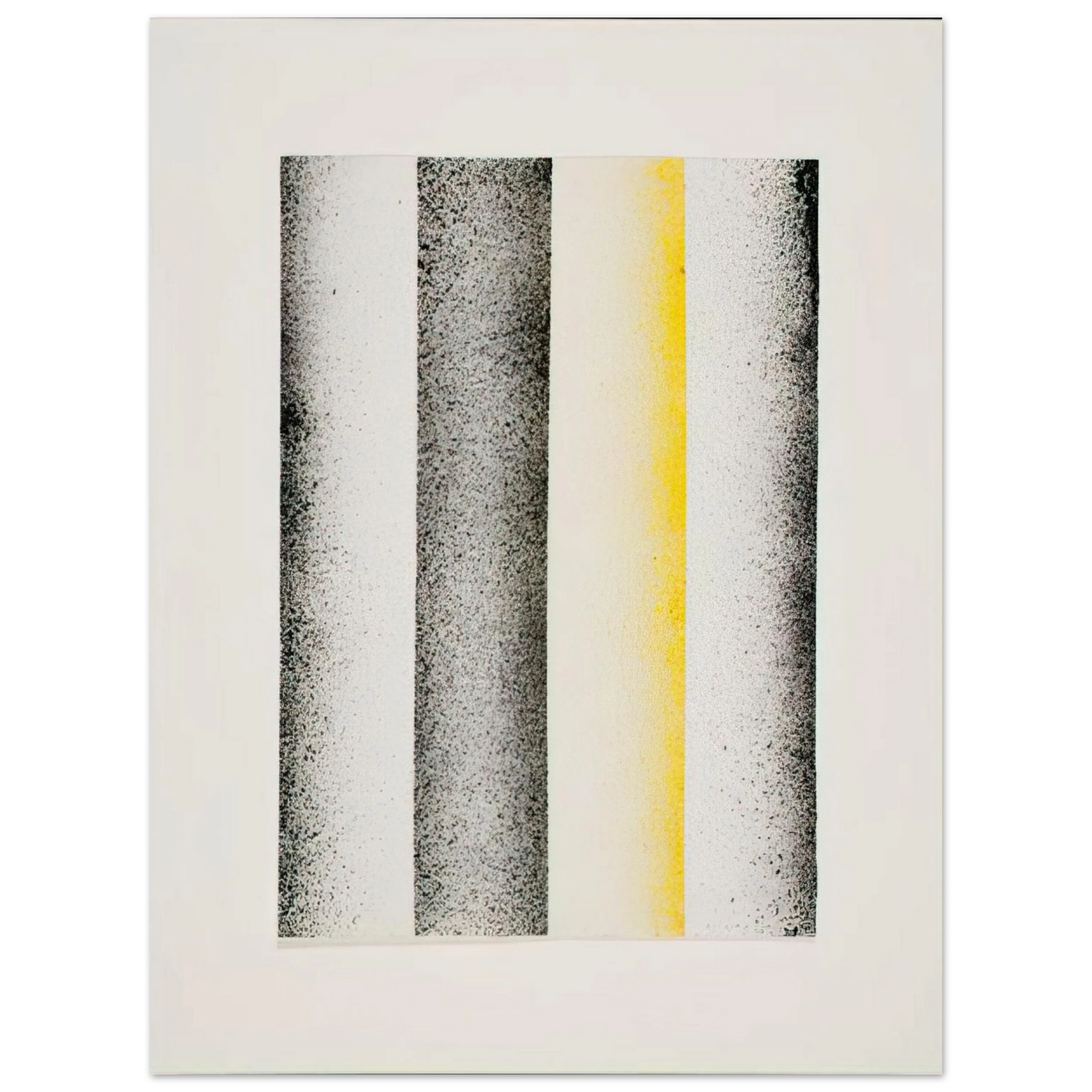
Charlotte Posenenske - Sprayed Picture - 1965 75x100 cm / 30x40inches Fine Art Poster

Charlotte Posenenske - Sprayed Picture - 1965 75x100 cm / 30x40inches Fine Art Poster

Běžná cena $207.99 USD
Běžná cena $311.00 USD Výprodejová cena $207.99 USD
Sleva Vyprodáno
Množství

Elevate Your Space with Charlotte Posenenske’s Industrial Minimalism

Experience the radical clarity of Charlotte Posenenske’s Sprayed Picture (1965), a definitive work from the peak of German Minimalism. This museum-quality reproduction captures Posenenske’s pioneering transition from gestural painting to industrial production. By using industrial spray guns rather than traditional brushes, Posenenske removed the artist's subjective touch, favoring a standardized, uniform surface that mirrors the aesthetic of modern manufacturing.

Authentic Historical Significance

In 1965, Posenenske began her famous Spritzbilder (Sprayed Pictures) series, which challenged the very definition of fine art. These works were intended to be reproducible and objective, laying the groundwork for her later modular sculptures. This 75x100 cm / 30x40 inch fine art print brings that intellectual rigor into your home or office, offering a sophisticated study in form, color, and texture.

The RedKalion Archival Standard

At RedKalion, we curate our prints for the most discerning collectors. This reproduction is executed on our Master's Edition archival paper, a premium 250 gsm (110 lb) natural white, uncoated substrate. The luxurious matte finish ensures that the subtle gradients and clean lines of the original 1965 work are preserved without distracting glare. This is not a mere poster; it is a museum-grade object designed to endure for generations.

  • Museum-Quality Texture: Thick 0.29 mm (11.4 mils) paper provides a substantial, high-end feel.
  • Archival Longevity: Acid-free composition (pH above 7) guarantees your print will not yellow or degrade over time.
  • Ethical Craftsmanship: Printed on FSC-certified paper to support sustainable forest management.
  • Expert Fulfillment: Produced on demand and handled with the precision that Charlotte Posenenske’s legacy demands.
Zobrazit veškeré podrobnosti
What are the physical specifications of the paper used?

We use Master's Edition archival paper, a 250 gsm (110 lb) museum-quality stock. It features a matte, uncoated, natural white finish and a thickness of 0.29 mm, providing a luxurious tactile experience for this minimalist masterpiece.

How does the acid-free quality affect the print's longevity?

Our paper is acid-free with a pH value above 7, which prevents the paper from yellowing or becoming brittle. This archival standard ensures that the vibrant colors and integrity of Posenenske's work remain pristine for decades.

Is this Charlotte Posenenske print sustainably produced?

Yes, we prioritize sustainability by using FSC-certified paper. Additionally, our on-demand printing model eliminates overproduction and waste, ensuring a more responsible environmental footprint for your fine art acquisition.

What are the shipping and fulfillment details?

Each order is printed on demand with no minimum requirements. We utilize a global fulfillment network to ship your artwork securely and efficiently, ensuring it arrives in perfect condition for immediate display.

Does the matte finish accurately reflect the original 1965 artwork?

Absolutely. The matte, non-reflective surface of our archival paper perfectly complements Posenenske's industrial 'Spritzbilder' aesthetic, allowing the viewer to focus on the color and geometry without the interference of artificial gloss.

Who was Charlotte Posenenske and why is her work significant?

Posenenske was a seminal German artist who merged Minimalism with Conceptualism. Her 1965 'Sprayed Pictures' marked a revolutionary shift toward industrial fabrication, questioning traditional notions of authorship and the uniqueness of the art object.

What was the technique behind the 'Sprayed Picture' series?

Posenenske utilized industrial spray guns to apply pigments, creating a smooth, objective surface. This technique was a deliberate rejection of the expressive brushwork typical of earlier eras, favoring a clean, modern, and mechanical finish.