
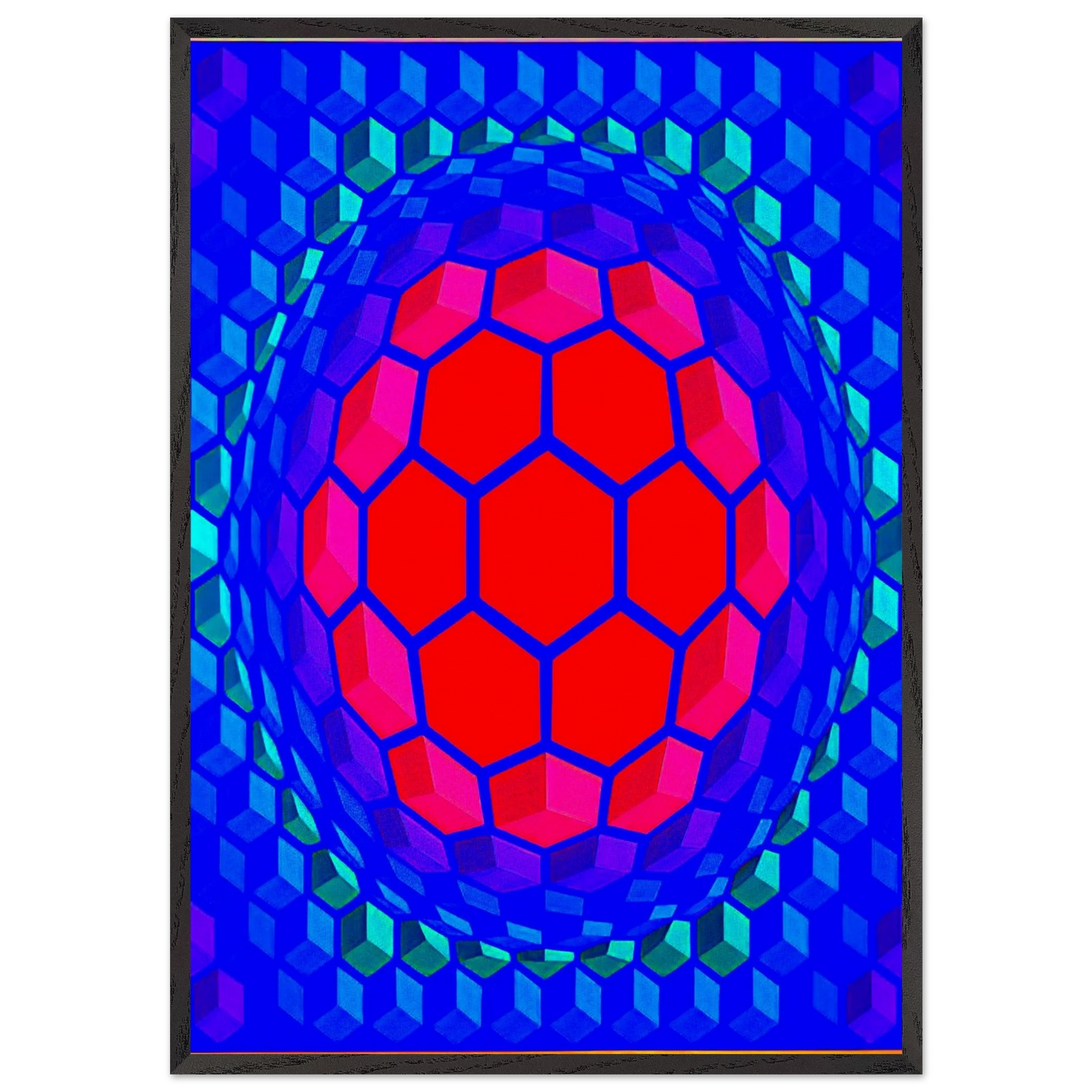
What paper quality is used for this Vasarely print?
We use 250 gsm (110 lb) archival museum-quality paper. It is a natural white, matte, and uncoated paper that ensures color longevity and a premium, glare-free aesthetic for your fine art collection.
Is the frame made of real wood?
Yes, our frames are crafted from responsibly sourced oak and ash wood. This specific edition features a black finish and a 20mm thickness, providing a more substantial and luxurious feel than standard frames.
Does the print come protected and ready to hang?
Absolutely. Each framed print is protected by shatterproof plexiglass and includes a pre-installed hanging kit, allowing you to display your museum-quality reproduction immediately upon arrival.
How is the artwork shipped to ensure it arrives safely?
We use specialized, high-durability packaging designed for fine art. The shatterproof plexiglass and robust wood frame are secured to prevent any movement or damage during transit to your home.
Are the materials used for this print sustainable?
Yes, we prioritize environmental responsibility. We use FSC-certified materials or equivalent certifications, ensuring that your art print is both beautiful and ethically produced using sustainable wood and paper.
What is the significance of the Cheyt Pyr series by Vasarely?
Created in 1971, Cheyt Pyr is part of Vasarely's exploration of hexagonal structures. It represents his 'Permutations' phase, where he used mathematical algorithms to create the illusion of 3D movement and volume.
Why is Victor Vasarely considered the father of Op Art?
Victor Vasarely pioneered a style of geometric abstraction that utilized optical illusions to create a sense of movement. His work in the mid-20th century redefined the relationship between the viewer and the canvas.