
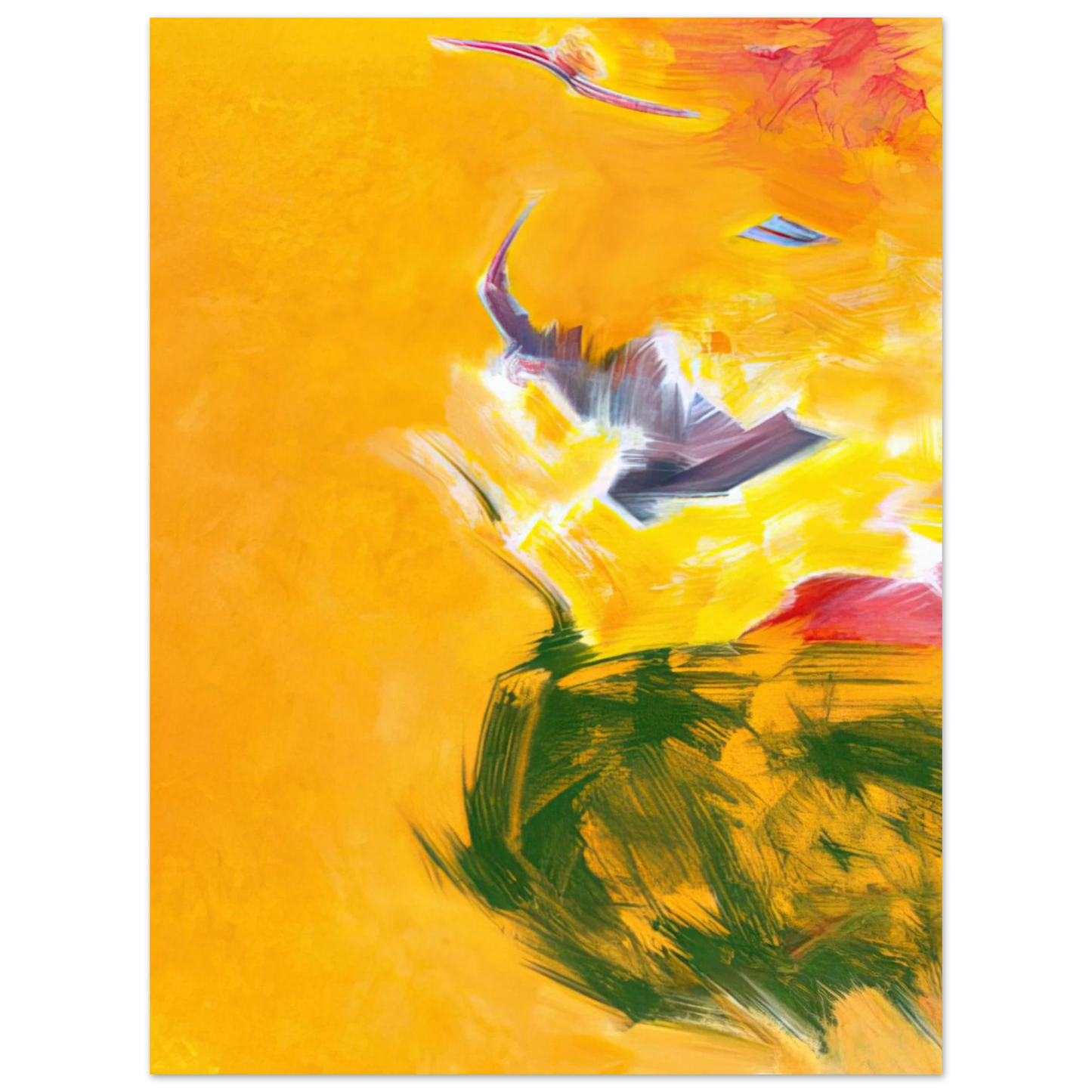
What kind of paper is used for this fine art print?
Our Clifford Possum Tjapaltjarri print is produced on Master's Edition archival paper, known for its museum-quality standards. It features a matte, uncoated, natural white (off-white) finish with a luxurious texture. The paper is 250 gsm (110 lb) with a 0.29 mm thickness.
Will this print yellow or degrade over time?
No, this fine art print is made on acid-free paper with a pH above 7, specifically designed to prevent yellowing or degradation over many decades. It ensures exceptional archival longevity, preserving the artwork's integrity for generations.
Is the paper used for the print environmentally friendly?
Yes, RedKalion is committed to sustainability. Our Master's Edition archival paper is FSC-certified, meaning it comes from responsibly managed forests that meet the highest environmental and social standards.
How are RedKalion prints produced and shipped?
All RedKalion fine art prints, including this Clifford Possum Tjapaltjarri reproduction, are printed and shipped on demand. We do not have minimum order requirements, ensuring efficient and sustainable production with reduced waste.
What makes this a 'museum-quality' reproduction?
A museum-quality reproduction uses archival-grade materials, including acid-free paper and fade-resistant inks, to ensure exceptional color accuracy, detail, and longevity. Our prints meet these rigorous standards, making them suitable for discerning collectors.
Who was Clifford Possum Tjapaltjarri?
Clifford Possum Tjapaltjarri was a pioneering Australian Aboriginal artist and a key figure in the Western Desert art movement. He was celebrated for his intricate dot paintings, which visually narrate ancestral Dreaming stories and cultural landscapes, bringing Aboriginal art to international recognition.
What do the patterns in Clifford Possum's 'Untitled' artwork represent?
In Aboriginal art, 'Untitled' pieces often convey complex Dreaming stories (Tjukurrpa). The patterns, including dots, lines, and circles, map out ancestral journeys, sacred sites, waterholes, and totem animals, reflecting deep spiritual connections to the land.