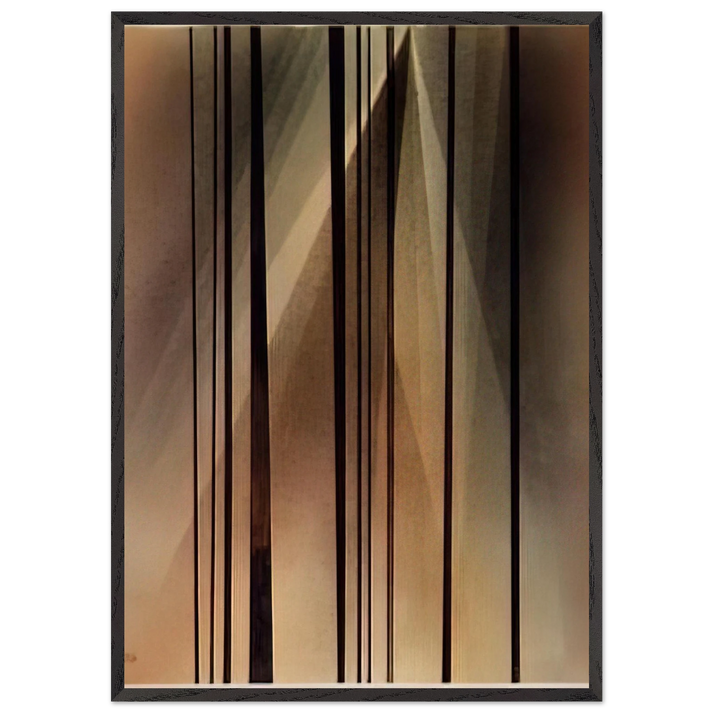

What is the significance of Wassily Kandinsky's CROSSING (1928)?
CROSSING (1928) is a key work from Kandinsky's Bauhaus period, showcasing his mature abstract style with a blend of geometric and organic forms, reflecting his theories on color and spirituality.
What are the paper specifications for this fine art print?
This museum-quality reproduction uses 250 gsm (110 lb), 0.29 mm thick, matte, uncoated, natural white, archival paper, ensuring vibrant colors and lasting quality for your fine art print.
What materials are used for the frame of this Kandinsky print?
The frame is crafted from responsibly sourced oak and ash wood, measuring 20mm (0.79") thick and wide, providing a sturdy and elegant presentation for your archival art.
How is the artwork protected and how quickly can I hang it?
Your CROSSING print is protected by shatterproof plexiglass. It arrives ready-to-hang with an included kit, allowing immediate display of this museum-quality reproduction.
What is the expected archival longevity of this art print?
Utilizing archival museum-quality paper and protective plexiglass, this fine art print is designed for exceptional longevity, preserving the integrity of Kandinsky's masterpiece.
Can you tell me more about Kandinsky's Bauhaus period?
Kandinsky taught at the Bauhaus school (1922-1933), a highly influential German art and design institution. His work during this era became more geometric and structured.
What does the abstract composition in CROSSING represent?
While abstract, CROSSING visually represents Kandinsky's exploration of the spiritual in art, using color and form to evoke emotions and create a harmonious, dynamic visual experience.