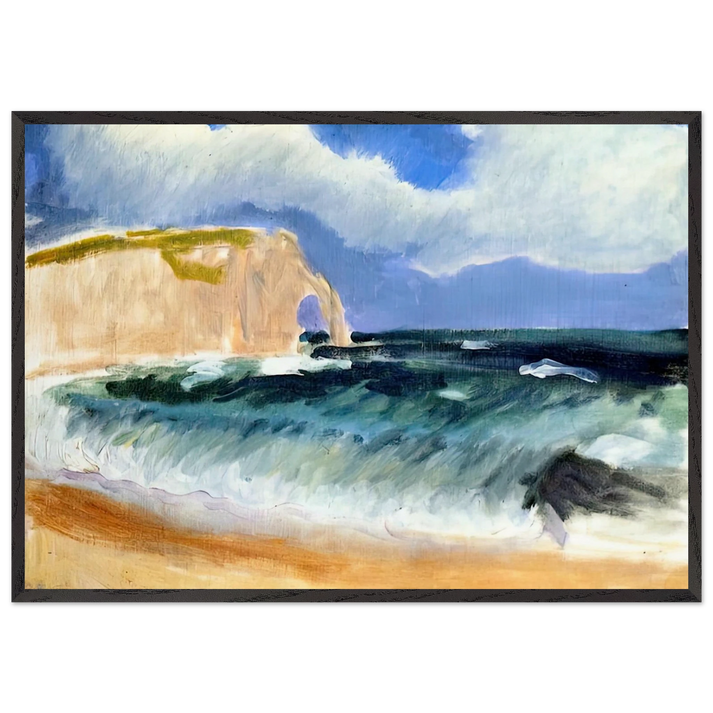
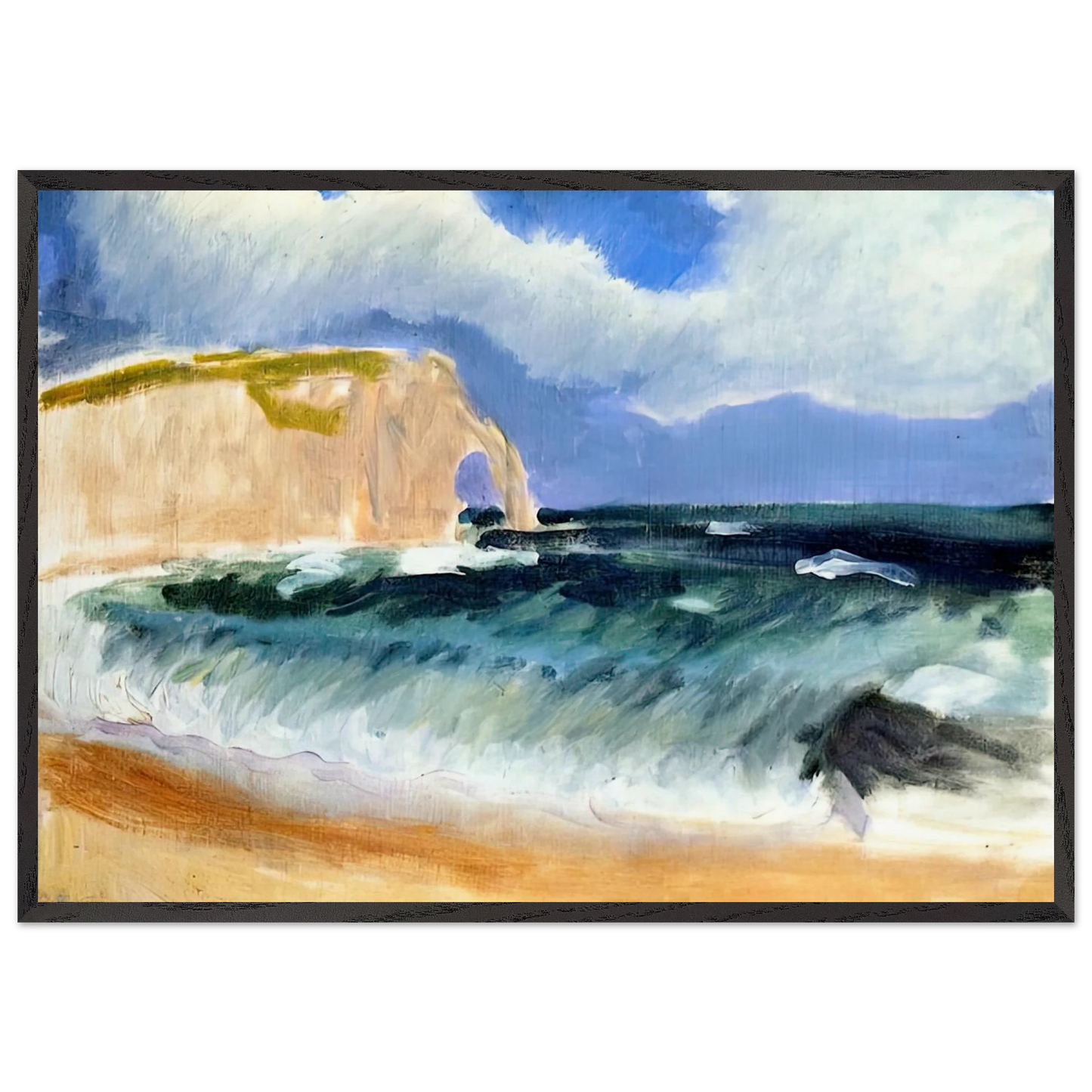
What is the historical significance of "Gale at Étretat 1920" by Henri Matisse?
This artwork showcases Matisse's Fauvist style, emphasizing bold colors and expressive brushstrokes to capture the dramatic Normandy coastline, reflecting his departure from traditional realism in early 20th-century modern art.
How does Matisse's technique in this piece differ from other artists who painted Étretat?
Unlike Impressionists like Monet, Matisse used simplified forms and intense hues to evoke emotion, focusing on the raw energy of the sea rather than detailed naturalistic scenes.
What are the specifications of the paper used for this fine art print?
The print uses 250 gsm (110 lb) matte, uncoated archival museum-quality paper, 0.29 mm thick, ensuring durability and vibrant color reproduction for a premium framed art print.
Is this framed art print ready to hang upon delivery?
Yes, it includes a hanging kit and is ready-to-hang directly on your wall, making installation simple for this Henri Matisse reproduction.
What materials are used in the black wooden frame?
The frame is made from responsibly sourced oak and ash wood, 20mm thick and wide, offering a sturdy and elegant display for your museum-quality print.
How does the shatterproof plexiglass protect the print?
It safeguards against damage while maintaining clarity, ensuring your archival art print remains pristine and secure in its black wooden frame.
Is this product environmentally sustainable?
Yes, it uses FSC-certified materials, supporting sustainable practices in this premium framed art reproduction.