
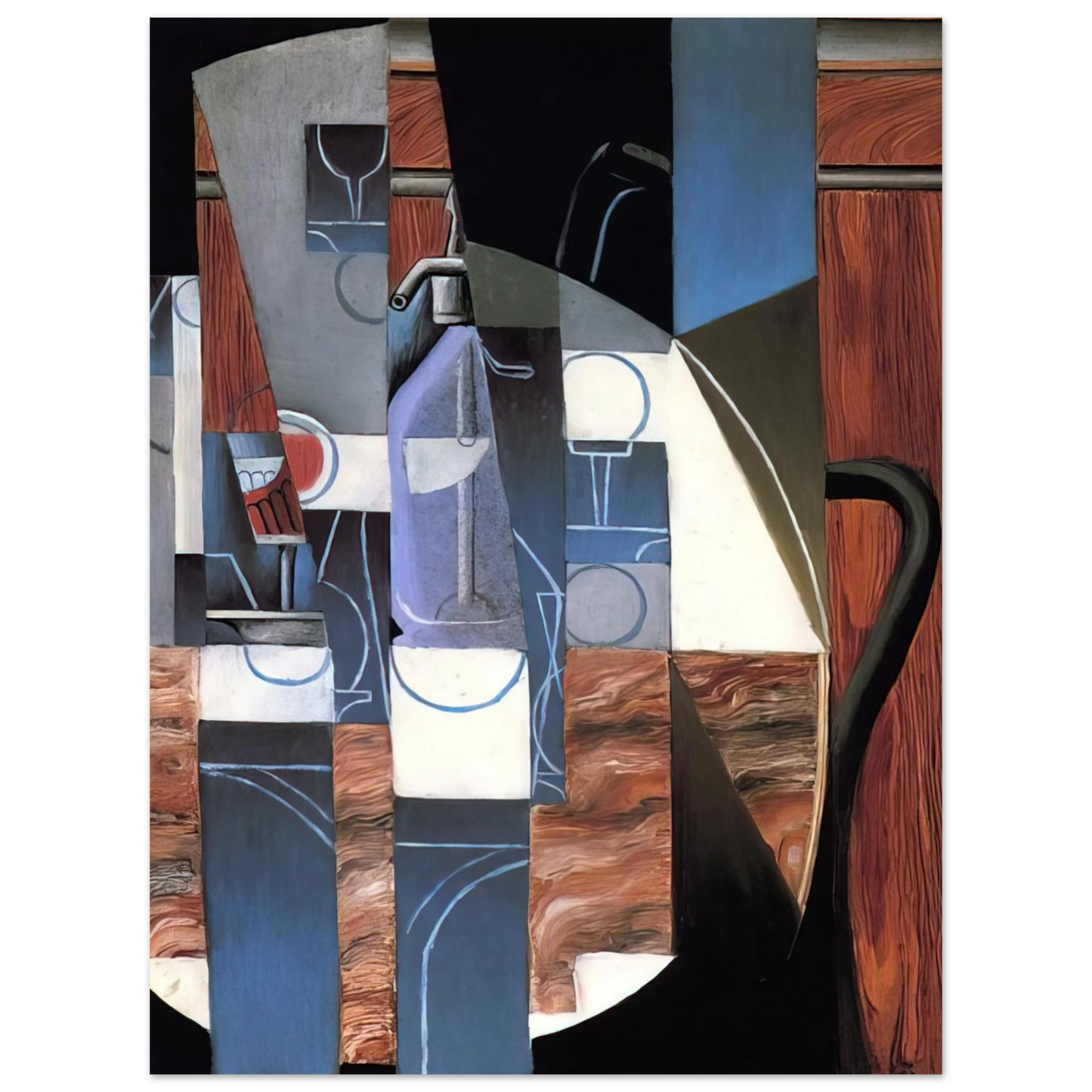
What is the historical significance of Juan Gris's THE SIPHON (1913)?
THE SIPHON is a key Analytical Cubist work by Juan Gris, showcasing his geometric fragmentation of everyday objects to explore form and space, reflecting the avant-garde innovations of early 20th-century art.
How does this fine art print capture the details of the original artwork?
Our museum-quality reproduction uses high-resolution imaging to preserve Gris's intricate brushwork and tonal variations, ensuring an authentic representation of this Cubist masterpiece on archival paper.
What are the specifications of the Master's Edition archival paper?
The paper features a matte, uncoated finish in natural white, with 250 gsm weight, 0.29 mm thickness, acid-free composition for longevity, and FSC-certified sustainability for eco-conscious display.
How is this art print shipped and what are the delivery options?
Printed and shipped on demand with no minimum orders, we offer secure packaging and global delivery to ensure your Juan Gris poster arrives in pristine condition.
Will this poster resist yellowing and fading over time?
Yes, the acid-free paper (pH above 7) prevents yellowing, and archival-grade inks ensure fade resistance, making this a durable investment for long-term display.
What objects are depicted in THE SIPHON and how does Gris abstract them?
Gris abstracts a siphon, glass, and newspaper into geometric planes and overlapping forms, using muted colors and structured composition to deconstruct reality in this Cubist analysis.
How does Juan Gris's style differ from other Cubist artists like Picasso?
Gris emphasized mathematical precision and harmonious balance in his Cubist works, often using clearer structures and more systematic fragmentation compared to Picasso's expressive, dynamic approach.