
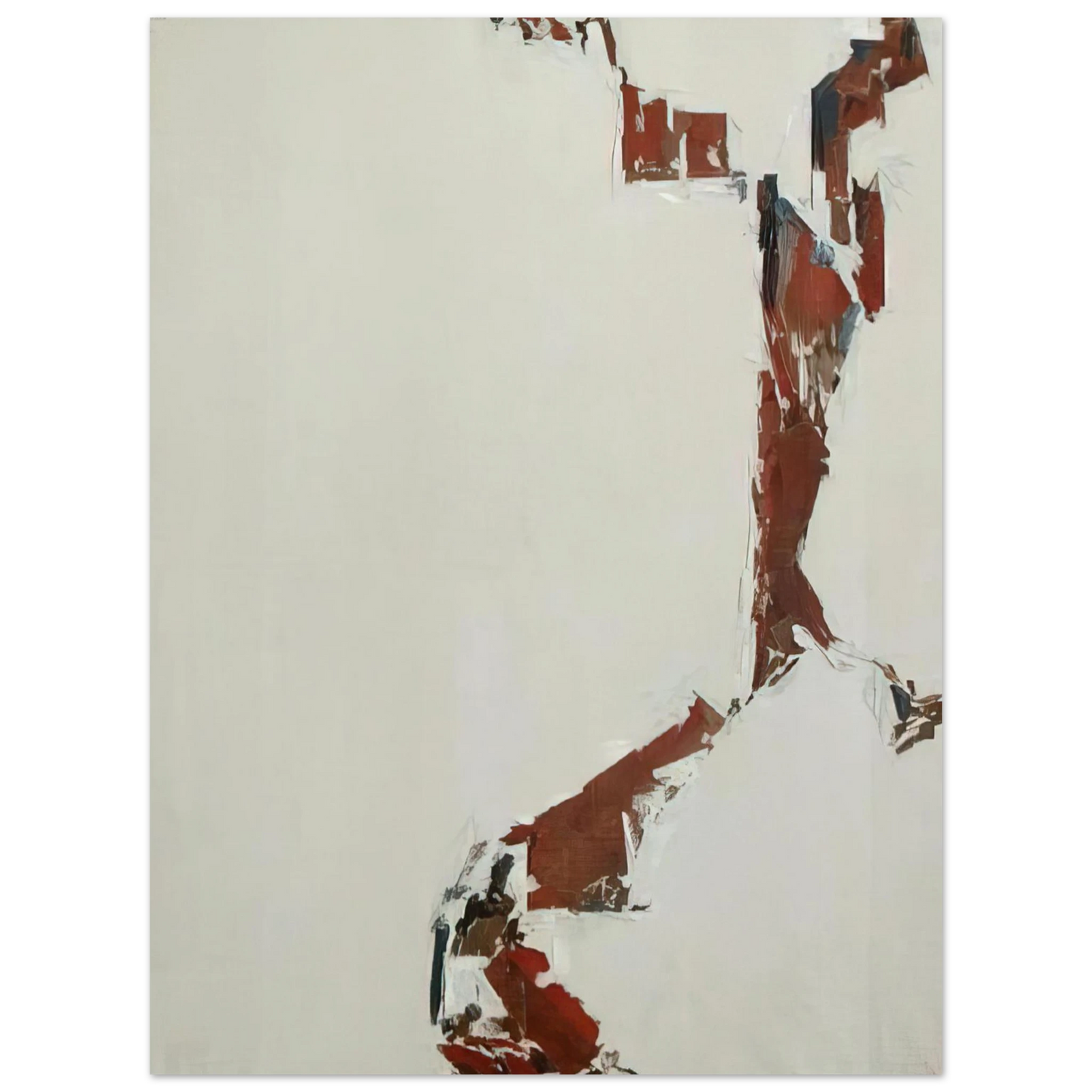
What is the historical significance of Martin Barre's "60-T-18" from 1960?
This artwork is part of Barre's "T" series, reflecting his innovative approach to geometric abstraction in post-war French art, emphasizing structured forms and intellectual depth in modern art prints.
How does the Master's Edition archival paper ensure museum-quality reproduction?
Our acid-free, FSC-certified paper with a matte finish and 250 gsm weight captures fine details, offering a luxurious texture for premium fine art posters that resist deterioration.
What are the exact dimensions and paper specifications for this fine art print?
It measures 75x100 cm (30x40 inches) on Master's Edition paper: 250 gsm, 0.29 mm thick, with a matte, uncoated finish in natural white for archival longevity.
How is shipping handled for on-demand prints?
We print and ship each order individually with no minimums, ensuring careful packaging and timely delivery for your museum-quality reproduction.
Why is acid-free paper important for preventing yellowing in art prints?
Acid-free paper (pH above 7) inhibits chemical breakdown, preserving colors and preventing yellowing to maintain the quality of archival fine art posters over time.
What techniques did Martin Barre use in his "T" series artworks?
Barre employed precise geometric compositions and bold color contrasts in his "T" series, exploring abstraction to challenge visual perception in mid-century modern art.
How does the FSC certification contribute to sustainability in this print?
FSC-certified paper ensures responsible forestry practices, aligning with eco-friendly standards for sustainable fine art reproductions from RedKalion.