
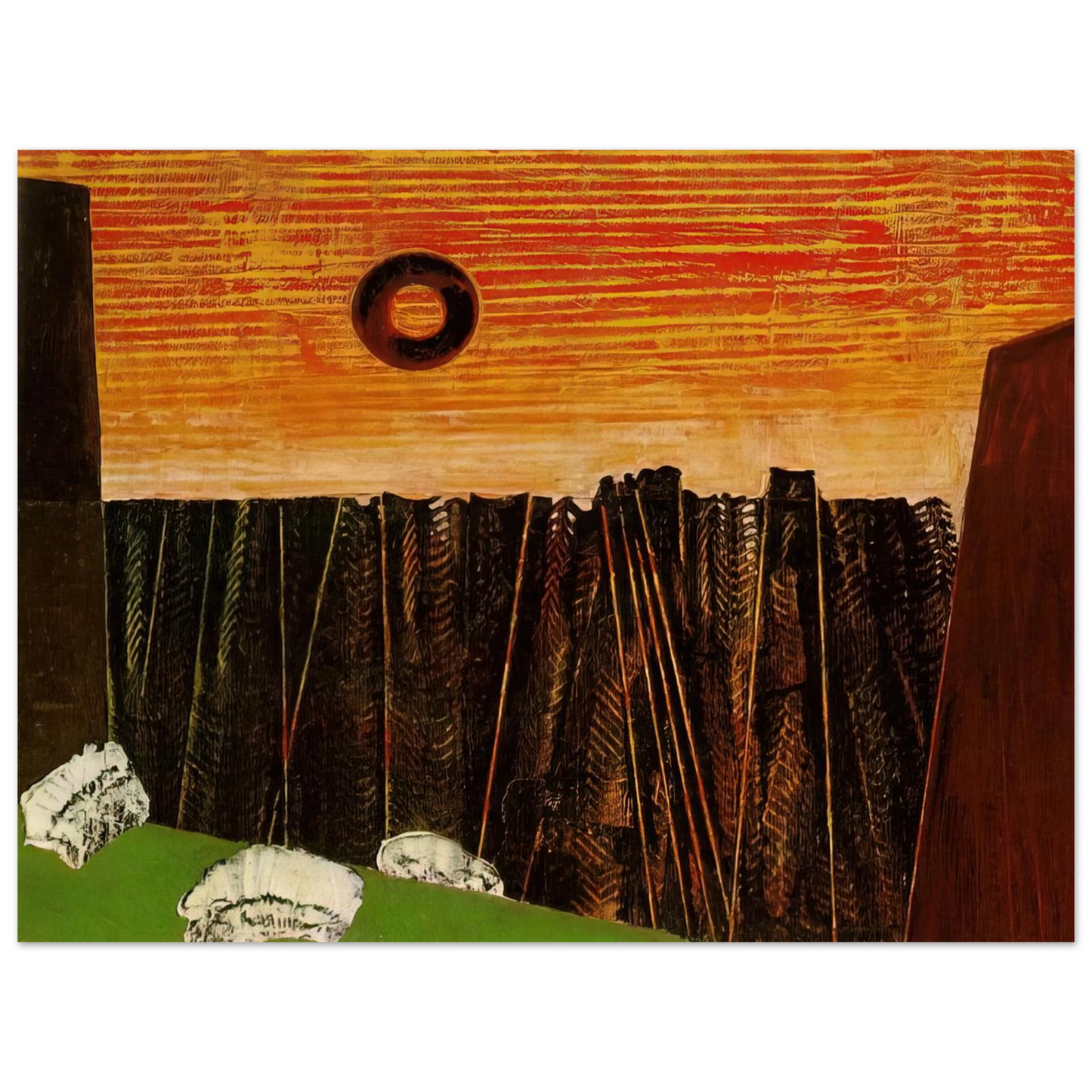
What is the historical significance of Max Ernst's "Fishbone Forest"?
"Fishbone Forest" is a key Surrealist work by Max Ernst, reflecting his use of frottage techniques to create dreamlike, textured landscapes that explore the subconscious and blend natural with mechanical forms.
What details make this fine art print museum-quality?
This print uses Master's Edition archival paper with a matte finish and acid-free properties, ensuring high fidelity to Ernst's original and longevity against yellowing, matching gallery standards.
Can you describe the paper specifications for this poster?
The paper is FSC-certified, 250 gsm (110 lb) weight, 0.29 mm (11.4 mils) thick, with a natural white matte finish, offering a premium texture for this archival reproduction.
How is this print shipped and are there order minimums?
It's printed and shipped on demand with no minimum orders, providing flexible fulfillment for your fine art poster needs.
Will this archival print last over time without fading?
Yes, the acid-free (pH above 7) paper prevents yellowing, ensuring this museum-quality reproduction endures for generations as a durable art piece.
What artistic techniques did Max Ernst use in this artwork?
Ernst employed frottage, rubbing surfaces to create textures, and grattage, scraping paint layers, to achieve the surreal, skeletal effects in "Fishbone Forest."
How does the matte finish enhance this Surrealist print?
The uncoated matte finish in natural white reduces glare, highlighting Ernst's intricate details and adding a tactile, luxurious feel to this fine art poster.