
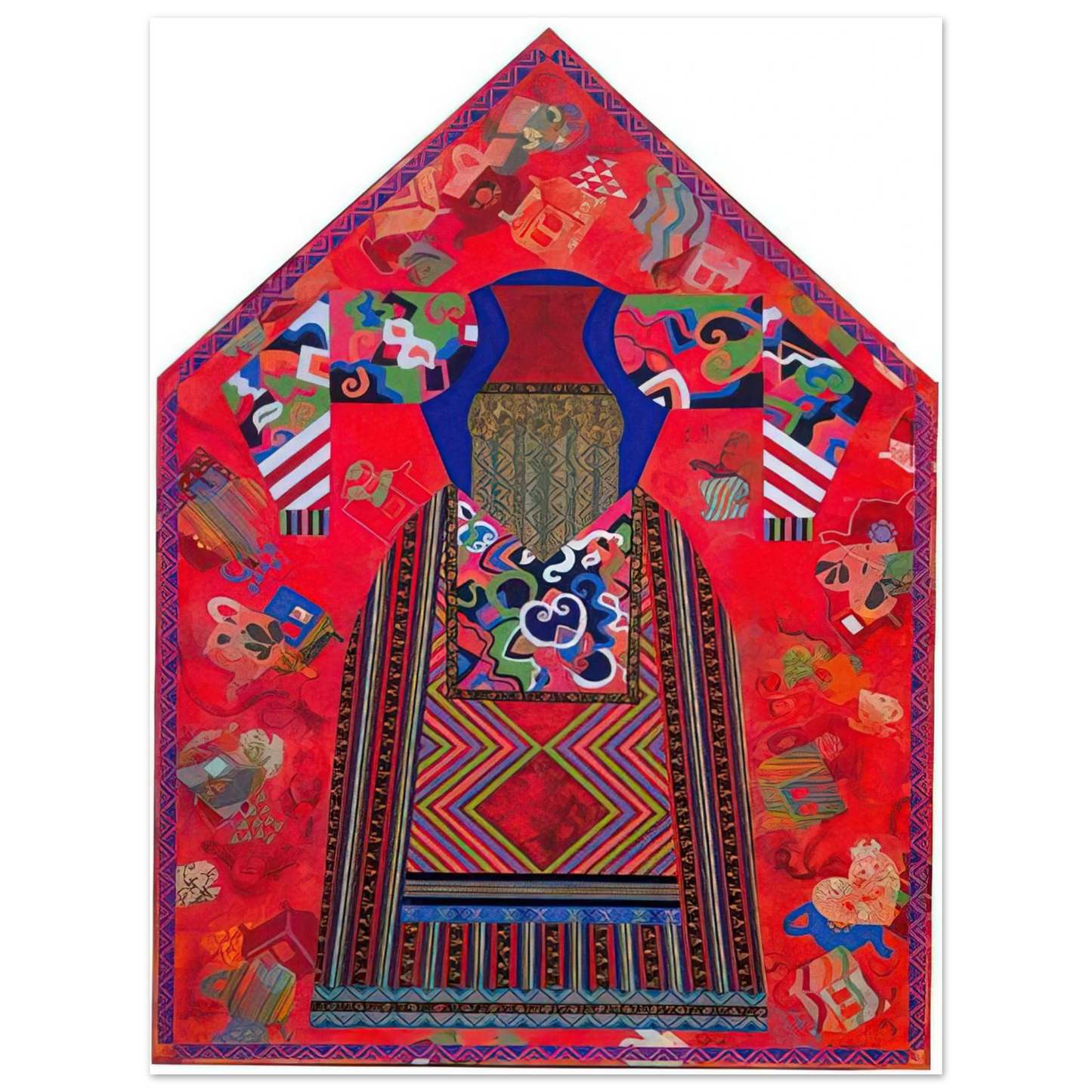
What is the historical significance of Miriam Schapiro's "The Poet" in feminist art?
"The Poet" is a key work from the 1970s Pattern and Decoration movement, where Schapiro used collage and quilting to elevate feminine crafts into high art, challenging gender norms in the art world.
How does this print capture the details of Schapiro's original artwork?
Our museum-quality reproduction on Master's Edition archival paper ensures sharp colors and intricate patterns, faithfully replicating Schapiro's layered techniques for an authentic viewing experience.
It features Master's Edition archival paper with a matte, uncoated finish in natural white, 250 gsm weight, 0.29 mm thickness, acid-free for longevity, and FSC-certified for sustainability.
How is this print shipped and is there a minimum order requirement?
We offer on-demand printing with no minimum orders, and it's shipped securely to ensure your museum-quality reproduction arrives in perfect condition.
Will this archival print resist yellowing over time?
Yes, the acid-free paper (pH above 7) prevents yellowing, making this a durable fine art print that maintains its vibrancy for generations.
What techniques did Miriam Schapiro use in "The Poet" that are reflected in this reproduction?
Schapiro employed collage and quilting methods, blending patterns and textiles; our print highlights these elements through precise color matching and texture on archival paper.
Why is the Pattern and Decoration movement important in art history?
This movement, active in the 1970s-80s, challenged modernist ideals by incorporating decorative arts, often associated with femininity, into mainstream gallery spaces.