
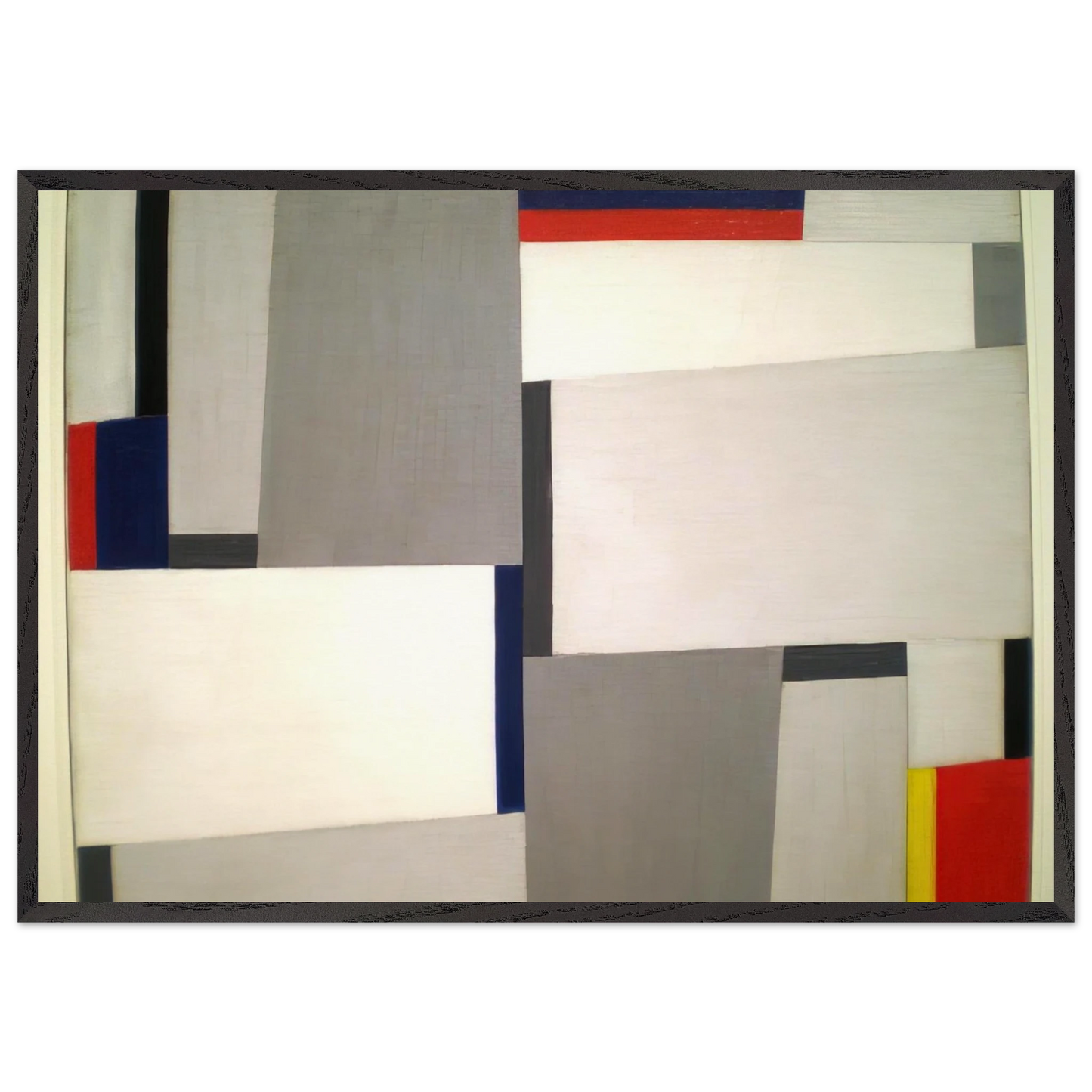
What is the historical significance of Fritz Glarner's Relational Painting 73 - 1954?
This artwork is a key example of Glarner's Relational Painting series, developed in the 1950s, which explores geometric abstraction through dynamic color relationships and structured compositions, influenced by De Stijl and modernist movements.
How does the frame enhance this fine art print?
The black wooden frame, made from responsibly sourced oak and ash wood with a 20mm thickness, provides a substantial, gallery-ready look that complements the geometric design and ensures durability for your museum-quality reproduction.
What are the specifications of the archival paper used?
The print uses 250 gsm (110 lb) matte, uncoated, natural white paper with a thickness of 0.29 mm (11.4 mils), ideal for fine art prints due to its archival quality and vibrant color reproduction.
Is this framed art print ready to hang upon delivery?
Yes, it includes a hanging kit and is fully assembled, so you can hang this Fritz Glarner reproduction directly on your wall without additional setup.
How does the shatterproof plexiglass protect the print?
The shatterproof plexiglass shields the print from dust, UV light, and physical damage, ensuring long-term preservation while maintaining clarity for your geometric abstraction artwork.
What makes this a sustainable art print option?
It features FSC-certified or equivalent materials, including sustainable paper and responsibly sourced wood for the frame, aligning with eco-friendly practices for premium reproductions.
Can you describe Glarner's technique in this piece?
Glarner employed a precise, grid-based approach with overlapping rectangles and squares, using a limited color palette to create visual tension and harmony, characteristic of his Relational Painting style.