
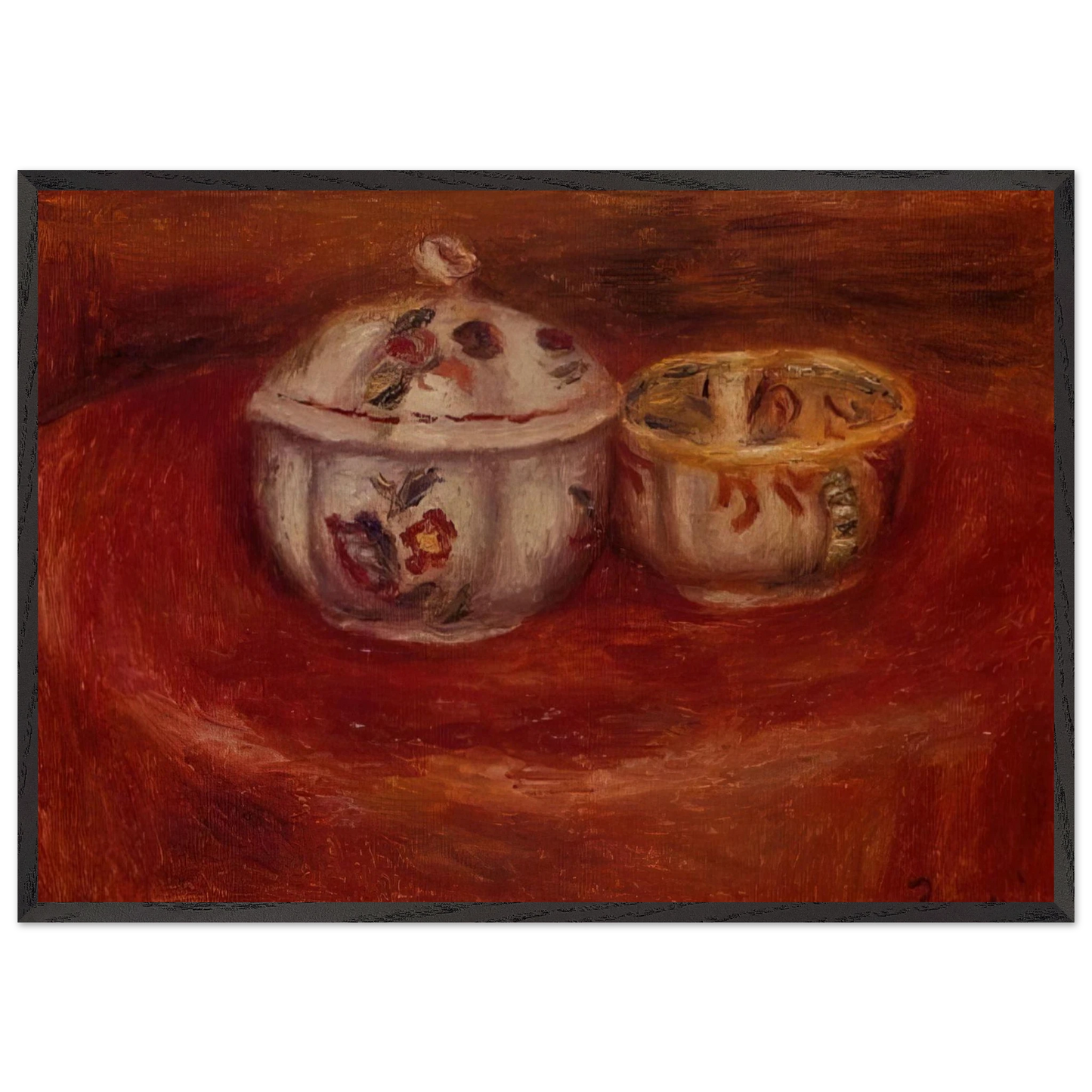
What is the historical significance of Renoir's "Sugar Bowl and Earthenware Bowl"?
This still life by Pierre-Auguste Renoir, created in the late 19th century, exemplifies Impressionist techniques with its focus on light, color, and everyday subjects, reflecting domestic tranquility and artistic innovation in fine art prints.
How does Renoir's technique enhance the mood of this artwork?
Renoir used soft, fluid brushstrokes and a warm palette to capture texture and light, evoking a sense of calm and intimacy in this museum-quality reproduction of a classic Impressionist piece.
What are the specifications of the paper used for this fine art print?
The print uses 250 gsm (110 lb) matte, uncoated, natural white archival museum-quality paper with a thickness of 0.29 mm (11.4 mils), ensuring durability and premium quality for framed art prints.
Is the frame included, and what are its features?
Yes, this ready-to-hang piece includes a black wooden frame made from responsibly sourced oak and ash wood, 20mm (0.79") thick, with shatterproof plexiglass for protection in archival reproductions.
How is this print shipped and installed?
It arrives ready-to-hang with a hanging kit, allowing for direct wall installation. RedKalion ensures secure packaging for safe delivery of museum-quality prints.
What makes this print archival and long-lasting?
Using FSC-certified materials and archival-grade paper, this fine art print resists fading and degradation, offering a durable investment in premium art reproductions.
Can I trust the color accuracy of this reproduction?
RedKalion employs advanced printing techniques to match Renoir's original palette, ensuring high color fidelity in this museum-quality framed art print.