

RedKalion
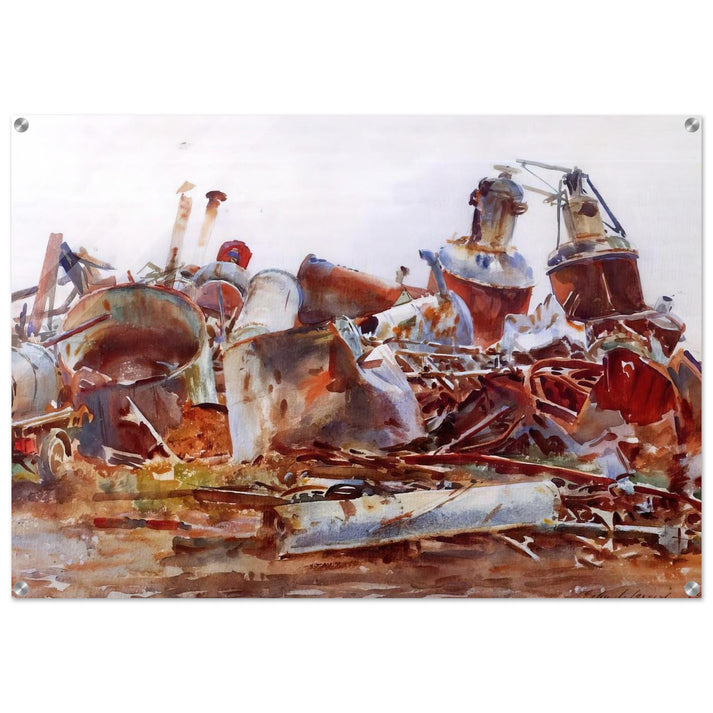
A Wrecked Sugar Refinery - John Singer Sargent Acrylic Print - 70x100 cm / 28x40″ inches | John Singer Sargent Wall Art | John Singer Sargent Prints
A Wrecked Sugar Refinery - John Singer Sargent Acrylic Print - 70x100 cm / 28x40″ inches | John Singer Sargent Wall Art | John Singer Sargent Prints
Verfügbarkeit für Abholungen konnte nicht geladen werden
Elevate Your Space with John Singer Sargent’s 'A Wrecked Sugar Refinery'
Experience the visceral beauty of industrial decay through the eyes of a master. John Singer Sargent’s 'A Wrecked Sugar Refinery' is a testament to the artist’s peerless ability to find elegance in the unexpected. Captured during his tenure as an official war artist in 1918, this piece showcases Sargent’s transition from high-society portraiture to a more profound, atmospheric realism. The play of light across the skeletal remains of the refinery is rendered with a luminosity that only a John Singer Sargent fine art print can truly honor.
Museum-Quality Execution on Premium Acrylic
At RedKalion, we believe that world-class art deserves a contemporary presentation that preserves its soul. This John Singer Sargent wall art is meticulously produced on 4mm (0.15") high-grade acrylic, providing a vibrant depth and clarity that traditional paper prints cannot match. The material choice enhances the intricate textures of Sargent's brushwork while offering a sleek, modern finish with straight-cut corners that integrate seamlessly into sophisticated interiors.
Designed for Longevity and Sophistication
This archival masterpiece is not merely a reproduction; it is a durable investment in culture. Our acrylic prints are engineered for resilience, featuring a transparent background that defaults to a crisp white for optimal color pop. Each piece arrives with a professional hanging kit, including hardware and screws. The pre-drilled holes—positioned 14mm from the edges—ensure a secure and balanced display, allowing this museum-quality reproduction to endure as a focal point in your collection for generations.
- Material: 4mm (0.15") premium acrylic for a sleek, vibrant finish.
- Visual Quality: High-definition rendering of Sargent’s masterful light and shadow.
- Modern Design: Straight-cut corners and transparent-to-white backing.
- Hardware Included: Complete kit with screws and 15mm screw heads for easy installation.
- Archival Grade: Engineered to resist fading and maintain clarity.


Discover Unlimited Art Possibilities
At RedKalion, you can find virtually any artwork from any artist, available in a wide range of sizes to perfectly match your space.
If you didn’t find what you’re looking for, contact us at support@redkalion.com . We will source any artwork and produce it in any size and format you need, including art prints, posters, canvas, framed pieces, framed canvas, and more.
For dedicated art enthusiasts, we also offer handcrafted replicas of any artwork, carefully painted by highly skilled artists using traditional techniques.
For custom requests, contact us at support@redkalion.com .
What materials are used for this John Singer Sargent print?
The artwork is printed on 4mm (0.15") premium acrylic. This provides a vibrant, high-definition finish that is significantly more durable and sleek than traditional glass or paper prints, ensuring your Sargent wall art remains a masterpiece for years.
How do I install my new acrylic fine art print?
Each print includes a professional hanging kit. It features pre-drilled holes 14mm from the edge at each corner, along with screws and 15mm screw heads. This ensures a secure, perfectly aligned mounting process for your museum-quality reproduction.
Is the print protected during shipping?
Yes, RedKalion uses archival-grade protective packaging to ensure your John Singer Sargent reproduction arrives in pristine condition. The acrylic material itself is naturally shatter-resistant, adding an extra layer of durability during transit.
Does the acrylic print have a glossy or matte finish?
Our 4mm acrylic prints feature a sleek, vibrant finish that enhances the depth and luminosity of Sargent's color palette. The smooth surface reflects light beautifully, mimicking the atmospheric quality of the original oil painting.
How should I clean and maintain my acrylic artwork?
To maintain your print, simply use a soft, damp microfiber cloth. Avoid harsh chemicals or abrasive materials. The durable 4mm acrylic protects the ink from moisture and dust, ensuring the longevity of your investment.
What is the historical significance of 'A Wrecked Sugar Refinery'?
Painted in 1918 in France, this work reflects Sargent’s time as an official war artist. It captures the intersection of industrial architecture and the devastation of the Great War, showcasing his unique ability to find light amidst destruction.
What technique did Sargent use in this specific piece?
Sargent utilized his signature 'impasto' and 'alla prima' techniques, focusing on the immediate capture of light and atmosphere. His mastery of tonal values allows the ruined structure to feel both monumental and ephemeral.